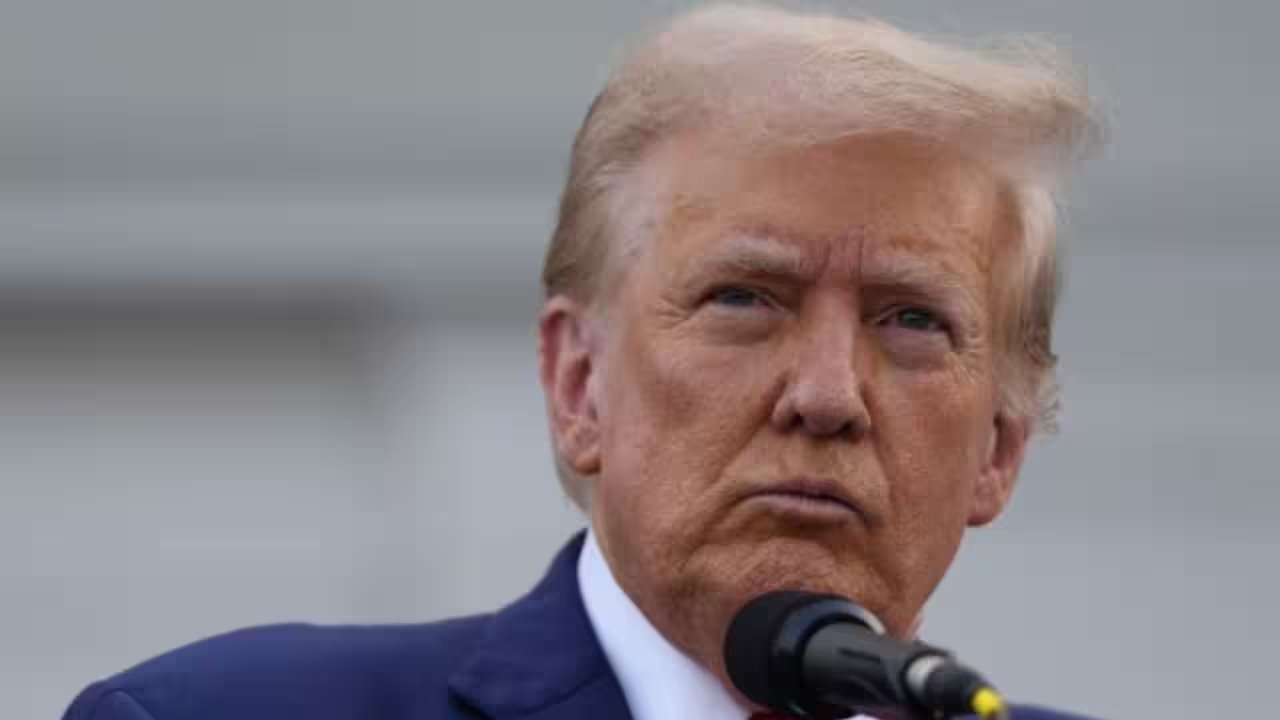
Donald Trump slammed the Democratic Party’s sweeping midterm election victory for triggering a single-day $3 trillion Wall Street collapse, declaring that the United States had taken a "giant step back in history."
The losses were swift. Writing on Truth Social, the US president claimed the equity market had operated like a "rocketship" during his tenure before skidding into an abrupt downward spiral as election tallies confirmed Democrats had captured majorities in both the House of Representatives and the Senate. Yet Trump insisted the setback would prove temporary, pledging his party would return "bigger and stronger than ever before."
Trading desks suffered severe whiplash across 48 hours. On Wednesday, the Dow Jones Industrial Average leaped 1,569 points—a 3% surge marking its strongest post-midterm performance in 44 years—as investors initially celebrated the prospect of divided governance. Then the floor gave way. On Thursday, heavy institutional selling wiped roughly $3 trillion off domestic market value, dragging the Nasdaq down 5.2%, the S&P 500 down 3.8%, and the Dow down 2.9%, or more than 1,500 points. Overseas bourses shuddered in tandem, with South Korea’s Kospi skidding 5.28%, Taiwan’s benchmark sliding 3.2%, and Japan’s Nikkei dropping 1.79%.
| Market Index / Asset | Movement | Key Context |
| :--- | :--- | :--- |
|---|---|---|
| Dow Jones Industrial Average | -2.9% (-1,500+ pts) | Reversal after 1,569-point Wednesday gain |
| S&P 500 Index | -3.8% | Erased post-election relief rally |
| Nasdaq Composite | -5.2% | Heaviest drag among major US benchmarks |
| Philadelphia Semiconductor Index | -10.0% | Intraday plunge touched 11% |
| Advanced Micro Devices (AMD) | -15.0% | Tech sell-off frontrunner |
| Micron Technology | -15.0% | Memory hardware supplier slump |
Technology and artificial intelligence heavyweights bore the brunt of the liquidation. But trading desks were not simply reacting to partisan rhetoric. Panic converged around concrete Democratic campaign pledges to halt energy-intensive artificial intelligence infrastructure, particularly sprawling data center developments that threaten regional electricity grids. In Texas—which accounts for an estimated 27% of planned domestic data center capacity—Democrat Gina Hinojosa ousted Republican incumbent Greg Abbott after running on an immediate permit moratorium. Similar regulatory resistance gained momentum under Amy Acton in Ohio and Keisha Lance Bottoms in Georgia.
Trump also linked the market convulsion to foreign policy stakes during public appearances in Florida and at NASA’s Kennedy Space Center, asserting that investor sentiment reacted to his administration's refusal to permit an Iranian nuclear weapon. But power inside the capital has fundamentally shifted. Democratic control of both chambers opens the path for intense scrutiny of federal spending, administrative rollbacks, and aggressive committee investigations.
Yet legislative muscle runs directly into executive power. Trump retains the presidential veto, a constitutional barrier that requires a two-thirds majority in both chambers to overturn. The president broadcast that leverage immediately, posting a photograph of a red baseball cap stitched with the word "VETO," though he acknowledged reluctance to spend the next two years blocking measures indiscriminately. The battle lines now pivot to the upcoming congressional swearing-in, where early legislative clashes over energy grid permits and infrastructure budgets will determine whether Washington settles into complete stalemate.
| Nvidia Corporation | -9.0% | AI market bellwether contraction |