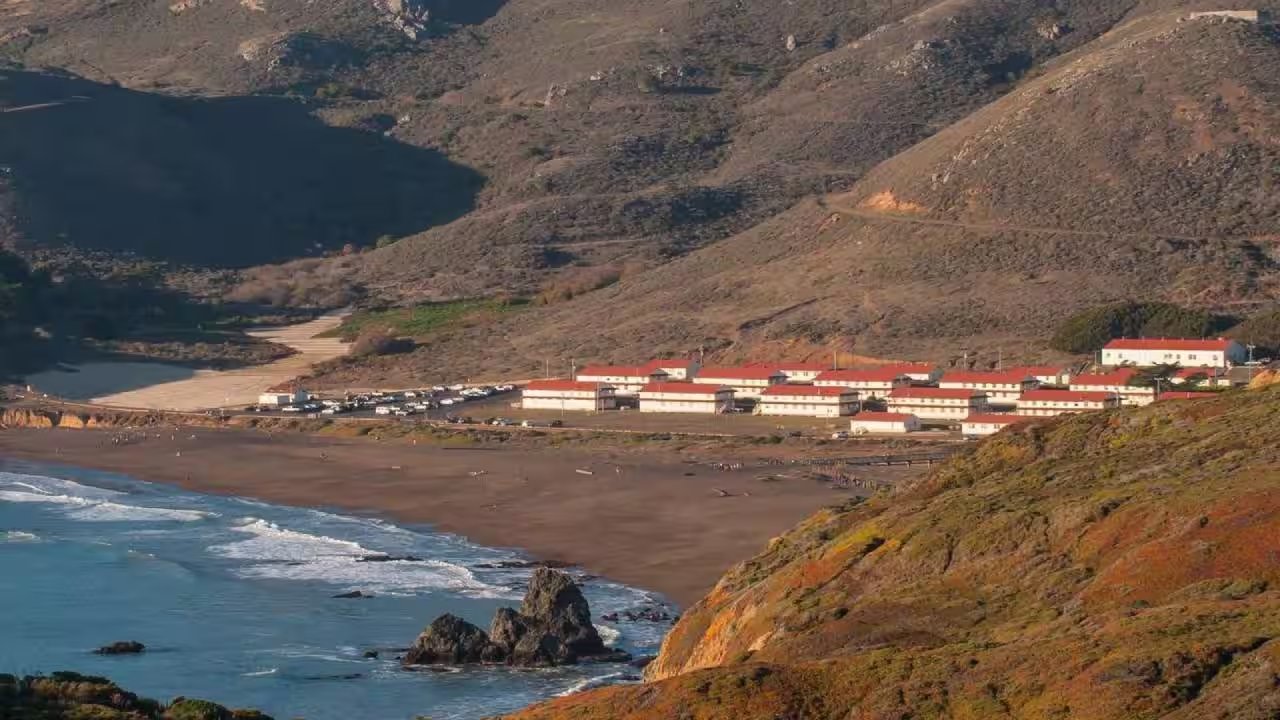
Fort Cronkhite sits on the Marin Headlands, overlooking San Francisco Bay. During the 1940s, it became a critical node in the U.S. Army’s coastal defense strategy. The site housed Battery Townsley, a pair of 16‑inch guns capable of firing a 2,700‑kg projectile up to 28 km. In 1940, the guns were fired for the first time, producing a shock wave that shattered windows over 12 km away in downtown San Francisco. The battery’s presence was a deterrent to any potential seaborne attack during World War II.
After the war, most temporary military structures were dismantled, yet Fort Cronkhite survived as one of the few intact wartime sites. The National Park Service acquired the property in 1979 and has since undertaken a meticulous restoration of the battery’s interior. Visitors can now walk through concrete corridors and peer into the chambers that once housed artillery crews and ammunition. A self‑guided history walk explains the fort’s role and the daily life of soldiers stationed there. The restoration preserves the original bunkers, gun mounts, and support facilities in their wartime configuration.
The fort’s strategic importance shifted during the Cold War, when aerial threats replaced naval ones. An adjacent Nike missile site, designated SF‑88, was installed at nearby Fort Barry to intercept potential Soviet aircraft. The missile batteries were decommissioned in 1970 but remain on the grounds, offering a window into another era of military defense. The site now hosts interpretive panels that describe the missile system’s operation and its place in the Bay Area’s defense network. Tourists can see the launchers, radar dish, and command bunker that once formed a critical part of the region’s air‑defense grid.
Beyond military history, the Marin Headlands provide natural attractions that lure hikers, surfers, and birdwatchers. Just below Fort Cronkhite lies Rodeo Beach, a stretch of coast dotted with red and green pebbles instead of typical sand. The beach’s powerful waves draw surfers, while current conditions make swimming hazardous. Nearby Rodeo Lagoon offers a calm habitat for wildlife, though public swimming is prohibited to protect fragile ecosystems. The area’s trails, such as the Coastal Trail, provide panoramic views of the Pacific and the chance to spot peregrine falcons and migrating whales offshore.
The National Park Service’s reopening of the gun batteries on September 15, 2023, marked the first time visitors could explore the site since the 1970s. The agency plans to launch a week‑long guided tour series in October, featuring historians and former military personnel who will recount the fort’s wartime experiences. In addition, the park will expand its educational outreach, partnering with local schools to offer field‑trip programs that cover both WWII and Cold War defense strategies. The guided tours will run every Saturday, Sunday, and Wednesday from 10 a.m. to 4 p.m., with admission free for all. The initiative seeks to deepen public understanding of the Bay Area’s role in national security.
Local residents and veterans have praised the effort, saying the restored fort provides a tangible link to the past. One former soldier, now 82, described the experience as “seeing history breathe again.” The park’s next step is to secure additional funding to preserve the surrounding environment and maintain the site’s infrastructure. A grant application is scheduled to be submitted to the federal Congress in November. The Fort Cronkhite project exemplifies how historic military sites can be repurposed for education and recreation while honoring the sacrifices made during war.