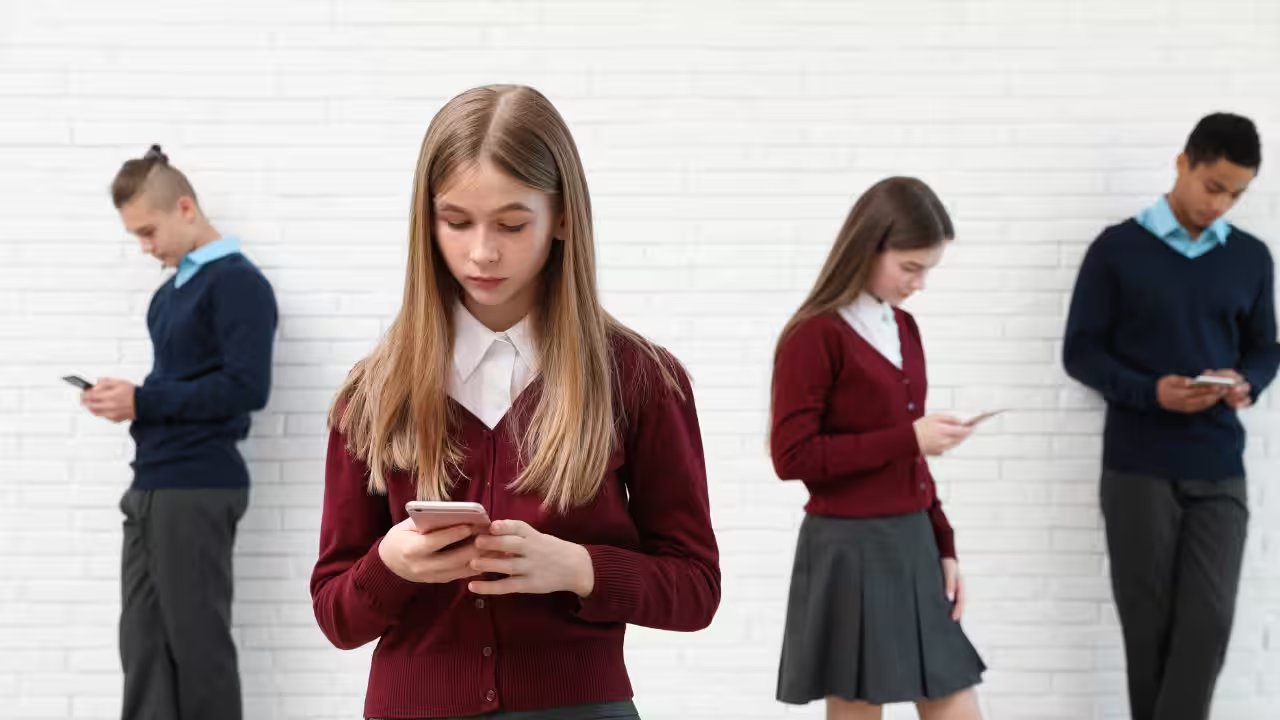
A twelve-year-old checks their smartphone after classes and spots group photos from a party they never got invited to. They track the comment count, tally the likes on a classmate's upload, and stew over why their own grid stays quiet. Even after tucking the phone under a pillow, the mind races.
Online life has morphed into an emotional battlefield for pre-teens.
A public health study conducted by the Postgraduate Institute of Medical Education and Research (PGIMER), Chandigarh, shows that younger adolescents bear the heaviest psychological toll from social platforms. Children aged 10 to 13 logged sharper, more disruptive digital strain than older teenagers aged 14 to 16. Across the board, 52% of surveyed pupils admitted to enduring mild to severe digital stress.
Conducted between January and April 2026, the investigation—titled Social Media Use and Digital Stress Among School Adolescents in North India—evaluated 1,306 school-going students across both government and private campuses. Field teams from PGIMER's Department of Community Medicine and School of Public Health worked alongside the Department of Psychiatry, tracking participants across urban Chandigarh and the rural Raipur Rani block in Haryana's Panchkula district.
The split between developmental age brackets is stark. While 48% of adolescents aged 14 to 16 registered digital stress, younger children aged 10 to 13 crossed that threshold in far larger numbers. Compulsive, unhealthy app habits mirrored the same pattern.
Roughly 20% of children aged 10 to 13 exhibited problematic social media use. Among teens aged 14 to 16, that figure dropped to 12%.
| Cohort / Metric | Ages 10–13 | Ages 14–16 | Study Total |
|---|---|---|---|
| Overall Digital Stress Rate | Above 48% (Highest) | 48% | 52% |
| Problematic Social Media Use | 20% | 12% | — |
| Daily Use Exceeding 3 Hours (Weekdays) | — | — | 32% |
| Internet Dependency Prevalence | — | — | 40% |
Heavy platform use fueled anxiety immediately. The data showed 32% of all students spent over three hours daily on social media during school weekdays. Among those heavy users, 64% suffered digital stress, compared with 46% of classmates who kept their daily time lower. Weekend metrics mirrored the damage, with 60% of heavy users reporting stress versus 43% among lighter users.
Geography and gender also shaped how adolescents absorbed digital pressure. Moderate-to-severe digital stress gripped 17% of urban students in Chandigarh, compared to 11% in rural Raipur Rani.
Girls shouldered a notably heavier load when managing direct communication expectations. Female respondents posted higher moderate-to-severe stress tied directly to the pressure of replying instantly to messages. Girls and urban students also experienced FOMO far more intensely than their male and rural peers.
Behind these patterns sits a deeper behavioral grip: 40% of all surveyed students demonstrated baseline internet dependency, an attachment tightly bound to escalating daily stress.
Counting daily screen minutes misses the core danger.
Two children can spend identical ninety-minute windows on a handset with wildly divergent consequences. One watches tutorials or plays games. The other agonizes over seen receipts, counts missing likes, or spirals after being excluded from a group chat.
Because the PGIMER survey gathered cross-sectional data at a single point in time, clinicians noted that the figures establish a powerful correlation rather than direct single-source causation. Yet the clinical signal is unmistakable.
PGIMER specialists advise families to track behavioral cues rather than just watch the clock. Warning flags include checking notifications compulsively, mood swings following peer posts, and panic over unanswered messages. Parents should establish firm device-free intervals, protect bedtime hours, and hold candid conversations reminding children that social metrics have zero bearing on personal worth.