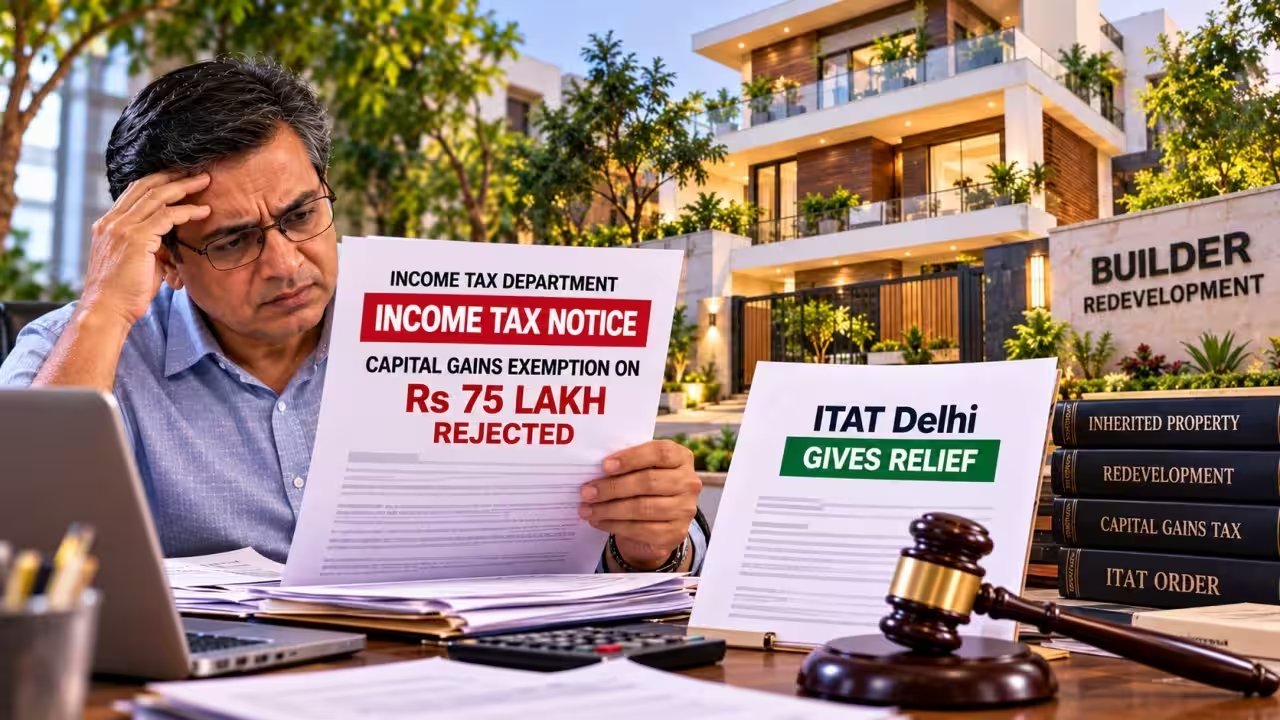
In 1997, a Delhi resident inherited 400 sq yards of leasehold land from his mother. By 1999 he had converted it to freehold and erected a single‑storey house in 1978. The property later became the subject of two redevelopment deals, the last of which paid him Rs 75 lakh in 2018.
The tax officer dismissed the man's Section‑54 claim, arguing that the basement, ground floor and third floor constituted three independent residential units. He cited the 2025 Budget amendment that limits the exemption to a single dwelling.
The Income Tax Appellate Tribunal, on July 13 2026, reversed the assessment. It held that the three floors were part of a single structure and therefore qualified for the exemption in full, and that the fair‑market value reported by licensed valuers was acceptable.
The ruling clarifies how redevelopment proceeds may be treated under the capital‑gain exemption, potentially easing the tax burden for future developers and investors in Delhi’s housing market.
At the heart of the case is a man who, after losing his mother in 1997, sought to turn a modest plot into a profitable asset. His victory may give similar property owners confidence that the tax framework can recognize legitimate redevelopment efforts.