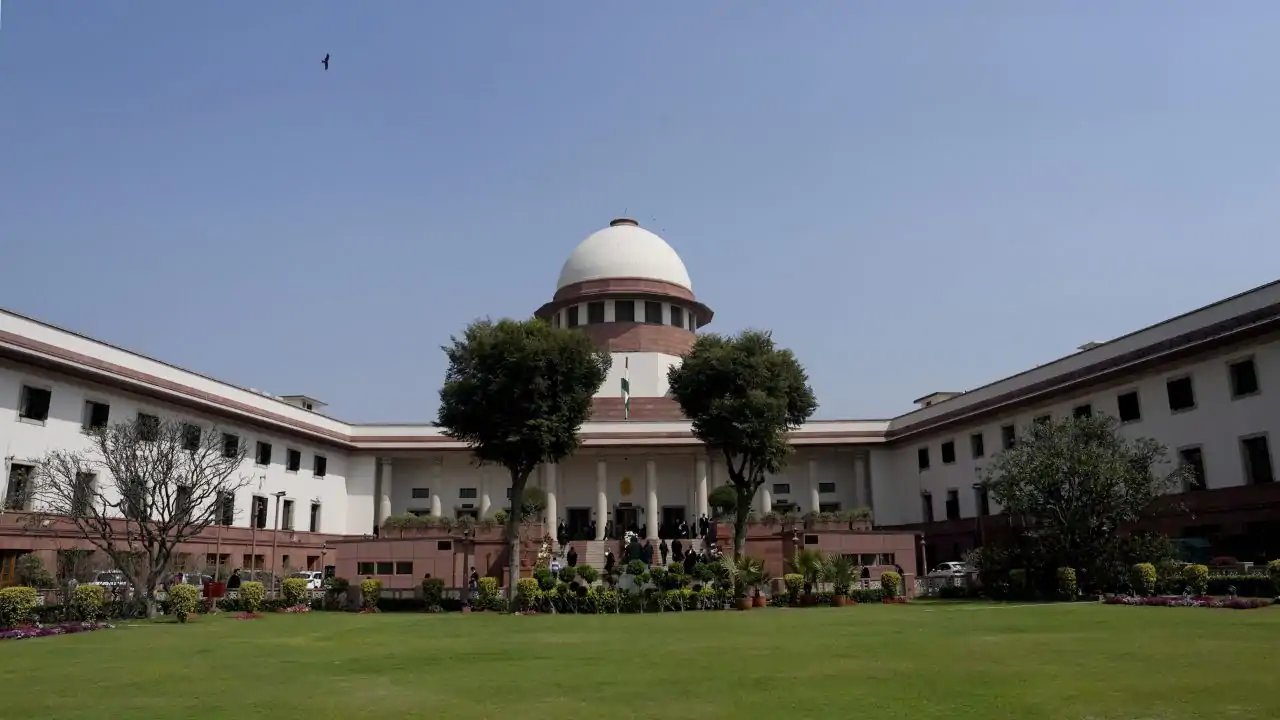
During a hearing on Tuesday, the Supreme Court heard Solicitor General Tushar Mehta use the word ‘Naxalites’ in a rebuttal to Senior Advocate Muralidhar, who represented Carnatic musician TM Krishna. The exchange erupted when Mehta tried to justify the Centre’s directive that all six stanzas of Vande Mataram be sung at official occasions.
Krishna’s petition challenges that mandate, arguing that four of the six stanzas invoke Hindu deities and that compelling citizens to sing them infringes on secularism, personal liberty and freedom of conscience. The petition also seeks to question the constitutionality of the Prevention of Insults to National Honour (Amendment) Act, 2026, which now treats Vande Mataram as a national song.
Under the amendment, a person who intentionally prevents the singing of the national song or disrupts an assembly singing it faces up to three years’ imprisonment, a fine, or both. Parliament passed the bill in July and the law came into force in August, extending Section 3 of the 1971 act to Vande Mataram.
The bench, however, said it would not decide whether the national song comprises two or six stanzas at this stage, focusing instead on whether failure to sing can attract criminal penalties. It cited the 1986 Bijoe Emmanuel case, which protected Jehovah’s Witnesses from expulsion after refusing to sing the national anthem.
For TM Krishna, a 45‑year‑old Carnatic violinist who has performed Vande Mataram at 150 public concerts, the ruling could mean a new legal precedent that affects musicians and educators across the country. He said the court’s decision could set a precedent for how constitutional rights intersect with cultural mandates.
The Centre has been ordered to state its position within two weeks, after which the bench may issue a notice and schedule a hearing on the potential criminal liability of those who refuse to sing the song. The outcome will likely prompt further debate on the balance between national symbols and individual freedoms.