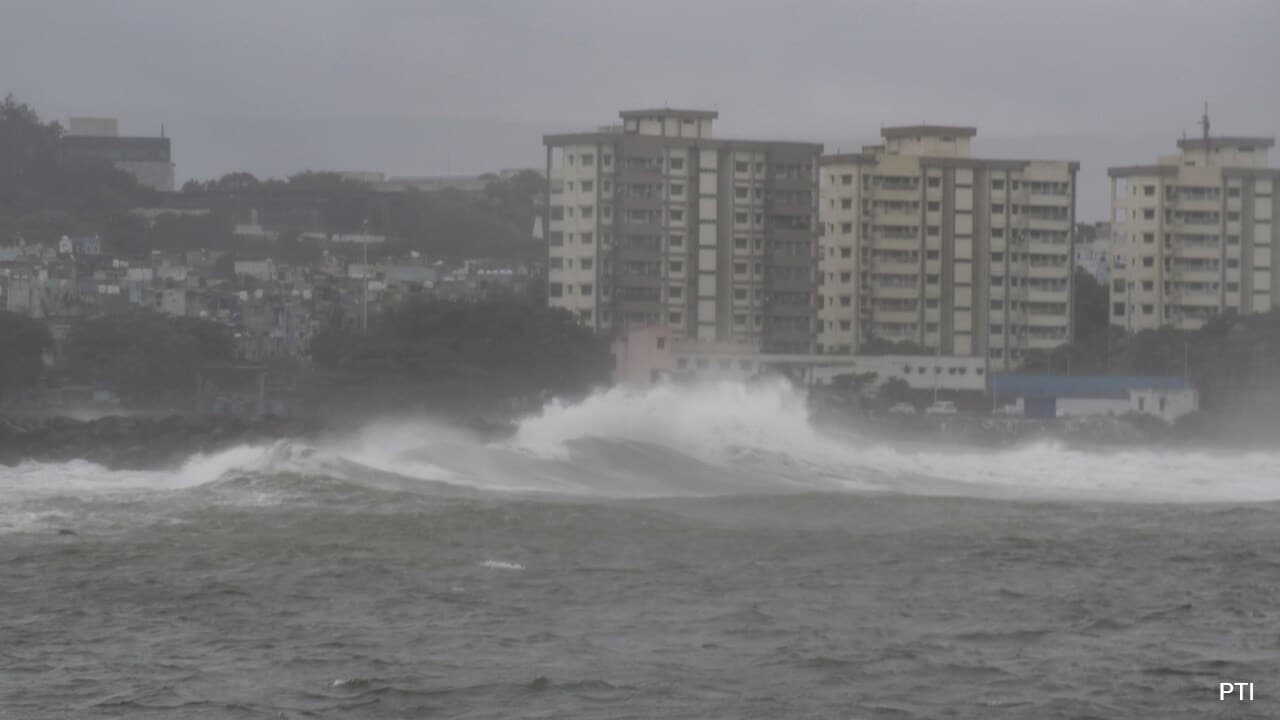
Cyclone Arnab, a "very severe" storm, slammed the Andhra Pradesh coast near Narsapur early Wednesday morning, bringing 140 kmph gusts and a 1.5-meter storm surge that inundated coastal lowlands. The India Meteorological Department (IMD) confirmed the system was practically stationary over the west central Bay of Bengal at 6:30 am, threatening to sustain these violent conditions for several more hours.
The storm has already triggered a massive evacuation of 1.8 lakh people across Andhra Pradesh and Odisha. Visakhapatnam recorded the highest rainfall, with 216 mm of rain falling between 8:30 am on October 27 and 5:30 am on October 28. Kalingapatnam followed at 147 mm, while Kakinada and Machilipatnam logged 118 mm and 115 mm, respectively.
Infrastructure took a direct hit. Power supplies were disrupted, trees were uprooted, and schools were closed. Airlines cancelled all flights to Visakhapatnam and Vijayawada for Wednesday, and several train services were halted. Officials warned that the heavy rain will persist through Thursday, extending the disruption.
The name Arnab, proposed by Bangladesh, means "ocean" in Bengali. It is part of a list of 169 names used by the World Meteorological Organisation to track tropical cyclones in the North Indian Ocean. No loss of life has been reported in either state so far, but the situation remains critical as the storm continues to spin over the coast.