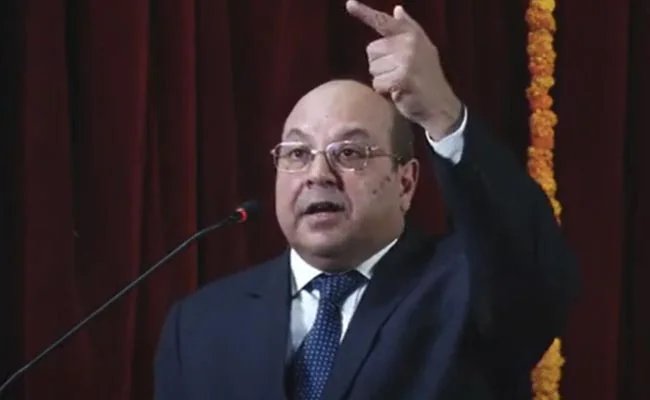
Justice Rohinton Fali Nariman (retd) didn’t mince words when he took the stage at Rajkumar College in Rajkot on October 4. The right to vote, he argued, is no longer just a constitutional right; it is the beating heart of Indian democracy, and right now, that heart is failing. The former apex court judge pointed to a staggering figure: 90 lakh voters in West Bengal were deleted from electoral rolls during the Special Intensive Revision (SIR) exercise. Of the 22 lakh appeals filed, only one lakh have been decided so far, with 93 per cent of those appeals decided in favour of the voter. This isn’t a glitch. It’s a systematic erasure.
The core issue, according to Nariman, lies in how the Election Commission (EC) is staffed and controlled. He referenced the Supreme Court’s 2023 judgment in the Anoop Baranwal case, which had recommended a selection mechanism involving the Prime Minister, the Leader of the Opposition, and the Chief Justice of India. Parliament, however, sidestepped this. In 2023, lawmakers enacted a law that replaced the judicial presence with a Union minister nominated by the Prime Minister. "So that again you are back to square one," Nariman said. The result? A poll panel where two commissioners recently raised objections to CEC decisions on 14 separate occasions, only to later issue a joint statement admitting their earlier objections were valid. They chose not to invoke Section 18 of the new Act, which allows a majority vote among the three commissioners.
This dysfunction isn’t just bureaucratic; it’s political. Nariman noted that both the CEC and the two Election Commissioners are appointed by the government of the day. When the government controls the appointment, independence becomes a theoretical concept rather than a practice. The recent 'patch-up' between the commissioners, marked by an admission of error and a return to the old Form 6, highlights the fragility of the institution. The Supreme Court is currently hearing the matter before a larger bench, likely five judges, to decide the validity of the 2023 law. Until that ruling lands, appointments remain in the hands of the ruling party.
Nariman’s call to action is urgent. He wants the Supreme Court to step in immediately to rectify what he called "disturbing developments." The proposed fix is clear: a selection panel comprising the Prime Minister, the Leader of the Opposition, and the Chief Justice of India (or his nominee). This tripartite body would pick an independent and impartial CEC. The legal battle over the EC’s structure is ongoing, but for millions of citizens whose names vanished from the rolls, the stakes are already decided. The next hearing on the constitutional validity of the appointment law will determine whether this structural flaw gets fixed or if the erosion of voter rights continues in silence.