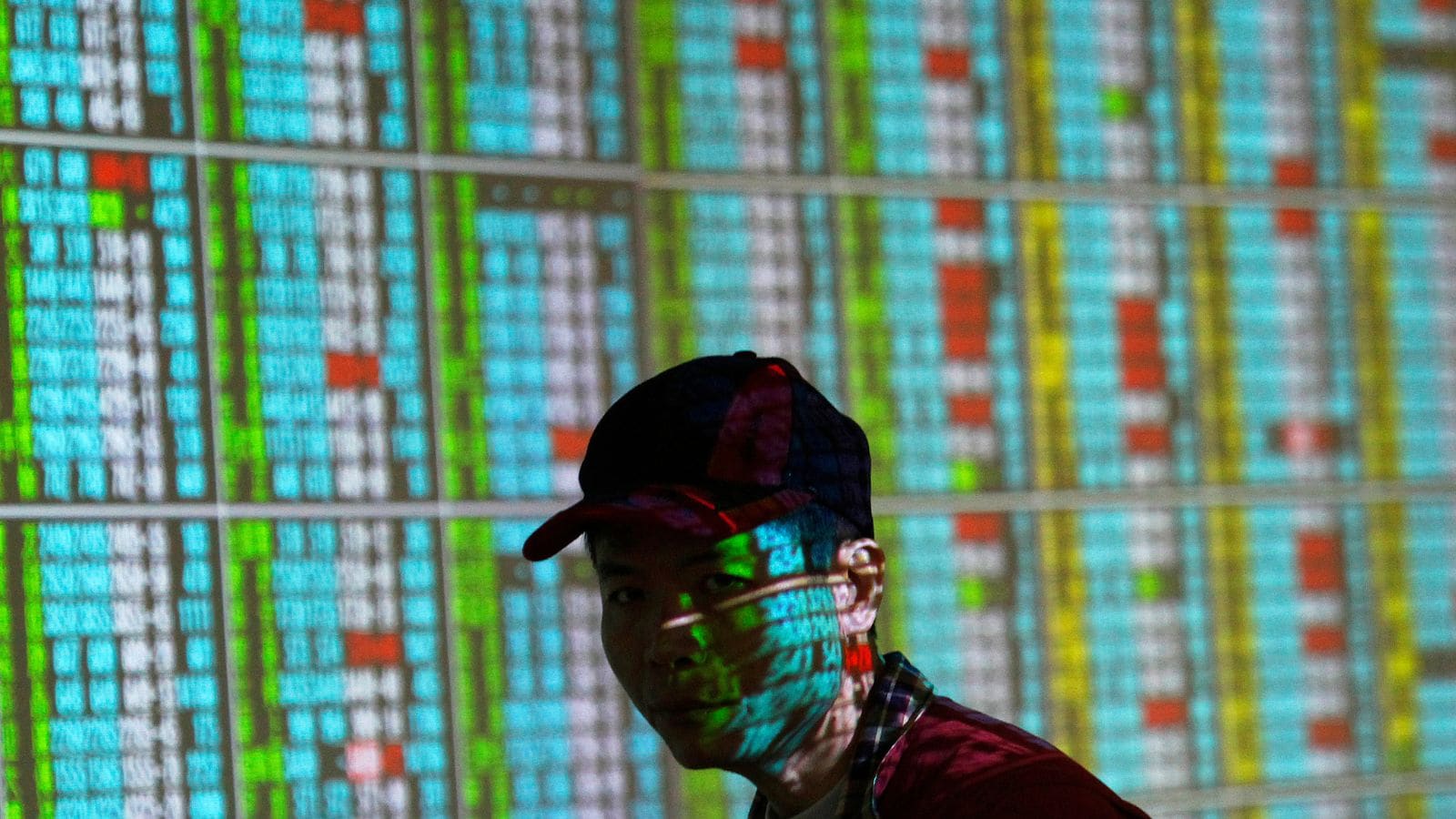
Taiwan’s benchmark Taiex Index jumped 4.9% on Monday, halting a punishing seven-session decline that had dragged the tech-heavy gauge straight into bear territory. The surge marked the market’s steepest single-day advance since July 31. Blue-chip chipmakers led the counterattack: Taiwan Semiconductor Manufacturing Co. and MediaTek Inc. both jumped at least 4% as institutional capital rushed back into semiconductor bellwethers.
Regulators moved fast over the weekend. Facing the market's longest liquidation run since 2022, Taiwan’s Financial Supervisory Commission and the Finance Ministry executed a coordinated clampdown to throttle speculative short bets. The financial regulator slashed the intraday ceiling on short-sale orders for borrowed securities to 3% of a stock’s 30-day average daily volume—down from 30% previously. And they raised the entry barrier for bears: the minimum margin requirement for short selling leaped to 130% from 90%, effective immediately on Monday.
Alongside trading curbs, the Finance Ministry signaled absolute readiness to deploy Taiwan's NT$500 billion National Stabilisation Fund. Equity sentiment improved across Asian bourses simultaneously, counteracting jitters surrounding an investigation into Nvidia Corp. Chief Executive Jensen Huang.
“Stabilisation measures are overpowering any impact from the Jensen Huang development that many investors may see as a sideshow on the semiconductor sector’s long-term trajectory,” said Homin Lee, senior macro strategist at Lombard Odier in Singapore.
Yet institutional desks caution that actual liquidity injections rarely match state headline numbers. An institutional trading desk note from Goldman Sachs Group Inc. noted that across the fund’s nine historical interventions—spanning the dot-com crash, the 2008 global financial crisis, and the 2020 pandemic—the state deployed between NT$0.76 billion and NT$122.7 billion, far below its NT$500 billion war chest.
| Stabilisation Metric | Historical Record / Regulatory Value |
|---|---|
| Benchmark Taiex Advance | +4.9% (Single-session gain) |
| Short-Sale Volume Ceiling | Capped at 3% (Down from 30%) |
| Minimum Margin Requirement | Raised to 130% (Up from 90%) |
| Usable State Stabilisation Capital | NT$500 billion |
| Historical Deployed Capital (Past 9 Interventions) | NT$0.76 billion to NT$122.7 billion |
| Average One-Week Post-Intervention Return | +6% |
| Average 12-Month Post-Intervention Return |
Historical precedent shows the state intervention typically forces rapid short covering. The fund’s prior nine activations triggered an average 6% gain over the subsequent week and a 22% rally across twelve months, according to trading data compiled by Goldman Sachs. But the relief rarely follows a straight line. Six of those nine intervention cycles experienced secondary drawdowns of between 5% and 28% within six months of activation. Desk managers expect the state backstop to funnel primarily into high-beta index drivers, preserving balance sheets across premier semiconductor foundries and major financial institutions.
| +22% |