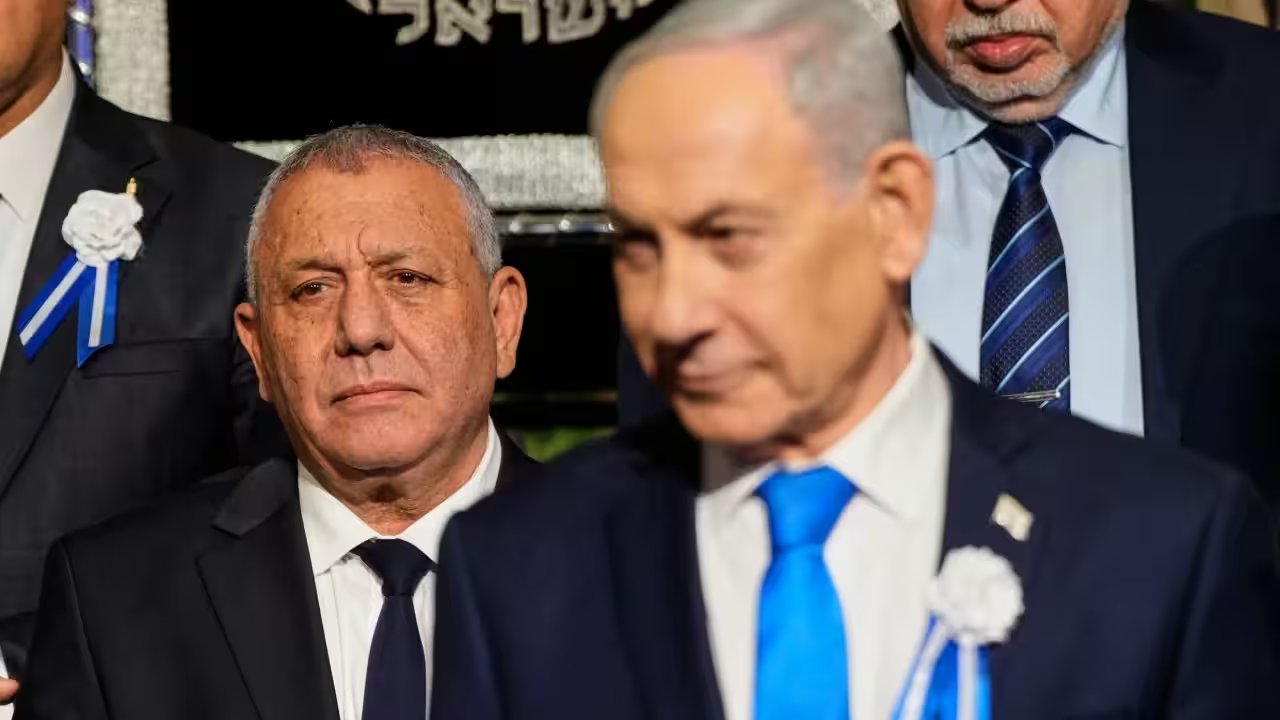
The talks collapsed before they even began.
Yashar party leader Gadi Eisenkot cancelled a scheduled Wednesday negotiating session with Benjamin Netanyahu’s Likud faction, declaring the outgoing prime minister unfit to govern following an explosive swearing-in ceremony for the 26th Knesset. The decision blew apart Netanyahu’s public push for a national unity government. Instead, it accelerated a high-stakes standoff over who will assemble the 61-seat majority required to rule the 120-member parliament.
The breach unfolded just 24 hours after Netanyahu urged rival factions to bury their differences in the face of Iranian nuclear developments. But when Netanyahu mounted the Knesset rostrum on Tuesday, his unity pitch turned into an open assault on opposition leaders for courting Arab-majority parties. For Eisenkot, who holds the official mandate to form Israel’s next government, the speech crossed a line from political maneuvering into institutional sabotage.
Eisenkot delivered a blistering assessment of the address on social media, asserting that the outgoing premier had degraded a solemn parliamentary transition into partisan warfare.
I sat and listened to the outgoing prime minister’s delusional, divisive, hateful and disgraceful speech, in which he abused a state occasion at the swearing-in of the 26th Knesset. I became even more convinced that he is unfit to remain in office for even one more minute.
Gadi Eisenkot, Yashar Party Leader
Yashar had outlined four non-negotiable principles for cross-party governance before scheduling the preliminary meeting with Likud. Those arrangements disintegrated the moment Netanyahu attacked Ra’am and the Joint List from the podium, warning Jewish opposition figures against depending on factions he branded as hostile to the state.
Netanyahu doubled down online. He labelled the proposed coalition dangerous and accused the Arab factions of backing terror. Likud officials pushed back against Eisenkot’s cancellation, calling the withdrawal puzzling and claiming Netanyahu would leave no stone unturned to forge a consensus. Likud negotiators pointedly highlighted that Arab parliamentarians had exited the chamber during the national anthem, arguing that Eisenkot was alienating mainstream conservatives while actively negotiating with anti-Zionist factions.
Yashar officials rejected the charge outright. The party stated that Netanyahu systematically places personal survival above societal stability, choosing political self-preservation at any cost whenever confronted with critical national crises.
President Isaac Herzog handed Eisenkot the primary mandate after 67 lawmakers recommended the Yashar leader. The arithmetic reveals a fragmented parliament where neither major bloc controls an outright majority on its own.
| Parliamentary Parameter | Official Tally / Status |
|---|---|
| Knesset Total Seats | 120 seats |
| Threshold for Majority | 61 seats |
| Eisenkot Presidential Recommendations | 67 lawmakers |
| Benjamin Netanyahu (Likud-Led Bloc) | 53 seats |
| Gadi Eisenkot (Yashar Alliance) | 48 seats |
| Statutory Mandate Window | Up to 6 weeks under President Isaac Herzog |
Eisenkot is now demanding immediate coordination from key opposition figures, directly calling on Yair Lapid, Yair Golan, Avigdor Liberman, and Naftali Bennett to lock arms in an emergency administration. His strategy bypasses Likud entirely.
The opposition bloc has already initiated parliamentary maneuvers to replace the Knesset Speaker and table three contentious bills: launching a state commission of inquiry into the October 7, 2023 security failures, codifying strict term limits for the prime minister's office, and repealing the judicial overhaul measures passed under Netanyahu's outgoing tenure. Eisenkot has less than six weeks to convert his 67 recommending lawmakers into a binding 61-seat governing pact; should his window close without an agreement, President Herzog will transfer the mandate directly back to Netanyahu.
| Key Legislative Priorities |
| Oct 7 State Inquiry, PM Term Limits, Judicial Reset |