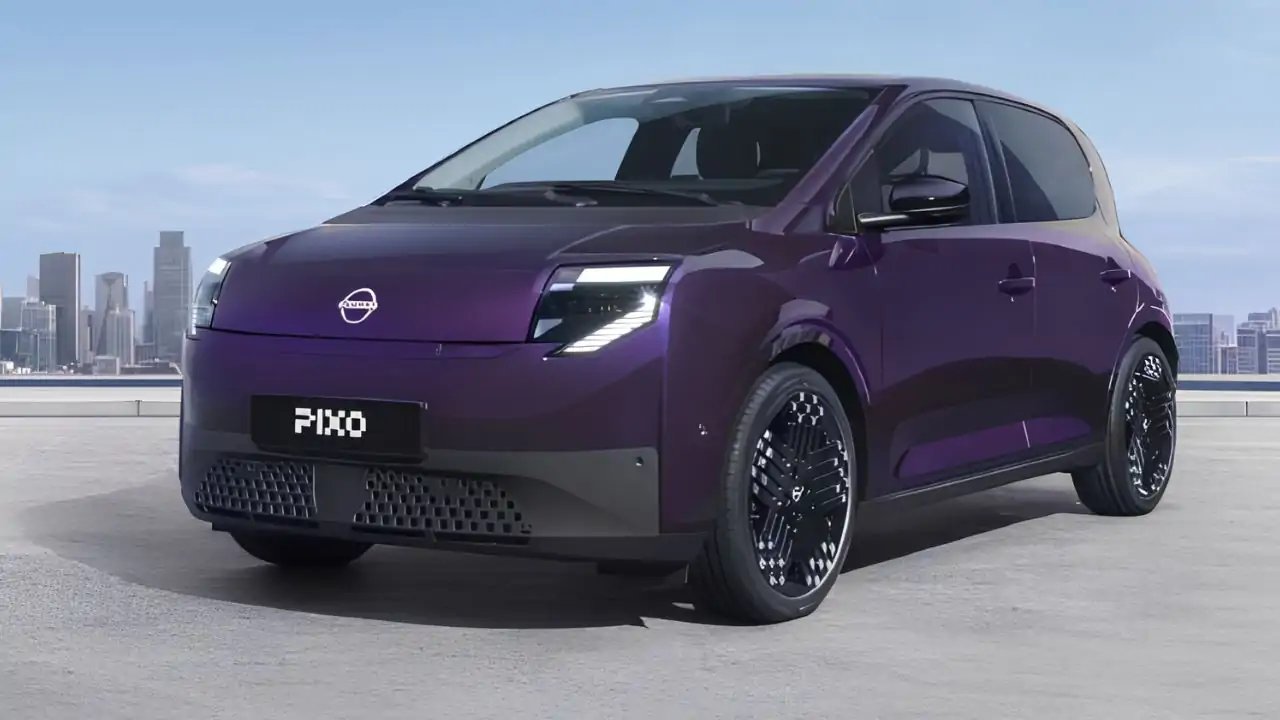
If you’re hunting a city‑ready EV, the new Nissan Pixo promises a 259‑km WLTP range from a modest 27.5‑kWh LFP pack and a single 82‑hp motor.
Charging is where the Pixo stands out. A 50‑kW DC charger lifts the battery from 15 % to 80 % in 28 minutes – a pace that rivals the Zoe’s 30‑minute charge on a 50‑kW supply. And with an 11‑kW bi‑directional AC port, you can plug it at home and even power a small fridge or phone during a break.
Co‑designed with Renault, the Pixo’s 3,796‑mm length and 1,790‑mm width make it a tight fit for narrow streets. The 9.9‑m turning circle is a big plus for congested city grids, and the 140‑mm ground clearance keeps it nimble on pothole‑laden roads. For comparison, the Tata iQ EV is slightly longer at 3,887 mm and has a 10‑m turning circle.
Inside, the cabin feels surprisingly spacious for a 4‑seat hatch. The sliding rear seats let you swap between 356‑litre boot and a 1,221‑litre cargo space when folded, a feature that edges out the Renault Zoe’s 325‑litre capacity. Tech-wise, the 7‑inch driver display and 10‑inch touchscreen run Google’s built‑in suite with Gemini voice, while Face‑ID and hands‑free parking add a touch of convenience.
Price and trim details are still under wraps, but pre‑orders are slated for December in Europe, with deliveries kicking off early 2027. For Indian buyers, that means the Pixo will be a distant option for now, but the specs hint at a direction Nissan might pursue if it decides to bring a small EV to the Indian market.