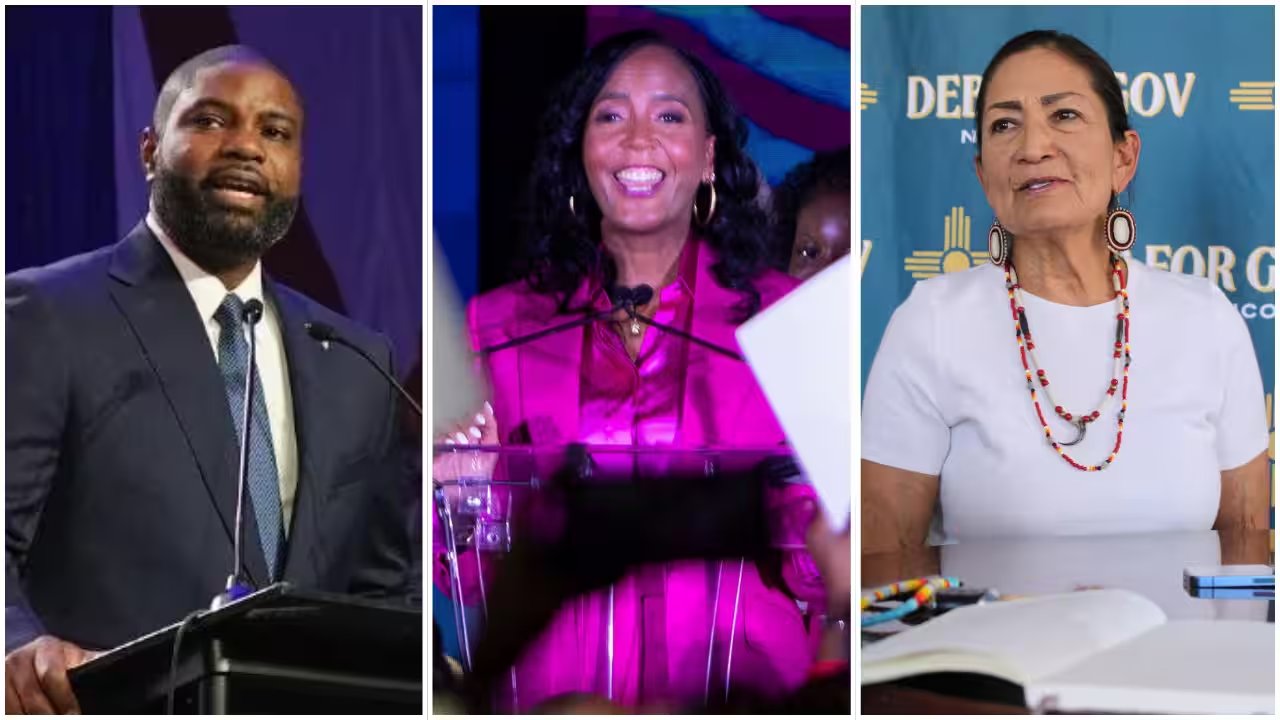
Keisha Lance Bottoms just became the first Black woman elected governor in US history, flipping Georgia’s governorship to the Democrats for the first time since 1998. She defeated Republican businessman Rick Jackson in a race that shattered the state's political demographic ceiling. All 83 of Georgia’s previous governors were white men. Bottoms, a former Atlanta mayor, told supporters that the state is defined by all its people, not by a single moment or person. Her win coincided with Jon Ossoff’s re-election to the Senate, where he will serve alongside Raphael Warnock, Georgia’s first Black senator and the state’s first Jewish senator.
In New Mexico, Deb Haaland became the first Native American woman elected governor, defeating Republican Gregg Hull. A citizen of the Laguna Pueblo, Haaland previously served as Interior Secretary under President Joe Biden, becoming the first Native American to lead a Cabinet department. She emphasized the importance of representation for children, stating that their dreams matter and that New Mexico is a place where they can build the life they want. Her victory marks a significant milestone for Indigenous representation in state leadership.
Gina Hinojosa ended more than three decades of Republican control of the Texas governorship by defeating incumbent Greg Abbott. She is the first Latina governor of Texas and the first woman to lead the state since 1995. Hinojosa, a state lawmaker from Austin, focused her campaign on supporting public school teachers and limiting billionaire influence in politics. Abbott called to congratulate her and offered to assist with the transition, marking a rare moment of bipartisan cooperation in a highly contested race.
Byron Donalds became Florida’s first Black governor, winning the Republican primary and general election in a state with a large African American population. His victory adds to a growing number of Black leaders contesting and winning gubernatorial races, following the re-election of Maryland Governor Wes Moore, the only other serving Black governor. Donalds’ win reflects a broader trend of increased Black political participation and representation in statehouses across the country.
The Senate races also produced historic breakthroughs. Minnesota Lieutenant Governor Peggy Flanagan became the first Native American woman elected to the US Senate, defeating Republican Michele Tafoya. Democrat Adam Hamilton won the Senate seat in Kansas, marking the party’s first Senate victory in the state since 1932. These wins signal a potential realignment in states that have historically favored one party, with Democrats making inroads in traditionally Republican territories. The next step involves the formal transition of power and the new leaders’ agendas for their respective states.