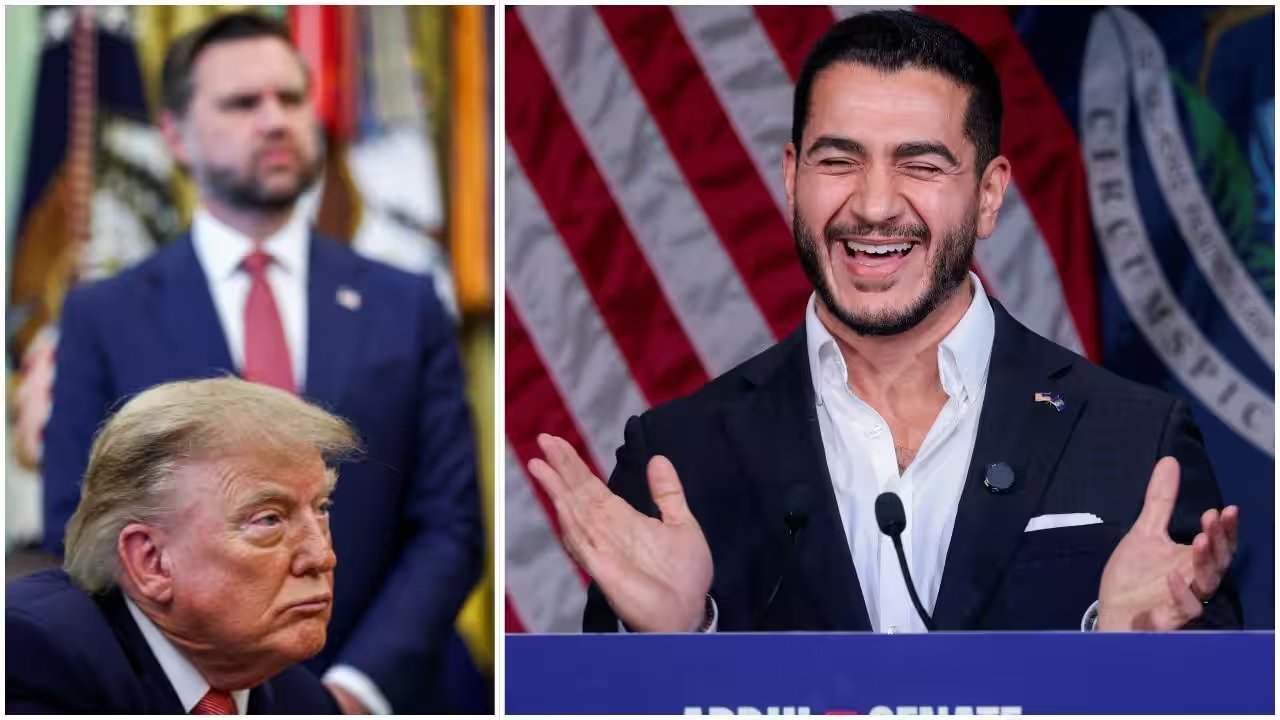
Abdul El-Sayed defeated Republican Mike Rogers in Michigan's open Senate race on Wednesday, cementing his status as the first Muslim member of the US Senate. The victory ended a contentious campaign defined by Trump’s personal attacks and a bruising primary against Representative Haley Stevens. El-Sayed, a former public health official and son of Egyptian immigrants, had never held elected office before this win.
His victory speech was a direct jab at the incoming administration’s leadership. Addressing Vice President JD Vance, El-Sayed said, “Habibi, there is this delicious irony in the fact that you’re constitutionally obligated to swear me in, in January.” He then turned to President Donald Trump, who had repeatedly questioned his loyalty during the campaign. “I know you struggle with my name, so after JD swears me in, you can just go on and call me Senator,” El-Sayed told the crowd.
The race was a microcosm of the broader midterm shift, where Democrats secured control of both chambers of Congress. Rogers, a former FBI agent and congressman who had Trump’s backing, struggled to overcome voter anxiety over rising prices linked to the war with Iran and presidential tariffs. He had previously voiced concern about the conflict, writing in September that it “needs to end, and end quickly,” but his alignment with Trump ultimately cost him the seat.
El-Sayed’s path to the Senate was fraught with opposition. AIPAC spent nearly $30 million opposing him in the Democratic primary, its largest single-race investment, driven by his criticism of Israel. Stevens, who lost the primary, endorsed Rogers on November 1, claiming El-Sayed failed to address Jewish community concerns. Yet, El-Sayed’s progressive platform, which includes universal healthcare and removing outside money from elections, resonated with voters in a state that has traditionally leaned Republican.
The win strengthens the progressive wing of the Democratic Party ahead of the 2028 presidential election. With Democrats now holding both houses, the Senate will face immediate scrutiny on its approach to foreign policy and domestic economic measures. El-Sayed’s presence on the dais in January will test the limits of partisan decorum in a deeply polarized capital.