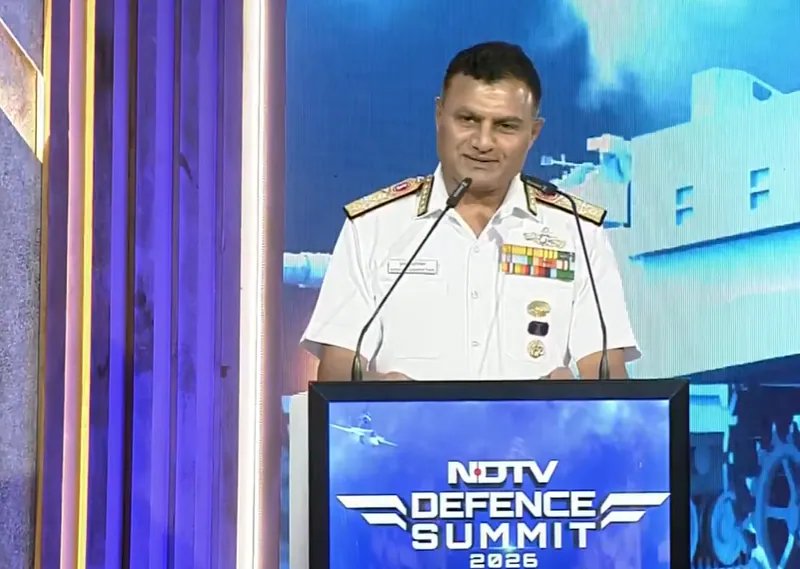
Admiral Swaminathan’s address at the NDTV Defence Summit in New Delhi on 29 September underscored the fragility of India’s maritime futures. He pointed out that the Strait of Hormuz now sees single‑digit daily transits, a sharp drop from the 125‑vessel average before the February attacks on Iran.
India’s economy is tightly bound to the sea: 90% of its trade by volume and over 70% by value passes through maritime corridors, while 60% of GDP is generated by coastal states and 18% of the population lives within 50 kilometres of the coast. The Indian Ocean carries about 30% of the world’s containerised cargo and half of its crude oil, with 55% of known offshore oil reserves and 40% of offshore natural gas.
Swaminathan noted that 40 to 50 warships from extra‑regional navies, including the U.S., China and France, maintain a near‑constant presence. He highlighted the Chinese Navy’s expanding footprint, arguing that the Indian Navy must monitor such moves to preserve strategic balance.
Threats have broadened beyond missiles; drones now pose a significant risk. Over the past two years, more than 120 merchant vessels were attacked in West Asia, and Swaminathan cited the Indian government’s swift energy diversification as a counter‑measure. In the Q&A, he reiterated the need for a third aircraft carrier, stating, "I’m absolutely sure the Indian Navy needs a third aircraft carrier, and I’m absolutely sure the government will give it to us… It’s only a matter of time."
The Defence Ministry is slated to review carrier procurement in the upcoming budget session, a decision that will shape India’s maritime posture for the next decade.