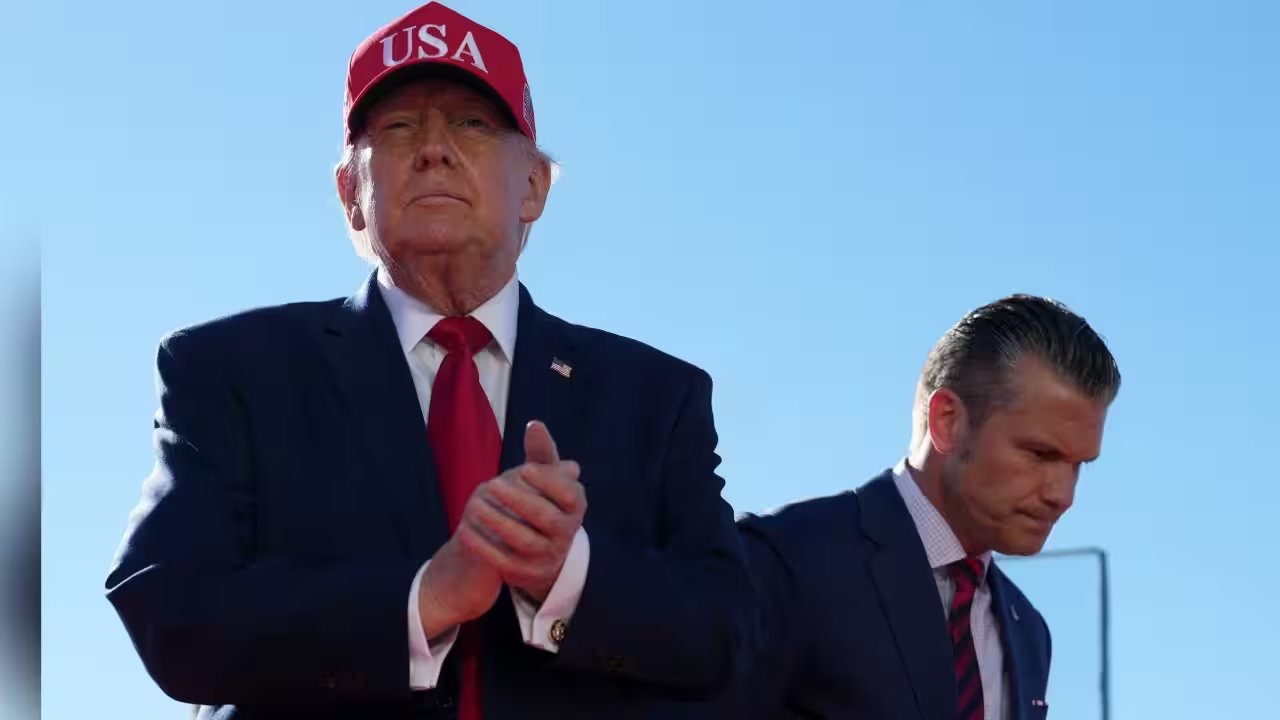
WASHINGTON — President Donald Trump threw his full political weight behind Defense Secretary Pete Hegseth on Monday, rejecting an eight-article impeachment resolution filed on the House floor by Republican Representative Thomas Massie over the administration's military campaigns in Iran, Venezuela, and Yemen.
Trump dismissed the challenge during an unscheduled appearance in the White House briefing room, hours after Massie read the resolution aloud to the chamber. He slammed his fellow Republican as a "stone cold loser" and insisted he would back his Pentagon chief even if the House voted to impeach him.
Pete Hegseth won two wars, Trump declared. He pointed directly to the January operation in Caracas that led to the capture of former Venezuelan leader Nicolas Maduro within 48 minutes, alongside the ongoing offensive against Iranian forces. Massie, who lost his Republican primary to a Trump-backed challenger earlier this year, fired back from the House floor, accusing Hegseth of abusing executive authority, violating the Constitution, and carrying out unlawful lethal operations—including Caribbean maritime strikes targeting suspected narcotics vessels that resulted in civilian casualties. Hegseth rejected the charges as a sham coordinated between a defeated lawmaker and congressional Democrats.
Congressional leadership split sharply along party lines as the resolution moved toward a potential mid-week vote. House Democratic Leader Hakeem Jeffries and Senate Democratic Leader Chuck Schumer threw their support behind the effort, with Schumer insisting that Hegseth must stand trial before the Senate. With Democrats expected to vote in near-unison, Massie requires only a handful of Republican defections to clear the lower chamber.
Yet House Speaker Mike Johnson warned against destabilizing military leadership during ongoing operations abroad, cautioning that an impeachment vote amid active combat sends a perilous signal to allies and adversaries alike. Senate Majority Leader John Thune similarly questioned the timing, indicating the upper chamber would evaluate proceedings only if the House formally acts. Lawmakers now face a critical mid-week floor test before the current legislative session draws to a close.