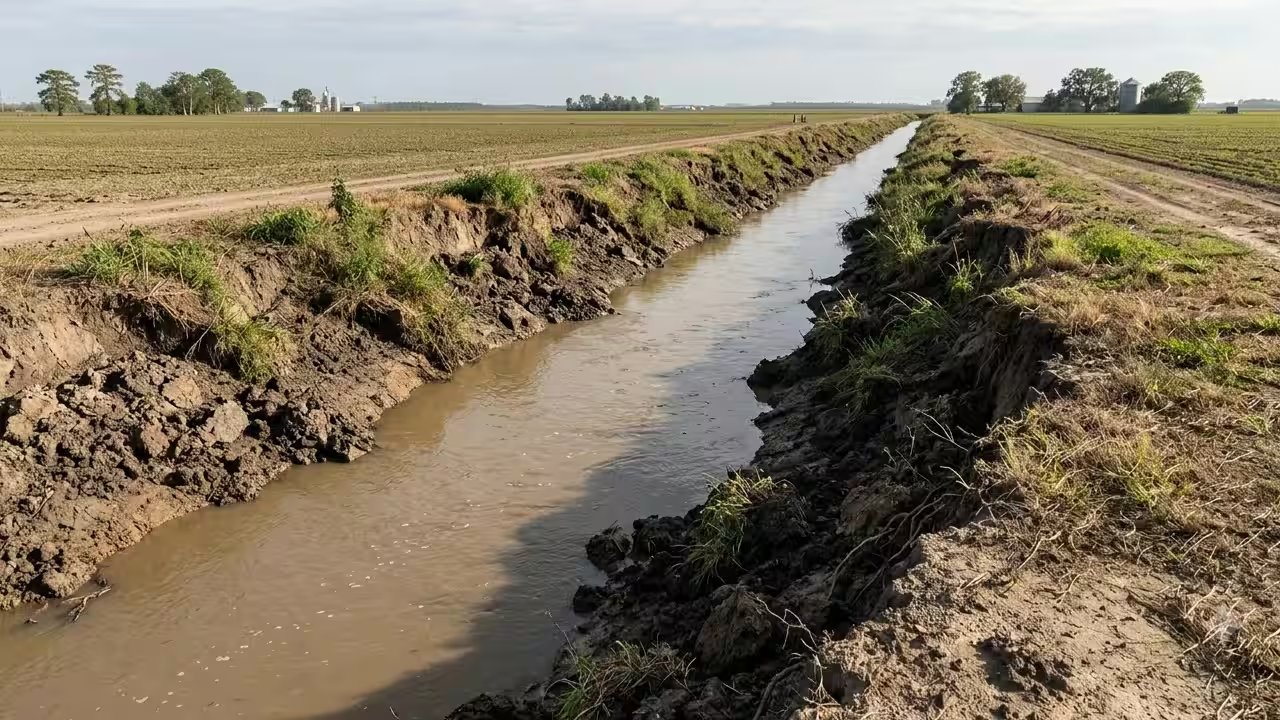
The Louisiana Court of Appeal has slammed the door on a multi-decade property dispute, upholding the dismissal of a lawsuit by two timber operators seeking damages from Southern Natural Gas Company over widening pipeline canals.
Both White Castle Lumber & Shingle Company and Jeanerette Lumber & Shingle Company waited far too long to seek redress. The appellate ruling, handed down on November 6, affirms a May 2025 trial court judgment that tossed the case out before trial. Under Louisiana law, breach-of-contract claims expire after 10 years. These contracts were signed more than half a century ago.
The roots of the fight trace back to 1952. That year, the two lumber companies granted Southern Natural Gas Company (SNG) right-of-way agreements to cut pipeline corridors across their timberland in Iberville and Assumption parishes. Those original contracts allowed SNG to dig canals up to 40 feet wide, requiring the pipeline builder to spread excavated soil evenly without choking regional drainage. In 1970, revised pacts permitted the gas company to widen the waterways up to 65 feet—adding 25 feet across the White Castle tract and 20 feet on Jeanerette land—to install a second line.
Decades passed. The cuts grew wider. Water steadily chewed through the timber tracts. In September 2018, both operators sued SNG, claiming that unchecked bank erosion had gouged the canals far beyond agreed boundaries, wrecked natural drainage, and damaged merchantable timber. Their lawsuit alleged breach of contract, negligence, trespass, nuisance, and violations of state consumer protection law. SNG fought back on procedural grounds, insisting the legal clock had run out decades earlier.
Louisiana appellate judges dismantled the lumber companies' core argument: that an active pipeline easement imposes a perpetual, unbroken duty to keep canal banks intact. The court found that while the contracts obligated SNG to maintain its actual transmission pipes, the text contained zero provisions ordering the company to shore up open canals or halt natural water erosion. The judges pointed to historic pipeline agreements from other cases that expressly required operators to reimburse landowners for canal-related degradation. These agreements contained no such promise. The bench refused to rewrite the contracts from the bench.
Nor did the legal theory of a "continuing wrong" save the lawsuit. The court ruled that ongoing physical degradation does not equal a continuing legal violation. To sustain an active claim, a defendant must engage in continuing wrongful conduct—not simply leave behind the enduring physical effects of old, authorized work. SNG performed no additional excavation on either property after expanding the rights-of-way in 1970. Consequently, any breach occurred when crews dug the initial canals in 1953 or widened them in 1970.
| Contract Parameter | White Castle Tract | Jeanerette Tract | Legal Finding |
|---|---|---|---|
| 1952 Original Width | Up to 40 feet | Up to 40 feet | Digging completed 1953 |
| 1970 Permitted Expansion | Additional 25 feet | Additional 20 feet | Widened up to 65 feet |
| Lawsuit Filing Date | September 2018 | September 2018 | Barred by 10-year prescription |
| Bank Maintenance Mandate |
By affirming the trial court's dismissal, the ruling extinguishes the timber operators' pursuit of financial damages and permanently bars them from refiling claims over the 1970 canal expansions.
| Not in agreement |
| Not in agreement |
| No duty found by court |