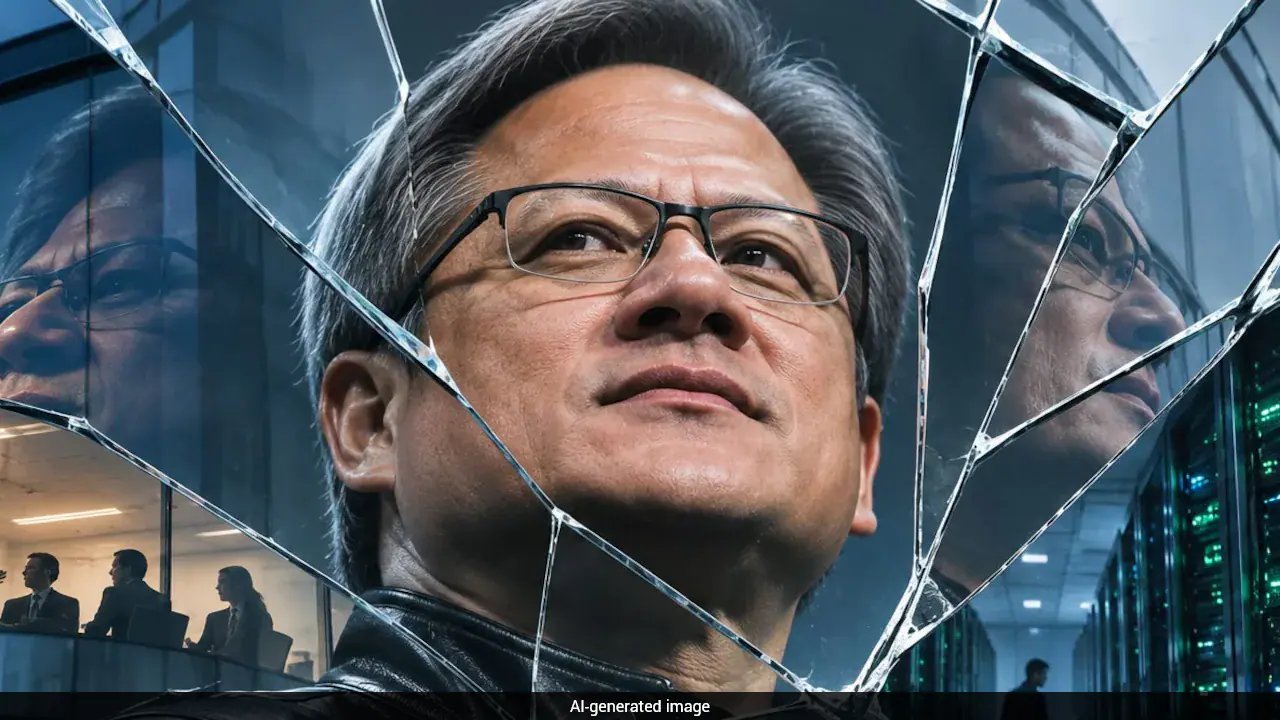
Nvidia suffered an unprecedented $260 billion market wipeout this week as a spiraling controversy engulfing Chief Executive Jensen Huang triggered an aggressive institutional sell-off.
The shock was immediate.
Wall Street trading slashed Huang's personal fortune by $7.4 billion in rapid succession, turning the spotlight onto corporate governance vulnerabilities across the hyper-concentrated artificial intelligence industry. Huang built the world's preeminent semiconductor empire through sheer personal projection—strutting across convention stages in his trademark black leather jacket before arena-sized crowds that cheered product unveilings like arena rock concerts. But when executive celebrity eclipses institutional guardrails, market retribution is swift. Investors pulled capital back at scale, demonstrating that the controversy threatens not merely Huang's personal standing, but the operational stability of the entire hardware supply chain feeding global artificial intelligence deployment.
The financial shockwave struck hardest across the Pacific, shattering the cultural and economic phenomenon known across Taipei as "Jensanity."
In Taiwan, Huang had attained near-mythic status. Local suppliers, retail brokerages, and political leaders had previously celebrated his public appearances as national triumphs, pegging semiconductor market optimism directly to his personal itinerary and unscripted charisma. That adulation fractured over forty-eight hours of intense market reprisal. As Nvidia shed $260 billion, institutional desks offloaded exposure, sending ripples through allied suppliers that depend directly on Nvidia's architecture roadmap.
| Financial Impact Parameter | Recorded Valuation Shift |
|---|---|
| Nvidia Corporation Market Capitalization | Slumped by $260 Billion |
| Jensen Huang Personal Net Worth | Slashed by $7.4 Billion |
| Key Geographic Epicenter | Taiwan Tech Corridor ('Jensanity' Ecosystem) |
| Primary Industry Exposure | Global Artificial Intelligence Infrastructure |
The episode exposes deep structural fractures in Silicon Valley's reliance on singular, all-powerful figureheads.
For decades, tech giants cultivated cults of personality to bulldoze through investor skepticism and secure outsized capital access. Huang leveraged that visibility aggressively. He previously aligned directly with fellow tech titans—including Tesla Chief Executive Elon Musk and Microsoft head Satya Nadella—co-signing an influential open letter that urged lawmakers and global regulators to expand public access to high-capacity artificial intelligence architectures. By placing their personal signatures above formal corporate statements, the executives signaled to capital markets that technological progress answered directly to individual visionaries rather than regulatory institutions.
Yet that concentration of authority cuts both ways.
When executive authority is absolute, scandal cannot be quarantined. Analysts across global brokerages now face the reality that sovereign wealth funds and institutional asset managers placed concentrated, trillions-of-dollars bets on individual personalities rather than insulated corporate frameworks.
Market Context: Nvidia's multi-trillion-dollar ascendancy anchored the entire semiconductor cycle throughout the generative computing boom. With capital allocation deeply tied to executive credibility, any reputational breach at the top rank sends immediate structural tremors through third-party foundries, cloud computing providers, and enterprise software platforms.
Institutional investors and tech industry boards now await Nvidia's next corporate disclosures and shareholder communications, where governance committees face mounting pressure to install rigid institutional oversight and decouple corporate continuity from individual executive celebrity.