A senior politician stood facing a blank wall inside the Prime Minister’s residence. He did not move. He wore a crisp white kurta-dhoti and remained frozen for over thirty minutes—dispatched to the corner like an errant schoolboy on the direct orders of Indira Gandhi.
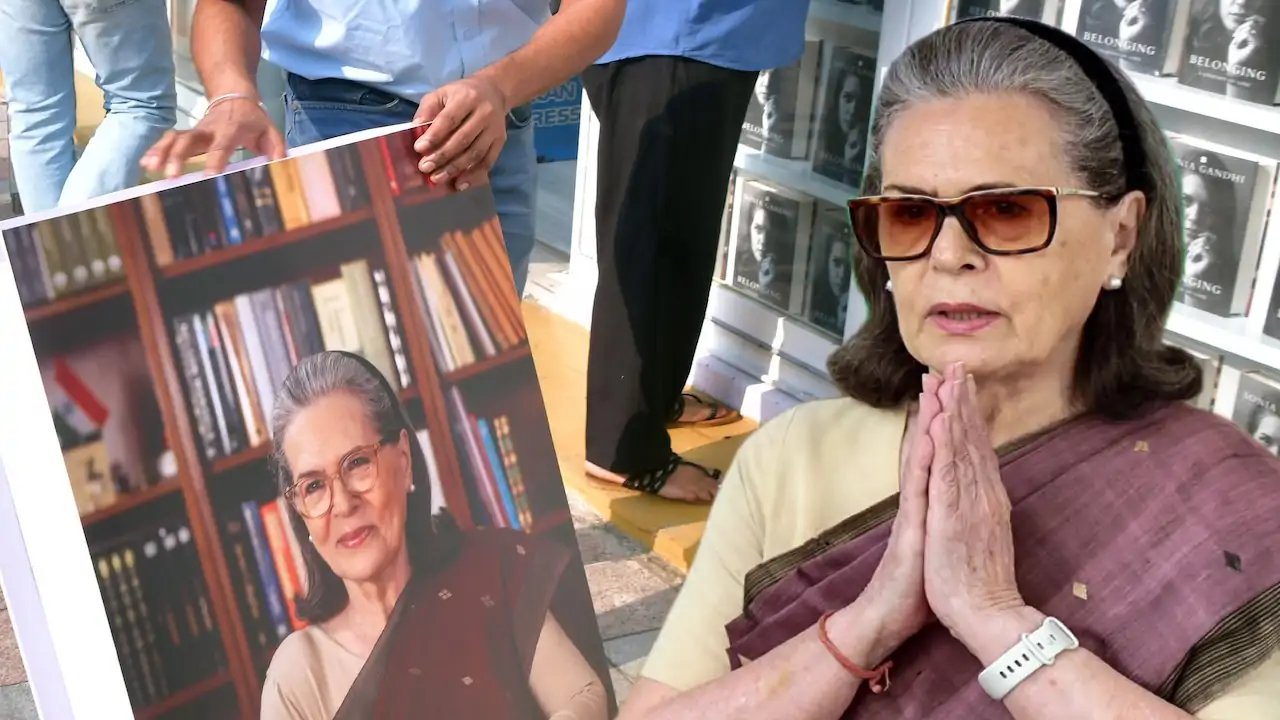
Sonia Gandhi watched the scene unfold in sheer disbelief. Fresh from Italy and barely initiated into the Byzantine corridors of New Delhi’s political establishment, the young bride realized very quickly that life at 1 Safdarjung Road was governed by sudden, lightning-crack atmospheric shifts. Those volatile domestic dynamics form the emotional backbone of Sonia Gandhi's 544-page memoir, Belonging: A Journey of Love, published Tuesday by HarperCollins India. The volume tracks her arc from post-war Italy to the assassination of Rajiv Gandhi and her eventual entry into public life. Yet the book's sharpest domestic sketches belong entirely to her mother-in-law's temper.
Indira did not merely reprimand subordinates. She froze them. A staffer who forgot an important appointment found himself ordered into a room corner while colleagues slunk past in mortified silence. Others were simply cut off—cast into administrative purgatory for days on end without a word. The fury occasionally spilled straight into dinner. After brutal shouting matches with opposition leaders in Parliament, Indira would march home, sit down, and shove her thali clean across the long dining table in a sudden flash of rage.
"I'd quake in my seat," Sonia writes, noting that the episodes instantly stirred childhood memories of her own father's temper. Rajiv and Sanjay Gandhi knew the drill. They sat stone-faced and waited out the storm. When Rajiv whispered reassurance—promising his bride that their mother would steady herself shortly—it did little to soothe her nerves. Indira almost always regretted the flare-ups, later offering subtle amends to those she had scorched. But betrayal brought an absolute freeze: anyone caught breaking her trust was cut loose forever.
The tempest usually receded over domestic tasks. To decompress, Indira summoned senior aide Amie Crishna to haul out heavy wooden boxes stuffed with family photographs, methodically organizing them by date. Other evenings were reserved for textiles. Indira sat sorting through mountains of handloom weaves, grouping sarees by provenance, tagging bundles for relatives, and cherishing heirloom pre-khadi pieces passed down from her mother alongside antique Kashmiri shawls.
Nothing, however, disarmed the iron matriarch faster than her grandchildren. As the years passed, the family turned the children into diplomatic scouts—sending them into Indira's private quarters to assess her mood before adults dared step inside. A single question from a grandchild dissolved the ice, softening an iron-willed prime minister whose wrath had routinely stopped Cabinet corridors in their tracks.