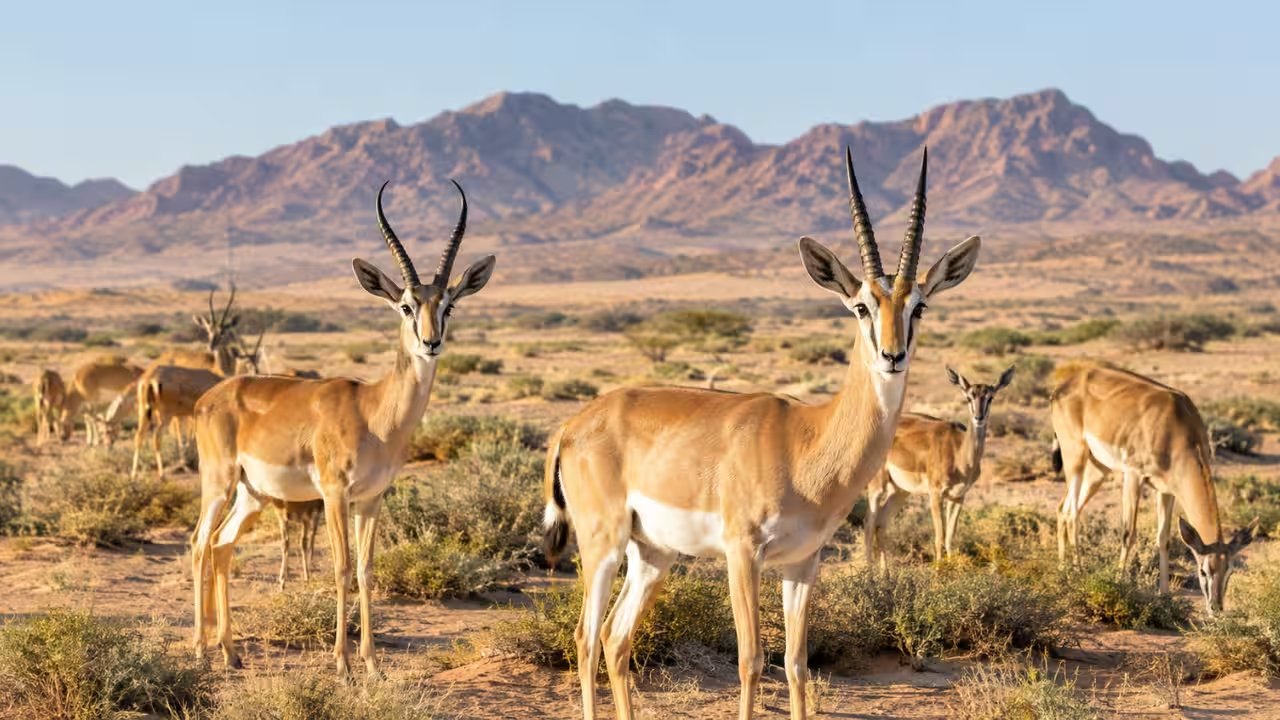
Two decades after releasing 313 captive-bred animals into the scorching sands of Uruq Bani Ma'arid, Saudi Arabia’s conservation gamble has paid off. The experiment, launched in the mid-to-late 1990s, targeted two globally threatened species: the Arabian gazelle (Gazella arabica) and the sand gazelle (Gazella marica). New data published in the Journal of Arid Environments confirms these herds are not just surviving; they are thriving and have fully integrated into the reserve’s ecology.
The success wasn't immediate or obvious. Early on, researchers relied on VHF radio-tracking to monitor where the animals went, a method that only gave a narrow slice of the puzzle. Fast forward to 2015–2016, and the team deployed a massive network of camera traps across the remote landscape. This shift in methodology revealed something radio collars couldn’t: the gazelles had spread far beyond their original release points. Arabian gazelles anchored themselves in the western reserve, while sand gazelles claimed the central zones.
But it wasn’t just about where they lived. It was about how they moved. The sand gazelles displayed a clear seasonal rhythm, pushing deeper into the interior during cooler months and retreating to the western margins when the heat spiked. Arabian gazelles, meanwhile, altered their daily routines to dodge the midday furnace. They shifted their activity to the night and the cooler hours of dawn and dusk. In the cooler seasons, they returned to daylight hours. This behavioral flexibility proves the captive-bred animals retained their wild instincts despite years in controlled environments.
The study challenges the notion that a reintroduced population needs to occupy every inch of a protected area to be considered a success. Instead, habitat use reflects the ecological conditions the species evolved to handle. For conservationists, this is a critical validation. It shows that multi-site releases over two to three years—rather than a single dump of animals—can establish resilient populations in vast, arid landscapes. The gazelles have essentially rewritten the map of the Ar Rub’ al-Khālī, proving that even in one of the harshest environments on Earth, targeted intervention can reverse the decline of threatened wildlife.
The next step for the research team is to continue monitoring these populations to track long-term genetic health and population growth rates. With both species now established, the focus shifts from survival to sustainability, ensuring these herds can withstand future climate pressures in the desert.