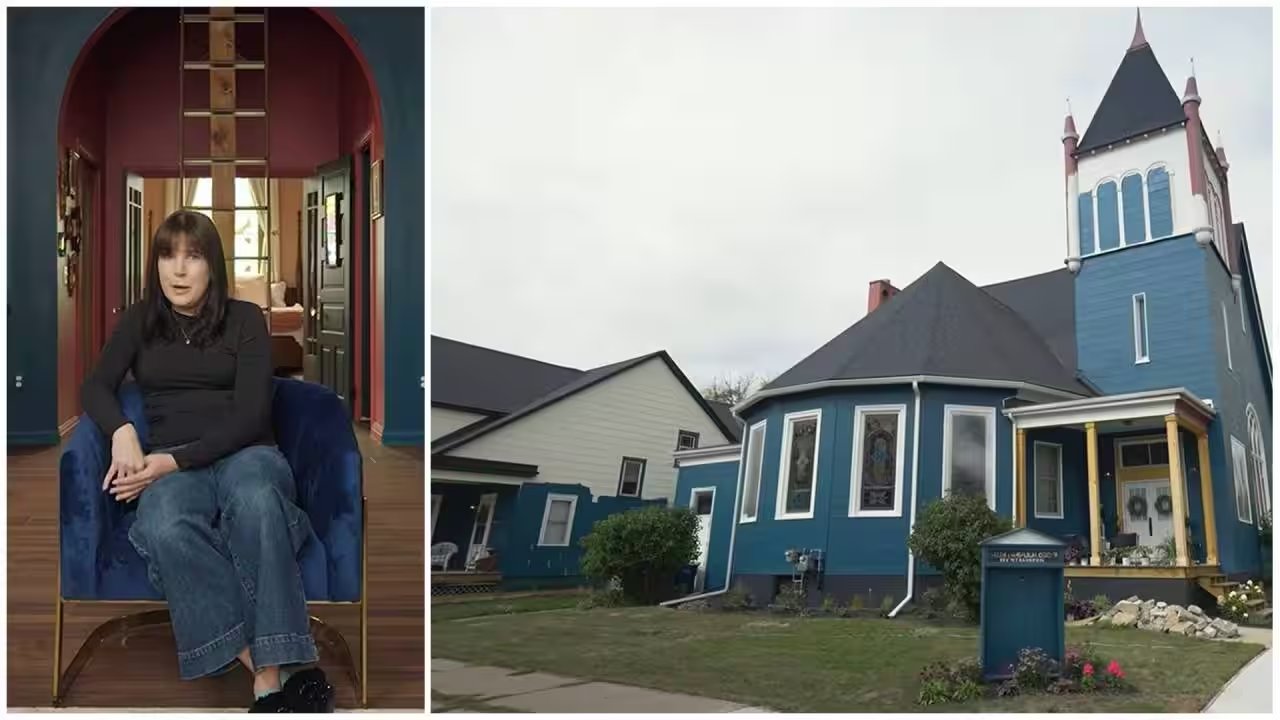
Whitney Anderson, a 45‑year‑old former New Yorker, landed on an abandoned parish church in Midland County, Michigan, in February 2024 after scouring Zillow for a “chouse” that would turn her dream into a brick‑and‑glass reality. She negotiated the church and its parsonage down from an original $125,000 to $45,000, paying cash after saving roughly $250,000 over three years.
The renovation kicked off in June 2024, beginning with a new roof and gutter system that addressed widespread water damage in both the nave and the parsonage. Anderson, who has a background in renovating condemned properties, described the work as a “house flip on steroids” and has taken on demolition, framing, drywalling, and painting herself.
Costs have already ballooned to $194,000, with the average market estimate for a full restoration hovering near $400,000. Anderson told CNBC Make It that the church’s 18‑inch sloping floor required custom 44‑foot I‑joists, while rewiring the historic structure added another layer of complexity.
Beyond the structural fixes, Anderson has preserved stained‑glass windows and repurposed pews into dining chairs, a library wall, and a kitchen island. The main living area remains open to showcase the glass, and a pellet stove keeps heating costs low.
The project gained a boost when Anderson appeared on Magnolia's Home Reimagined in March 2025, which supplied kitchen cabinets, appliances, and a design plan. Despite the help, she still faces uncertainty, admitting that the project is a 50/50 gamble that could either sustain her or bankrupt her.
Local contractor Mike DeLuca, who built the new roof, said the church’s age meant every beam had to be inspected. “We’re seeing a lot of hidden decay,” he remarked. Anderson’s next milestone is to finish the unfinished rotunda and primary bathroom before the year‑end deadline, a move that will determine whether the $400,000 estimate is realistic.
The project’s outcome will have ripple effects for the Midland community, where the church has sat vacant for decades. Residents are watching closely to see if the conversion could serve as a model for repurposing historic buildings in the region.