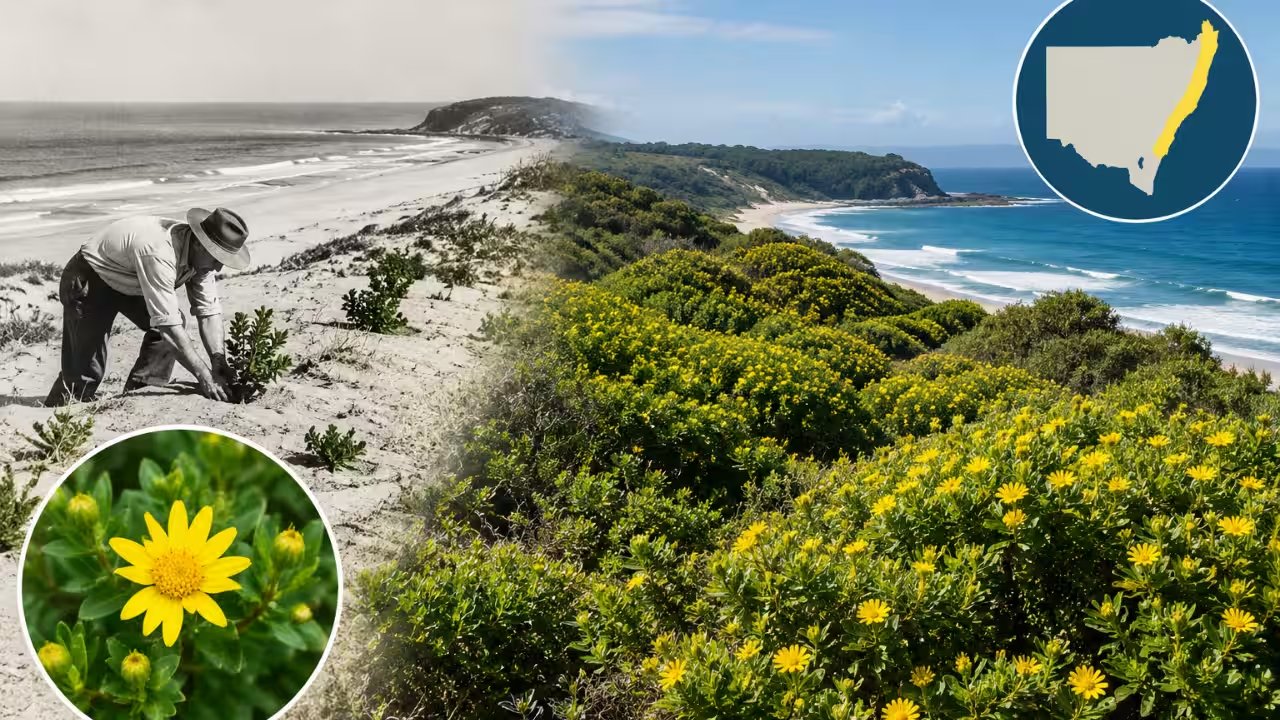
NSW Environment Department has declared that the South African bitou bush — introduced deliberately between 1946 and 1968 to hold sand dunes in place — now blankets 46% of the state’s coastline, a figure that dwarfs earlier estimates of 90% in 1999.
The shrub first arrived in Australian waters as ballast on ships, but officials in the 1940s saw an opportunity: fast growth, deep roots, and an uncanny ability to cling to shifting sands turned the plant into a tool for dune restoration. “We planted it where dunes were most vulnerable,” said Environment Minister Sarah Hughes in a 2023 briefing.
Once established, bitou bush spread like wildfire, infiltrating heathlands, grasslands, and even headland woodlands. It can push inland up to 10 kilometres, forming dense thickets that smother native seedlings and alter soil composition. Researchers at the University of New South Wales report that the shrub's allelopathic chemicals inhibit the germination of many local species.
The ecological toll is stark: 157 native plant species, three plant populations and 24 ecological communities are now at risk, while 24 native animal species face potential decline. Dr. Anjali Rao of the NSW Scientific Committee warned that “the invasion is a key threatening process that could irreversibly alter coastal biodiversity.”
In response, the department has rolled out a Threat Abatement Plan that earmarks 169 priority sites for removal, coupled with containment zones north of Cape Byron and south of Point Perpendicular under the Biosecurity Act 2015. Local community groups, including the Byron Bay Coastal Alliance, have joined the effort, using manual removal and targeted herbicide applications. A 45‑year‑old fisherman from Ballina, who watched his nets once lined with native grasses, said the new plan gives hope that his catch will return.
The next phase hinges on an intensified eradication campaign scheduled for the next five years. The government has secured additional funding, and work crews will begin clearing the most invasive patches in 2025, with a full rollout planned by 2030. The measure aims to restore native vegetation and protect the coastal ecosystems that many communities, from Ballina to Tweed Heads, depend on.