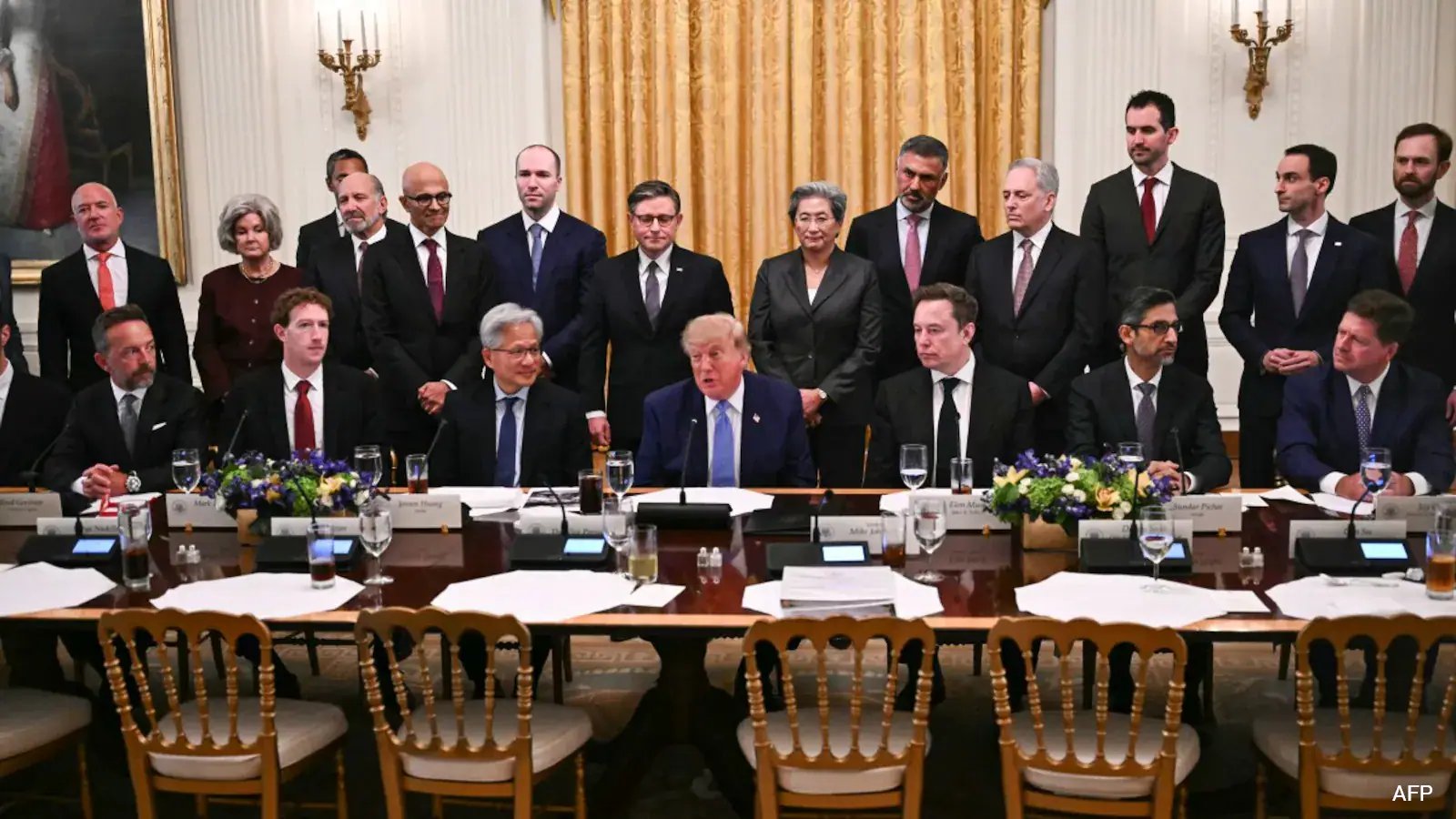
On Tuesday, President Donald Trump unveiled the White House Accord on Super Intelligence at a White House briefing. Six major AI firms—Meta, OpenAI, Anthropic, xAI, Google, and Nvidia—signed the document, committing to safety checks and external audits.
The pact traces its origins to a conversation between Meta’s Mark Zuckerberg and House Speaker Mike Johnson at a state dinner hosted for Chinese President Xi Jinping last week. Johnson, who chairs the House Oversight Committee, and Zuckerberg raised concerns about unregulated AI development.
Following the dinner, Zuckerberg met with Nvidia CEO Jensen Huang to draft a set of principles. Huang then enlisted other industry leaders, and the proposal was circulated among executives before the White House session.
Trump explained that the government would adopt the term "Super Intelligence" for all AI‑related communications, arguing that "Artificial" misrepresents the technology's nature.
The accord calls for rigorous safety protocols and allows independent audit groups, but it omits detailed enforcement mechanisms. Analysts say the agreement could pave the way for federal regulation if the agencies find the industry’s self‑regulation insufficient.
White House officials plan to brief congressional leaders next week on how the pact will be monitored and what legal frameworks might be needed.