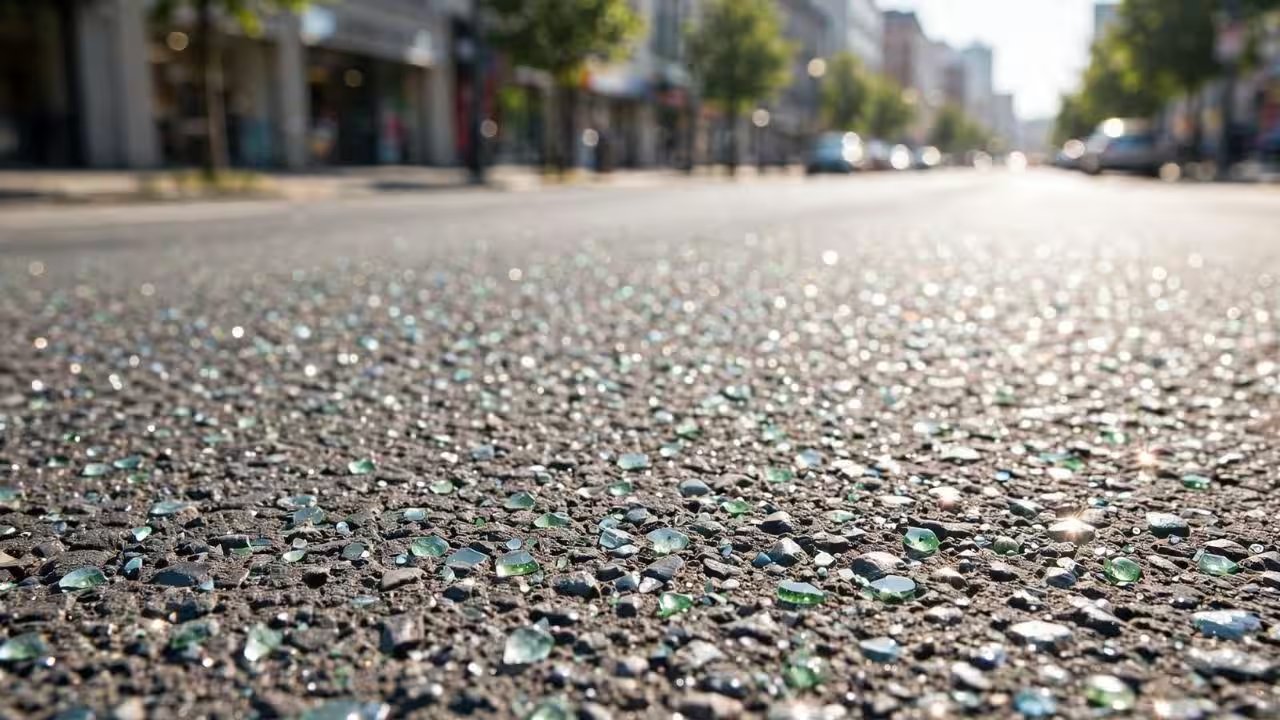
The new surface, a hot‑mix asphalt blend containing 12% fine‑crushed glass, was laid over a 0.8‑km stretch of North‑East Avenue and City Hall Boulevard.
Earlier state‑wide trials in the 1970s used up to 25% glass and suffered raveling; the current mix caps glass at 15% for the wearing course and screens particles under 4.75 mm, a method endorsed by the FHWA. The mix also reduces maintenance costs, with a projected 12% savings over conventional asphalt, according to the city's capital improvement plan.
James O'Connor, the department’s chief engineer, said the glass improves skid resistance and reduces heat absorption, citing lab data that shows a 3.5% increase in longitudinal strength. The engineer also highlighted that the glass aggregate’s lower thermal conductivity helps retain heat, keeping the surface warmer in winter.
Local resident Maya Singh, who lives across the street, says the new road glints in the evening and has cut her commute time by 2 minutes. She added that the sparkle has become a local attraction, drawing tourists to the area.
City officials announced a pilot program to apply the glass mix to 30 additional streets by March 2027, pending a 12‑month performance review that will be presented to the City Council. Council members will vote on the expansion proposal next month.