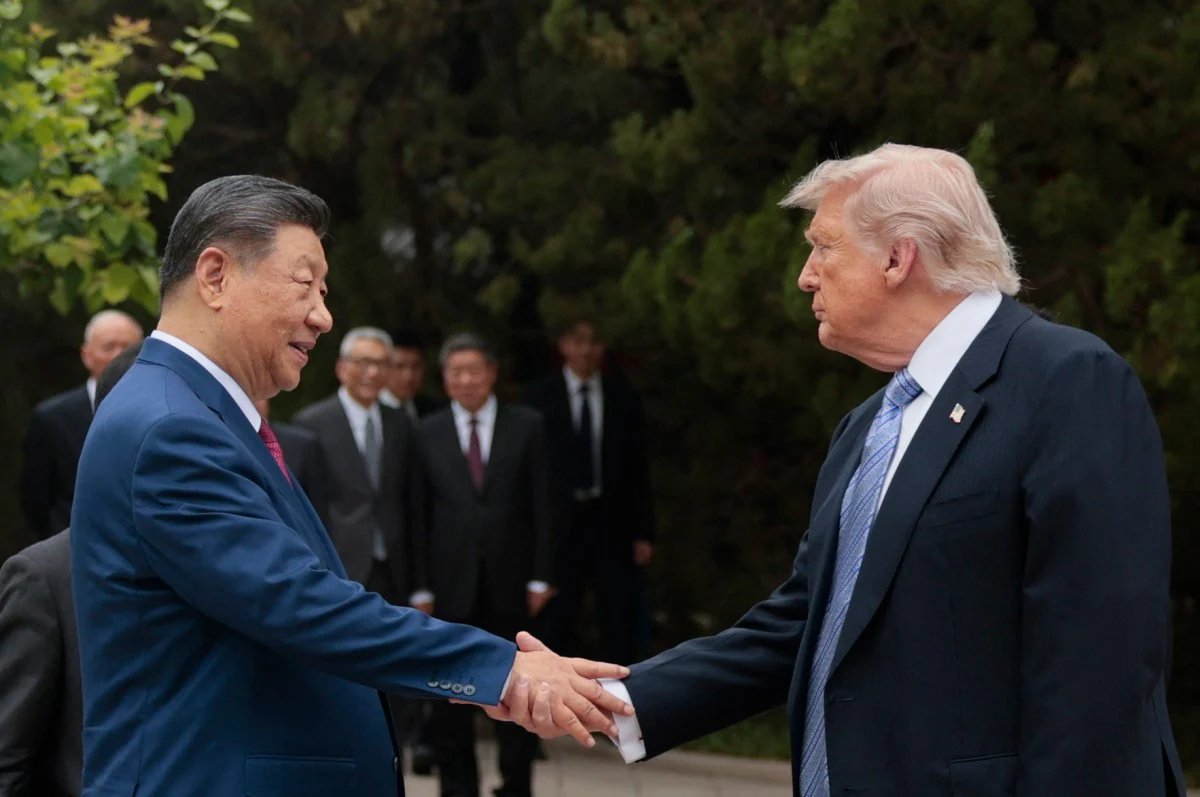
Treasury Secretary Scott Bessent sits across from Vice Premier He Lifeng this weekend in Washington. The goal is clear: lay the diplomatic groundwork for the summit between Donald Trump and Xi Jinping next week. The agenda is heavy. Artificial intelligence, once a tech industry talking point, is now the central axis of US-China friction.
The dispute centers on three distinct flashpoints. First, US authorities accuse six Chinese firms of 'distilling' American AI models—essentially using the outputs of expensive frontier tools to train smaller, cheaper copies. In September, law enforcement officials stated this was done 'likely with Chinese government awareness.' Beijing's embassy in Washington dismissed the claim as 'baseless.' Second, the chip war persists. Washington has banned advanced chip exports to Beijing since 2022, though Trump recently authorized the sale of Nvidia’s H200 chips. That move drew sharp criticism from China hawks in the capital who argue the decision hands China a significant technological advantage. Third, there is the security dimension. US and Chinese experts are drafting 'red lines' to prevent an accidental AI-driven military escalation. The fear: an autonomous system triggering a cyberattack that leaves a nuclear-armed rival with minutes to respond.
The ideological gap is vast. Trump, when pressed on AI regulation on Monday, rejected the need for federal oversight. He called calls for regulation a 'hoax' and insisted the US only needs a 'strong president,' which the country has 'in spades.' China, conversely, maintains a strict regulatory framework requiring AI-generated content to be clearly labeled and governing data usage for training.
The stakes are defined by the shrinking gap. In 2025, former White House AI adviser David Sacks estimated China was three to six months behind the US. The Commerce Department recently pegged that gap at eight months for specific models. But the industry narrative is shifting. Clement Delangue, CEO of Hugging Face, told CNBC on August 3 that China is already winning in open-weight models and could dominate frontier development by the end of next year. 'I wouldn't be surprised if they start dominating at the frontier either by the end of this year or next year at the rate of progress,' he said.
The weekend Bessent-He Lifeng talks will determine the tone for the Trump-Xi summit. If a framework for chip access and AI military redlines isn't agreed upon, next week's meeting risks becoming a stalemate on the very technology that now dictates global economic and military power.