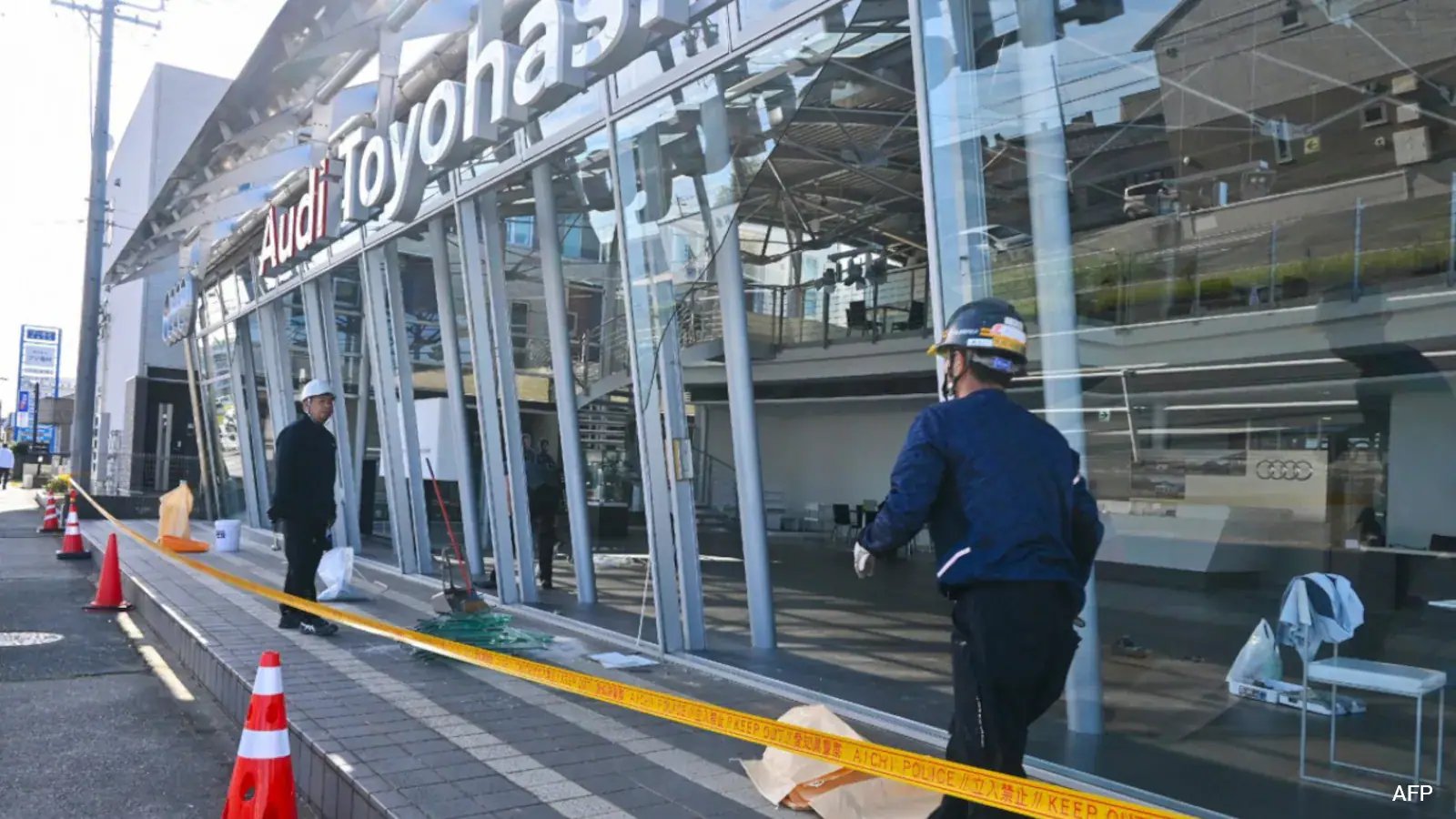
A violent magnitude 5.7 earthquake ripped through central Japan early Sunday, injuring at least 22 people as deep seismic shaking shattered storefronts, tossed merchandise across streets, and sent panicked residents racing out of swaying buildings.
Night turned into chaos in seconds. The tremor struck at 1:04 a.m., centered roughly 40 kilometers beneath Shizuoka Prefecture, according to the Japan Meteorological Agency. The U.S. Geological Survey measured the shock at magnitude 5.5. Though seismic energy dissipated before reaching Tokyo, the shaking battered neighboring Aichi Prefecture with severe surface acceleration, sending shockwaves across Hamamatsu, Gifu, Yamanashi Prefecture near Mount Fuji, and the historic cultural hubs of Kyoto and Nara.
Hospital wards filled quickly with walking wounded. Several residents suffered fractures and blunt trauma after tumbling down staircases in the dark while attempting to flee their homes. In commercial centers, ground motion hurled heavy inventory from shelving units and blew out large display windows, blanketing sidewalks in jagged glass. Footage from regional hubs showed bookstore interiors completely buried under mounds of fallen stock.
Railway operators immediately throttled Shinkansen bullet trains to reduced speeds throughout the strike zone to guard against buckled tracks or misaligned rail beds. Yet disaster managers directed their most urgent attention deep below the seabed. Agency seismologists closely evaluated the rupture zone to determine whether the jolt had destabilized the Nankai Trough—a notorious fault line where geologists warn an overdue megaquake could eventually trigger immense destruction. Official instrumentation detected no anomalous shifts along the fault plate.
"Please be on the lookout for mudslides, falling rocks and the possible effects from rainfall," said Ayataka Ebita, an official with the Japan Meteorological Agency, warning that rainfall could loosen hillsides already unsettled by the initial shock.
Rescue services and municipal disaster teams across Shizuoka and Aichi remain on high alert through Wednesday. The meteorological agency warned that powerful secondary shocks could rock the region over the next two to three days, instructing residents to keep emergency kits accessible and secure vulnerable domestic furniture against imminent aftershocks.