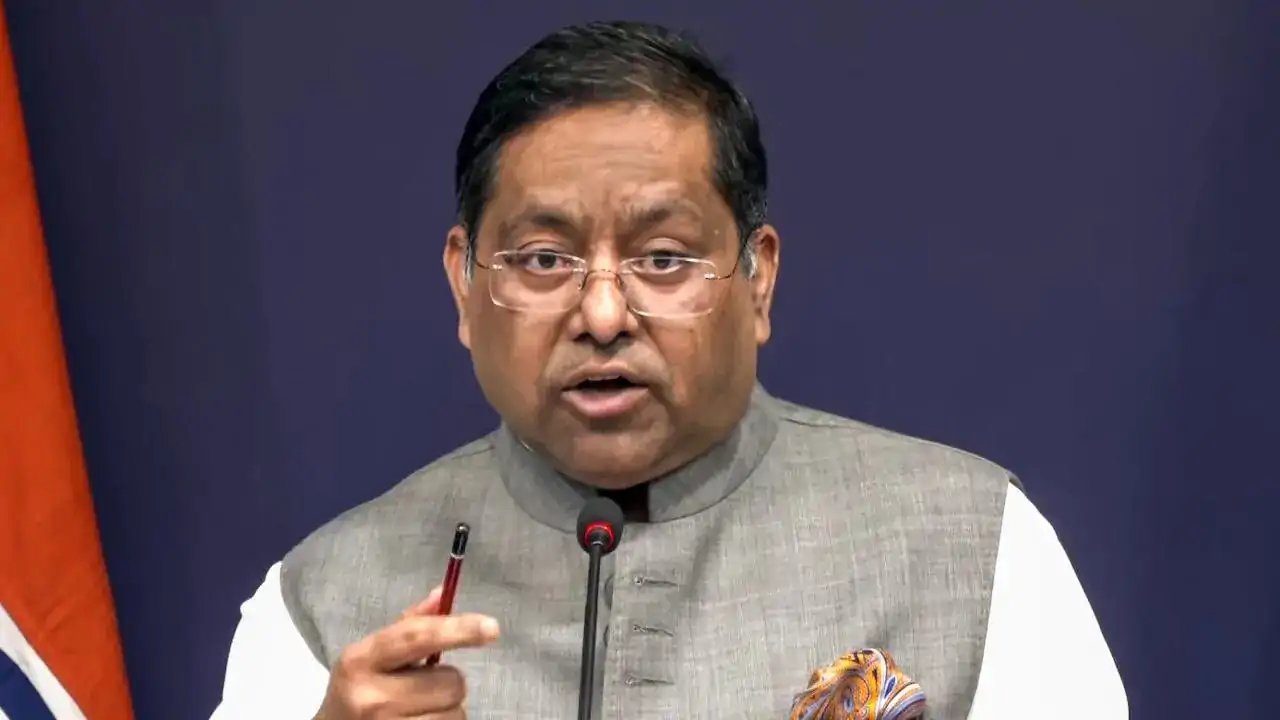
New Delhi rejected any notion of passivity on Friday, vowing to safeguard its national interests as Dhaka moves to audit 101 bilateral agreements. Ministry of External Affairs spokesperson Randhir Jaiswal, speaking at a biweekly media briefing, confirmed that while India has noted media reports, no official communication has yet arrived from the Bangladesh government. "Obviously, India will take all necessary actions to protect its interests," Jaiswal stated, a sharp departure from the diplomatic platitudes usually exchanged between the two neighbours.
The review was initiated by Bangladesh Nationalist Party (BNP) Chief Whip Nurul Islam Moni earlier this month. Moni specified that the government is examining pacts signed under the previous Awami League administration to assess their alignment with Bangladesh's current national interests. Crucially, this includes arrangements governing the use of Chattogram and Mongla ports, lifelines for India's northeastern states and trade connectivity. Dhaka has not announced a blanket cancellation, but the threat of renegotiation puts significant pressure on New Delhi's strategic goals in the region.
The stakes extend far beyond port fees. India has extended substantial Lines of Credit for rail, road, and port connectivity in Bangladesh, and any reversal of these agreements could stall projects that are already in progress. Energy security is another flashpoint; Bangladesh imports electricity from India, including power from the Adani Power plant in Godda, Jharkhand. If commercial arrangements are altered, the financial and logistical consequences will ripple through both economies.
This move signals a broader recalibration under Prime Minister Tarique Rahman, who has sought to redefine ties around "mutual interests" rather than historical alignment. State Minister for Foreign Affairs Humaiun Kobir confirmed the scope of the review, while acknowledging unresolved issues like border management, trade imbalances, and extradition. The friction is not new, but the scale of the review—101 documents—marks a significant shift in the diplomatic dynamic.
Water politics loom large in this context. The India-Bangladesh Ganges Water Sharing Treaty, signed in 1996, expires in December 2026. Jaiswal assured that the Joint Rivers Commission mechanism remains operational for technical discussions on the 54 shared rivers, including the long-stalled Teesta water-sharing issue. As both nations grapple with these overlapping crises, the next few months will determine whether the 101-pact review leads to a reset or a rupture in one of South Asia's most critical relationships.