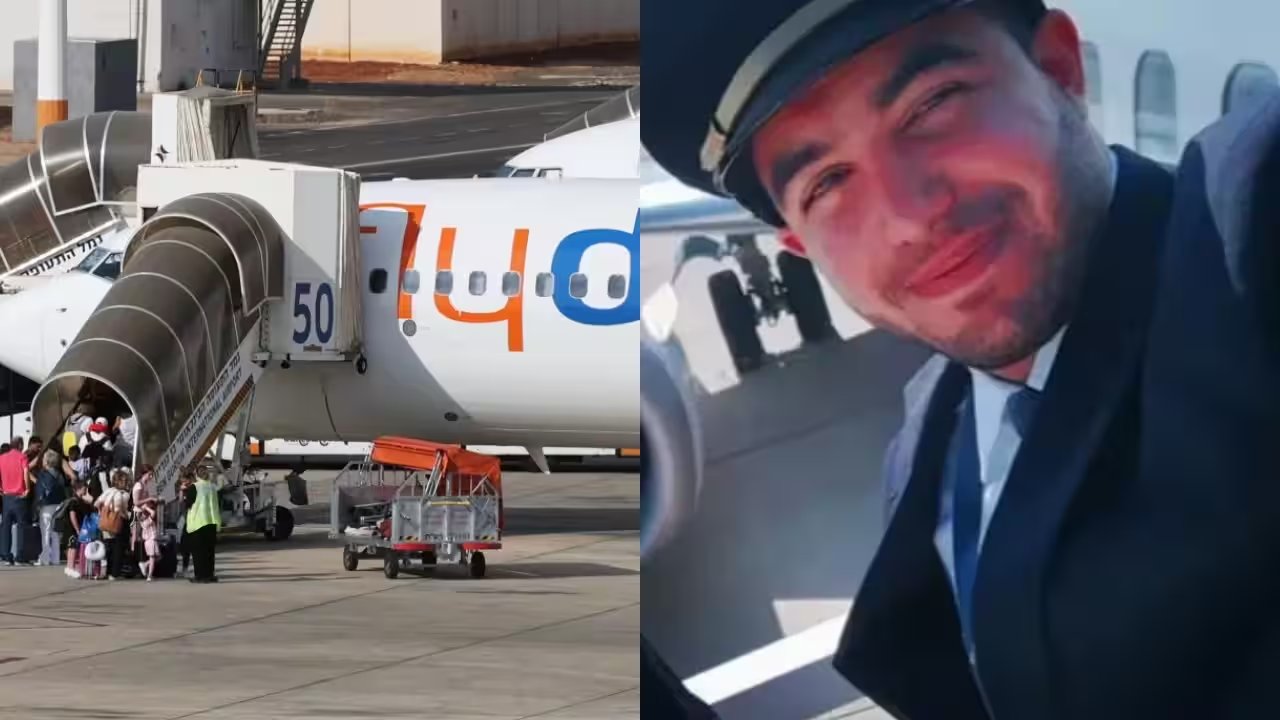
The attack began when Hamam al‑Hammami, an Omani co‑pilot, struck Indian captain Smit Machchhar with a crash axe and then wrested control of the Boeing 737 after the captain opened the cockpit door—an act described by Corriere della Sera and cited by Ynet News.
The crew’s quick response was to disconnect the autopilot and push the aircraft’s controls violently forward, sending the plane into a steep descent that lost about 16,000 feet in under a minute, according to the same investigation.
Emergency cabin lights flared on mid‑flight, a phenomenon that Boeing 737 captains noted could only happen if the main electrical supply failed and the aircraft switched to battery power—suggesting the co‑pilot may have also cut the fuel supply to the engines.
Air traffic controllers first heard squawk 7700, a general emergency code, then seven minutes later switched to 7500, indicating a suspected hijack. The aircraft was steered away from Jordanian airspace, turned back, and finally diverted to Tabuk, Saudi Arabia, for an emergency landing.
Passengers overpowered the co‑pilot, restoring control and stabilising the descent. An aviation instructor who recreated the event in a simulator described the experience as a "vertical roller coaster" for those aboard, and UAE authorities labelled the incident a terrorist attack.
The incident has exposed gaps in pre‑flight screening: the Omani co‑pilot had been banned from flying by his own country for extremist concerns, yet boarded a flydubai flight. Israeli Prime Minister Benjamin Netanyahu ordered a review of all foreign civil aviation security protocols, and the Shin Bet and the Transportation Ministry are cooperating to assess passenger list vetting. Investigators will now examine the fuel‑cut hypothesis, while Israel’s security agencies prepare a comprehensive audit of foreign flight screening.