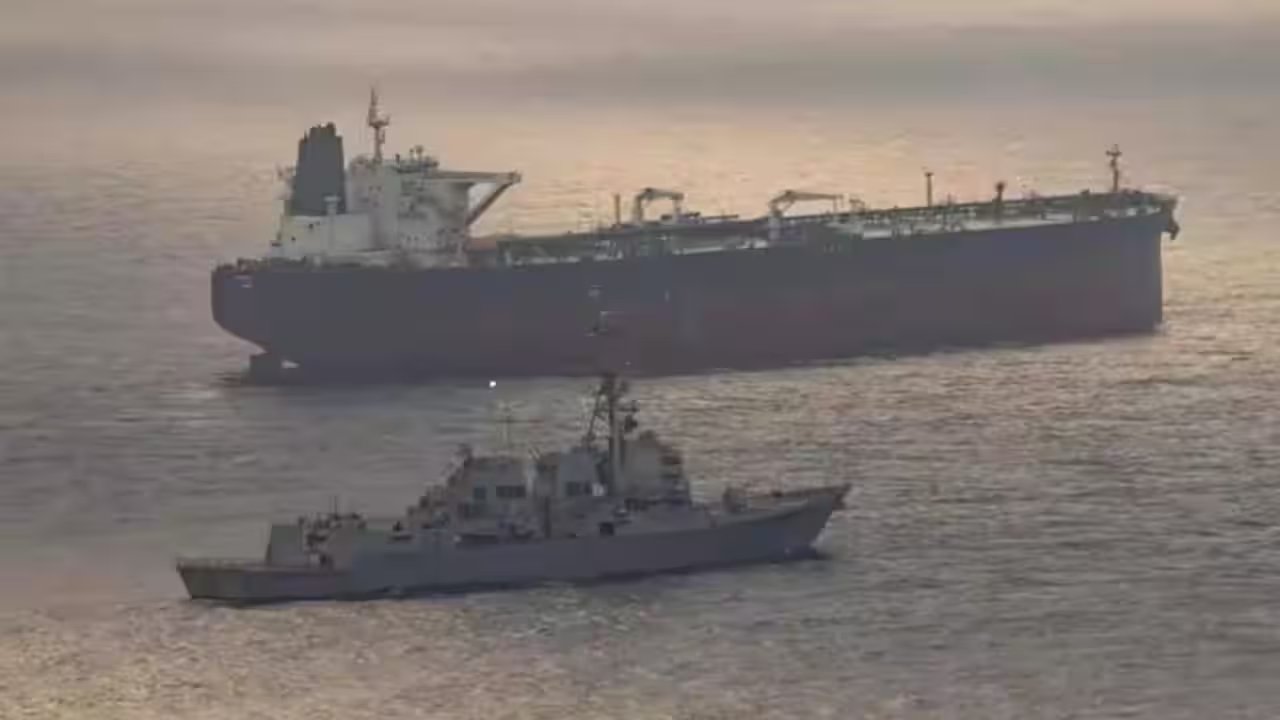
Tehran has quietly acquired port terminals and snapped up seven crude storage facilities across China, establishing a dedicated coastal infrastructure to defeat United States maritime sanctions.
Leaked correspondence penned by acting Iranian Oil Minister Hamid Bovard to former national security adviser Ali Shamkhani reveals an overseas supply apparatus reshaped under President Masoud Pezeshkian. The network allows Iranian-flagged and shadow-fleet tankers to dock directly at Chinese ports. No mid-sea transfers. No deceptive vessel-to-vessel lightering. The crude moves straight from ship manifold into Chinese pipelines feeding regional refineries.
Iranian authorities negotiated direct footholds across Shandong province and the Ningbo-Zhoushan free trade zone, according to Oil Ministry records. Tehran secured operational stakes in docks at Qingdao and Pant, positioning tankers alongside pipelines that supply independent "teapot" refiners. Iran also purchased seven massive onshore storage tanks. Four sit across Dalian, Huizhou, Dongying, and Weifang. Three others anchor the Ningbo-Zhoushan archipelago on Aoshan Island, Shulanghu Island, and the Zengyamuo oil zone.
Port access allows Tehran to maintain high-volume crude deliveries despite Western embargoes. China accounted for more than 80 percent of Iran's seaborne oil exports in 2025, taking in an average of 1.4 million barrels each day.
Many of those cargoes arrive aboard tankers managed by Hossein Shamkhani, the son of the former security council chief. The U.S. Treasury has already blacklisted 51 vessels tied to his maritime network. Yet the ships continue to offload crude at the leased facilities, completely bypassing open-water surveillance.
To settle payments, the two governments set up a barter conduit that routed up to $2.5 billion over the past year. Proceeds from crude sales do not touch conventional international banks. Instead, funds pass through a dedicated special-purpose vehicle that pays Chinese vendors directly for industrial machinery, vehicles, telecommunications hardware, and pharmaceuticals shipped back to Iran.
Yet the arrangement is fracturing from within.
Bovard's letter reveals sharp friction between Tehran and Beijing alongside fierce turf wars inside Iran's energy establishment. Chinese officials recently rejected an Iranian request to expand import quotas for domestic refineries, raised their purchases of Venezuelan crude, and demanded steeper discounts on Iranian grades.
Domestic tensions are equally acute. Bovard lashed out at Hossein Shamkhani, accusing him of using state loans to buy tankers that he subsequently diverted to carry Russian oil rather than Iranian crude. Bovard also alleged that Shamkhani received state oil on consignment without providing collateral and transformed the United Arab Emirates into a private commercial domain. With Beijing pressing for cheaper fuel and Western authorities tracking the 51 designated tankers, Iranian officials face a narrowing window to protect their Chinese beachhead before enforcement actions constrict throughput.