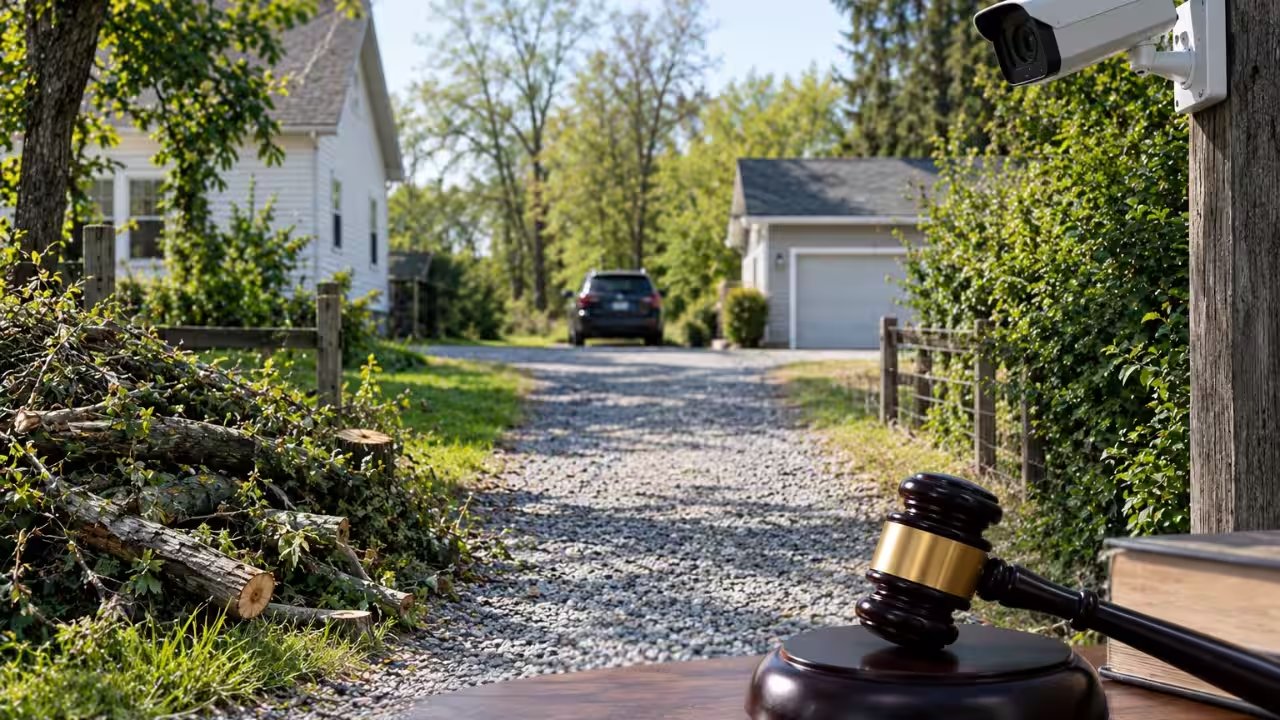
The dispute began when the Stahleys bought a neighboring property in 2020 that could only be accessed through the Rubys’ gravel driveway. A 2014 easement allowed the Stahleys to use the lane but required written consent for any maintenance, and prohibited tree removal without the Rubys’ approval.
Leonard Ruby filed suit in January 2024, alleging breach of easement, trespass, unlawful tree removal and intrusion upon seclusion. The district court ruled in favor of the Rubys, awarding $27,000: $20,000 for privacy, $6,000 in trebled nominal damages for tree removal, and $1,000 for breach of the easement.
In October 2026, the Court of Appeals reversed the $20,000 privacy award, citing that the evidence failed to show a highly offensive, intentional intrusion. The motion‑activated camera captured the driveway, parked vehicles, and a vague outline of the Rubys’ house, but did not focus on windows or interior spaces, so the court remanded the claim for further proceedings.
The appellate panel also corrected the tree‑removal damages, reducing them from $6,000 to $2,000 because Minnesota law requires trebling only when actual loss can be proven, not on nominal amounts. All other claims, including the Stahleys’ counterclaims for trespass, quiet title and emotional distress, were upheld as dismissed.
The families, who have lived on their respective properties since 2020, continue to argue over the camera’s purpose—security versus privacy. The case remains on the docket, with the next hearing set for early 2027, and it is expected to set a precedent for easement‑related surveillance disputes in the region.