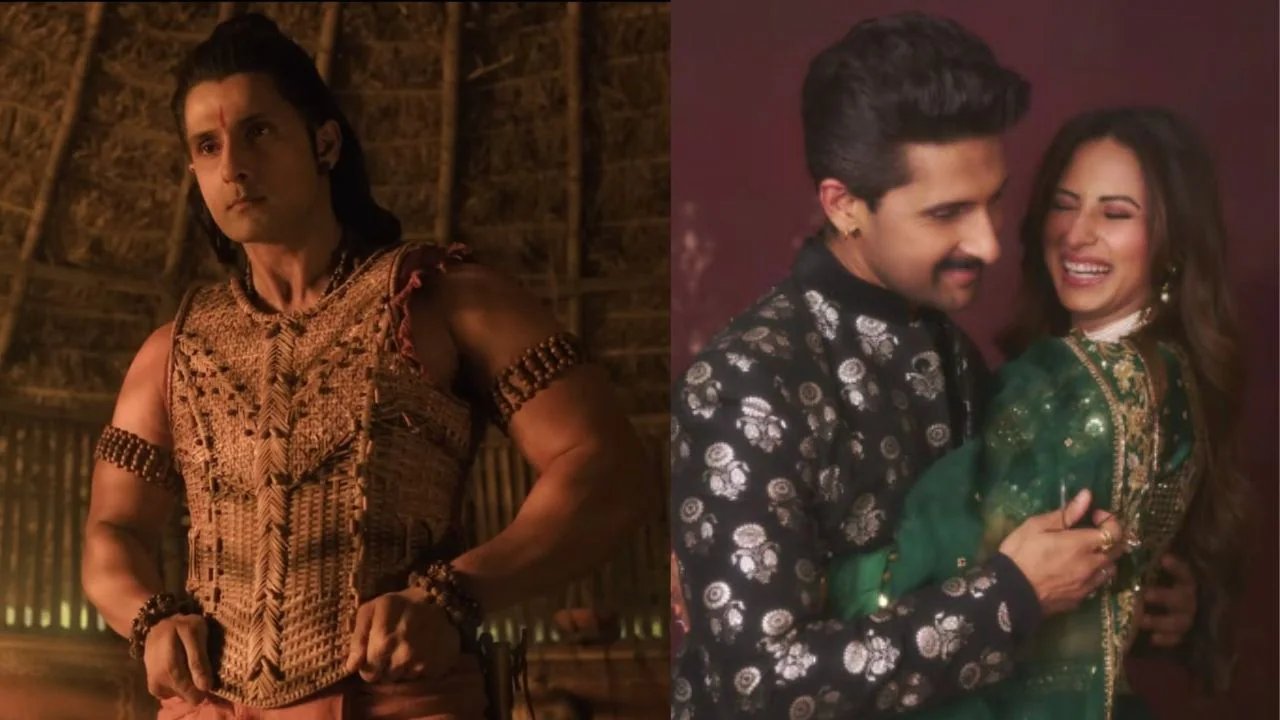
The big screen had been waiting two decades. After twenty-one years grinding through television sets, relentless auditions, and long stretches on the industry margins, Ravi Dubey has stepped into the cultural glare as Lakshman in director Nitesh Tiwari's sprawling adaptation of Ramayana.
Praise arrived swiftly. Yet the reaction that cut deepest arrived from inside his own living room.
Actor and producer Sargun Mehta—Dubey's wife and creative partner—penned an emotional reflection tracing the grueling climb that preceded his casting. Mehta drew a sharp, poignant parallel between the mythological prince's fourteen-year exile and their own shared marathon in Indian show business, writing: "Maine kahaa tha iss diwali hamara vanvaas poora hoga badi."
That singular plural pronoun stopped Dubey cold.
When I read Sargun's post, the word that stayed with me was 'hamara'. 'Hamara vanvaas.' We've watched each other quietly go through so much over the years. When a moment like this comes, she knows what it took to get here. I think seeing me on that screen was far more emotional for her than it was for me.
Dubey carried an unabashed cinematic ambition from his first day in the business. Seeing that ambition materialize under Tiwari's direction carried immense personal weight, but experiencing the breakthrough alongside Mehta altered the stakes entirely.
"Seeing myself on the big screen was a dream I'd carried from the day I came into this industry," Dubey noted. "And after playing Lakshman in Ramayana, in the greatest Indian film ever made, seeing this blessing in our lives through her eyes after everything we have been through together made it especially special."
Yet while the term vanvaas evokes barren hardship, Dubey pushed back against viewing their past solely through a lens of deprivation. The long wait was real. The early setbacks stung. But the climb itself contained hard-won joy.
"There was a long wait, there were rejections, and there were years when this particular dream felt very far away," he said. "And I remember how much joy there was in those years too. We celebrated our first days as actors on television. We celebrated becoming producers. Each of those moments felt like a complete victory when it happened."
Stepping into Lakshman's shoes demanded an unusual performance posture: carrying commanding physical presence while intentionally yielding the spotlight to Shri Ram.
Dubey refused to overcomplicate the balance.
I never consciously held back. I tried to stay close to what I understand to be Shri Lakshman's deepest instinct. He's happy to walk a step behind Shri Ram, to be his shadow, to be a shield around him. With no desire to himself seek spotlight or be at the forefront, I found this attribute of Shri Lakshman and his unconditional loyalty and duty to his brother so very graceful and noble.
For Dubey, the epic functions as a vast ensemble where every piece serves a higher narrative design, from Hanuman ji and Sugriv to Bali, Maa Sita, and Ravan.
That unifying intent, the actor noted, anchors the entire production helmed by Tiwari and producer Namit Malhotra as the team aims for a global theatrical footprint.
"From Namit sir and Nitesh sir onwards, the collective intent has been to take Shri Ram's name to every corner of the world," Dubey stated. "It's very heartening to see that become a reality as we speak."