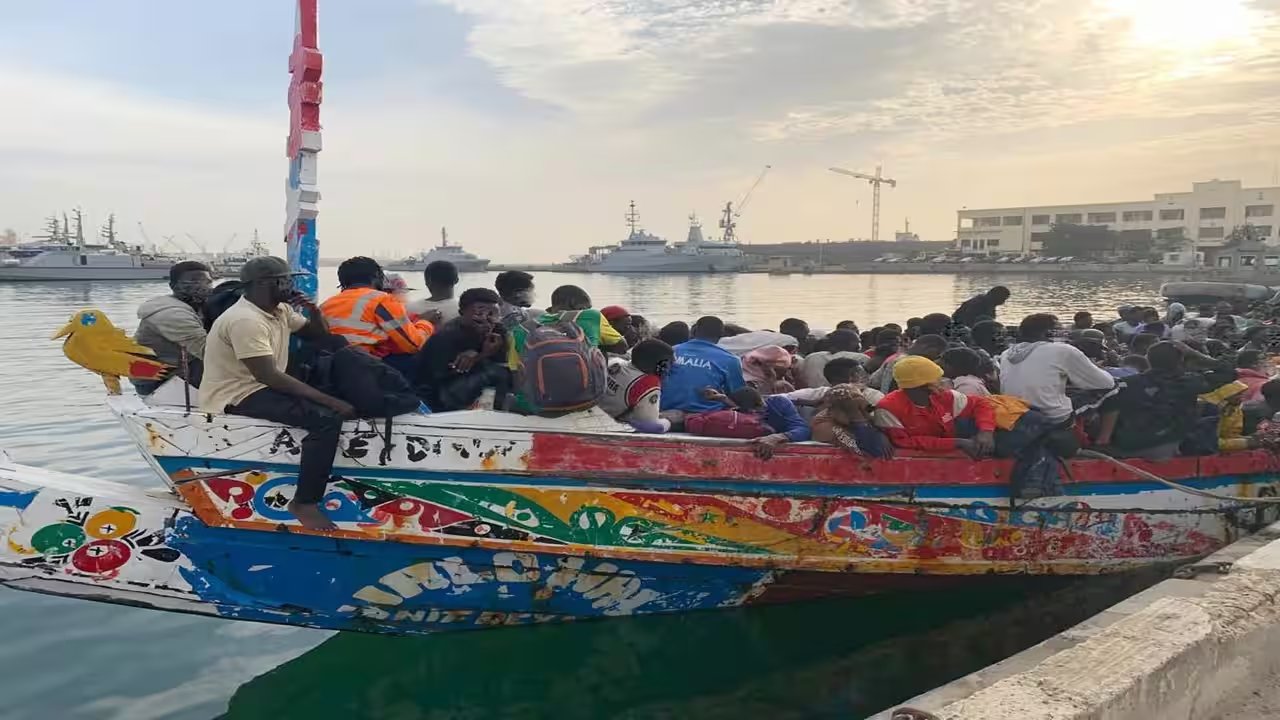
At least 39 people drowned off the coast of Senegal after a wooden boat carrying migrants capsized in Atlantic waters while bound for Spain’s Canary Islands, Senegal’s Interior Ministry announced. Emergency rescue teams pulled just one survivor from the churning surf between the capital city of Dakar and the northern port of Saint-Louis. The rest vanished beneath the waves.
Search crews continue to patrol the coastline. All bodies recovered so far belong to Senegalese nationals, confirmed Saliou Diouf, founder of the migrant aid association Boza Fii, though the identities and nationalities of dozens still missing remain unconfirmed. President Bassirou Diomaye Faye vowed an immediate operational offensive against the criminal syndicates organizing maritime trafficking networks.
"We will relentlessly continue the fight against those who organise these crossings and the work that gives our young people reasons to hope here," Faye stated, urging Senegalese youths not to gamble their lives on unseaworthy vessels.
The disaster lays bare the brutal toll of the Atlantic route, now the deadliest maritime corridor into southern Europe. Heightened border policing across the Mediterranean has diverted thousands of migrants toward West African departure beaches, forcing narrow wooden pirogues into punishing ocean currents. Spanish migrant rights group Walking Borders documented 635 deaths along the Atlantic route to the Canary Islands between January and May 2026 alone—a mortality rate averaging 21 deaths for every 100 migrants who successfully completed the voyage.
Law enforcement operations have intercepted several departures before disaster struck. Senegalese police stopped another boat on Friday, halting 142 migrants from embarking toward Spain. That manifest included 23 women, two infants, and two children, with passengers originating from Senegal, Gambia, Guinea-Bissau, Guinea, and Nigeria.
Yet arrivals continue to overwhelm Spanish island outposts. Authorities on the Canary Island of El Hierro declared a state of emergency on Saturday after more than 3,300 migrants reached its shores aboard roughly 30 boats since the beginning of November. The arrival count equals nearly one-third of the island’s resident population. Fernando Clavijo, president of the Canary Islands regional government, warned that reception infrastructure has collapsed under conditions he termed "absolutely unsustainable."
Back in Dakar, economic hardship continues to drive young workers into the hands of smugglers. Nearly one in four young people in Senegal was unemployed during the second quarter of 2026, according to the national statistics agency. The International Organization for Migration identified limited domestic jobs, intense family financial strain, and entrenched human-smuggling rings as primary drivers pushing youths to sea. The crisis poses an immediate governing test for President Faye, who swept into power in 2024 backed by a restless youth base demanding domestic employment.
Senegal's Interior Ministry stated that joint intelligence operations and maritime coastal sweeps with neighboring West African states will expand this week to dismantle clandestine boat-building yards and staging beaches.