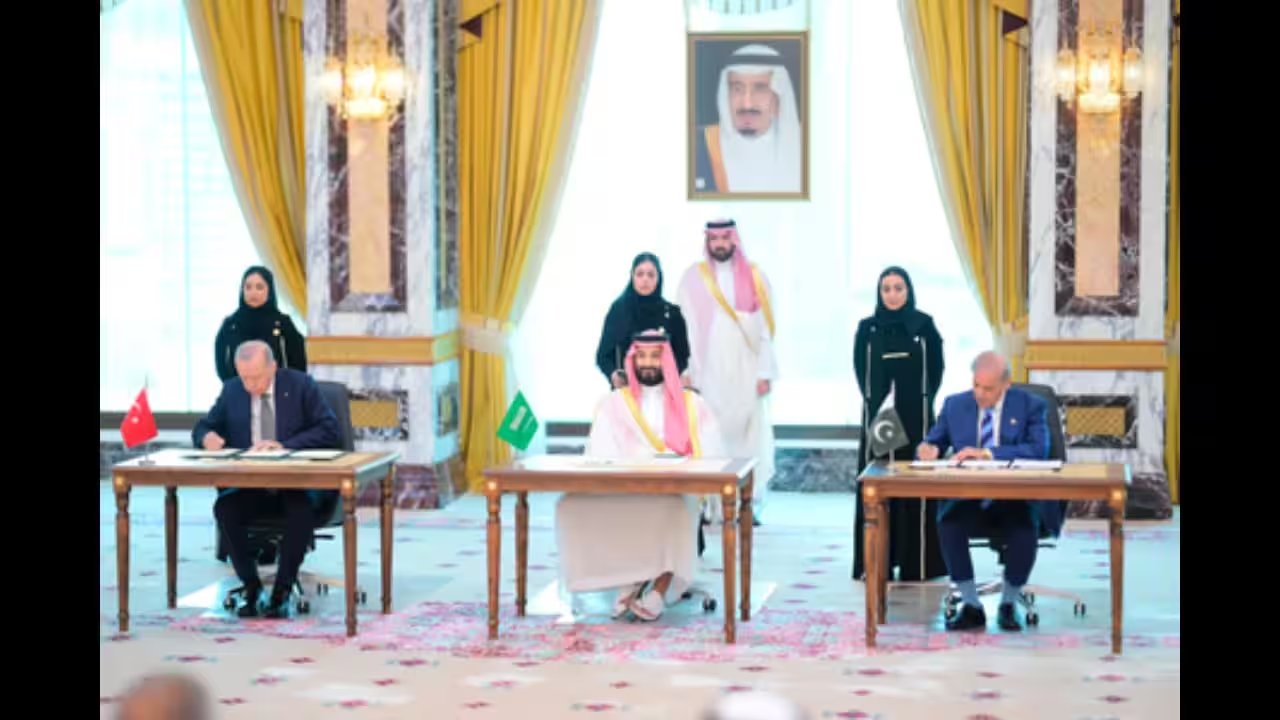
On Monday, 7 October 2026, Islamabad, Ankara and Riyadh signed a binding defence pact that authorises the rapid deployment of their forces to Saudi Arabia in response to Iran‑backed Houthi attacks—an escalation that has rattled the Gulf region.
The agreement, built on the August Makkah Defence Treaty, stipulates that an armed attack on any of the three signatories is a collective assault, obliging each nation to act in concert. The Strategic Political and Defence Committee (SPDC) of the Makkah Alliance ratified the provision after a week‑long series of military and political consultations.
Deputy Prime Minister Ishaq Dar and Defence Minister Khawaja Asif of Pakistan, alongside Field Marshal Asim Munir, flew to Riyadh to sign the documents, while Turkey’s Chief of Defence Staff announced that Turkish troops would be in a “supportive role” while Pakistan’s units would focus on reconnaissance. “Whatever assistance they require is being provided,” Asif told Geo News, stressing that Saudi forces were already engaged in frontline operations.
The pact came amid a wave of Houthi attacks that have struck Makkah, Madinah and several coastal cities, causing civilian casualties and crippling infrastructure. The statement explicitly condemned the assaults but did not disclose troop numbers or an exact deployment timeline, leaving the precise scale of the mobilisation uncertain.
In Jeddah, a local shopkeeper recalled a night of sirens as drones struck a market—an incident that underscored the urgency behind the alliance’s decision. “It’s terrifying to know that the next attack could be anywhere,” he said, holding a photo of a damaged building.
The SPDC also appointed retired Pakistani General Nauman Mahmood as its first secretary‑general for a three‑year term, signalling a new institutional layer in the alliance. The next phase will involve the rapid assembly of a joint task force, with a 48‑hour mobilisation window set by the treaty, and a scheduled joint exercise in early November to test the rapid‑deployment protocol.