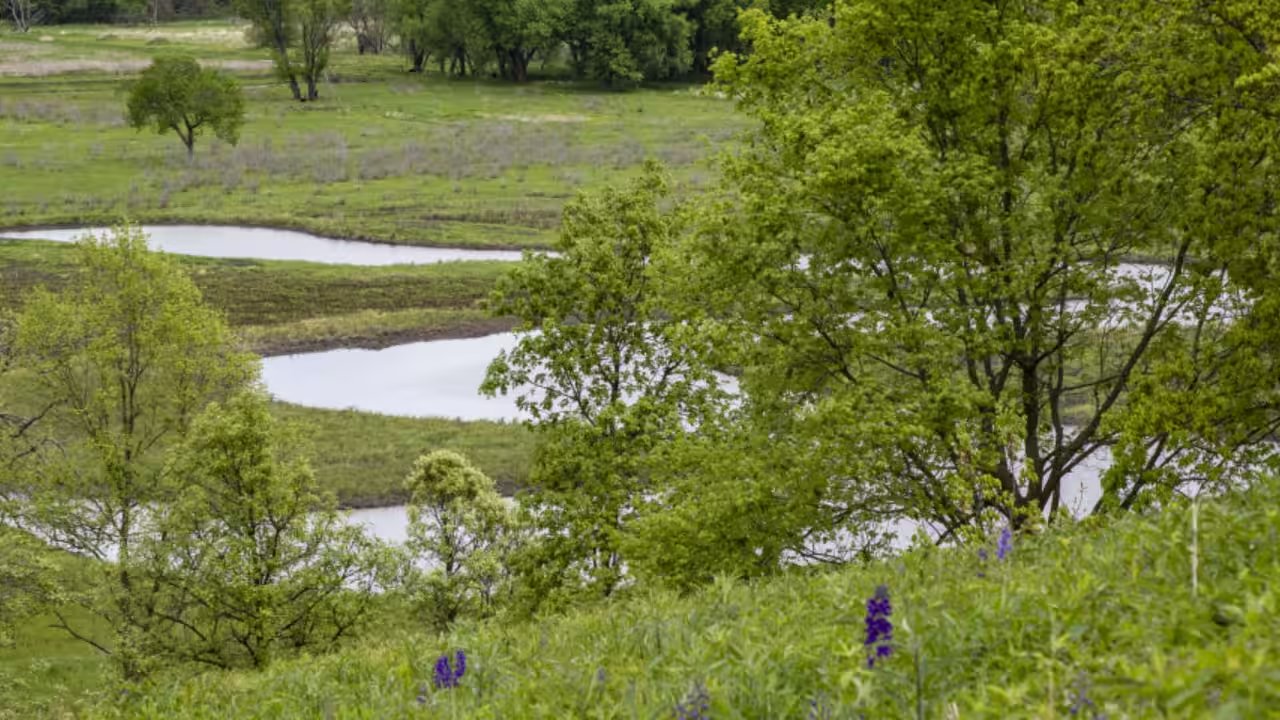
The Paules first surveyed the land in 2023 and found the hillsides choked with multiflora rose, prickly ash, and other invasive species; surviving bur oak trees hinted at a former oak savanna—hinting at deeper ecological value.
Drake University biology professor Tom Rosburg visited the site and identified remnants of a sedge meadow, a wet meadow, and a transitional habitat zone, confirming the property’s potential as a rare wetland ecosystem.
The Iowa NRCS Easement Team, led by civil engineer Nick Campbell, designed a 70‑acre meandering wetland restoration, funded 100% through stewardship payments under the Agricultural Conservation Easement Program, and incorporated native seeding and brush management.
Since the restoration, the Paules have seen sandhill cranes, red‑headed woodpeckers, and hundreds of blue‑winged teal lingering for weeks—indicating the habitats are attracting diverse bird species, though no formal census has been conducted.
Iowa once boasted 4–6 million acres of wetlands, but 95% have been drained; the Paules’ project demonstrates how private landowners can partner with public agencies to conserve dwindling ecosystems.
The couple now aims to extend conservation efforts across more than 300 acres, integrating wetland and oak savanna restoration to bolster local biodiversity and flood mitigation.