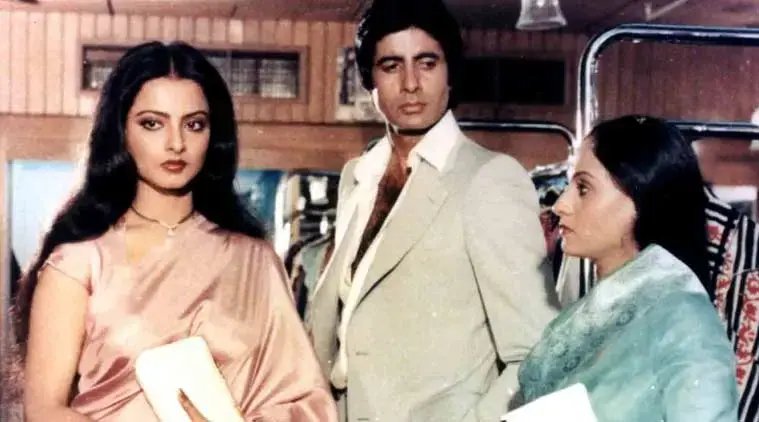
When Yash Chopra was scrambling to salvage Silsila, a single line from Jaya Bachchan turned the script on its head. She insisted on being present on set, even when her scenes were cut, a concession that bought Chopra the time to shuffle the cast.
The original line‑up read Smita Patil as Jaya’s role and Parveen Babi as Rekha’s. Parveen’s health crisis forced Chopra to ditch her, and Smita, too, was let go in a swift reshuffle. The void left an empty frame that needed a new face.
Jaya’s hesitation stemmed from the hot‑potato rumours linking Amitabh and Rekha, and from a personal sense of propriety. Sanjeev Kumar, who’d shared a sisterly bond with her on Gulzar’s Koshish, convinced her that the film could be a safe space. His influence tipped the scale.
The condition itself was a masterstroke: by remaining on set, Jaya could monitor the on‑screen chemistry and ensure the production stayed respectful. It also kept the crew honest, as her presence was a silent reminder that the trio’s dynamics were under scrutiny.
The result was a film that not only broke box‑office records but also became a case study in Bollywood’s backstage politics. The star‑packed cast, coupled with Jaya’s on‑set vigilance, turned Silsila into a cultural touchstone still referenced in casting debates today.
Fast forward to Yash Chopra’s 80th birthday, when he told Shah Rukh Khan how Amitabh’s acquiescence and Jaya’s condition had sealed the deal. The story remains a testament to the power of negotiation and the unpredictable turns that shape cinema history.