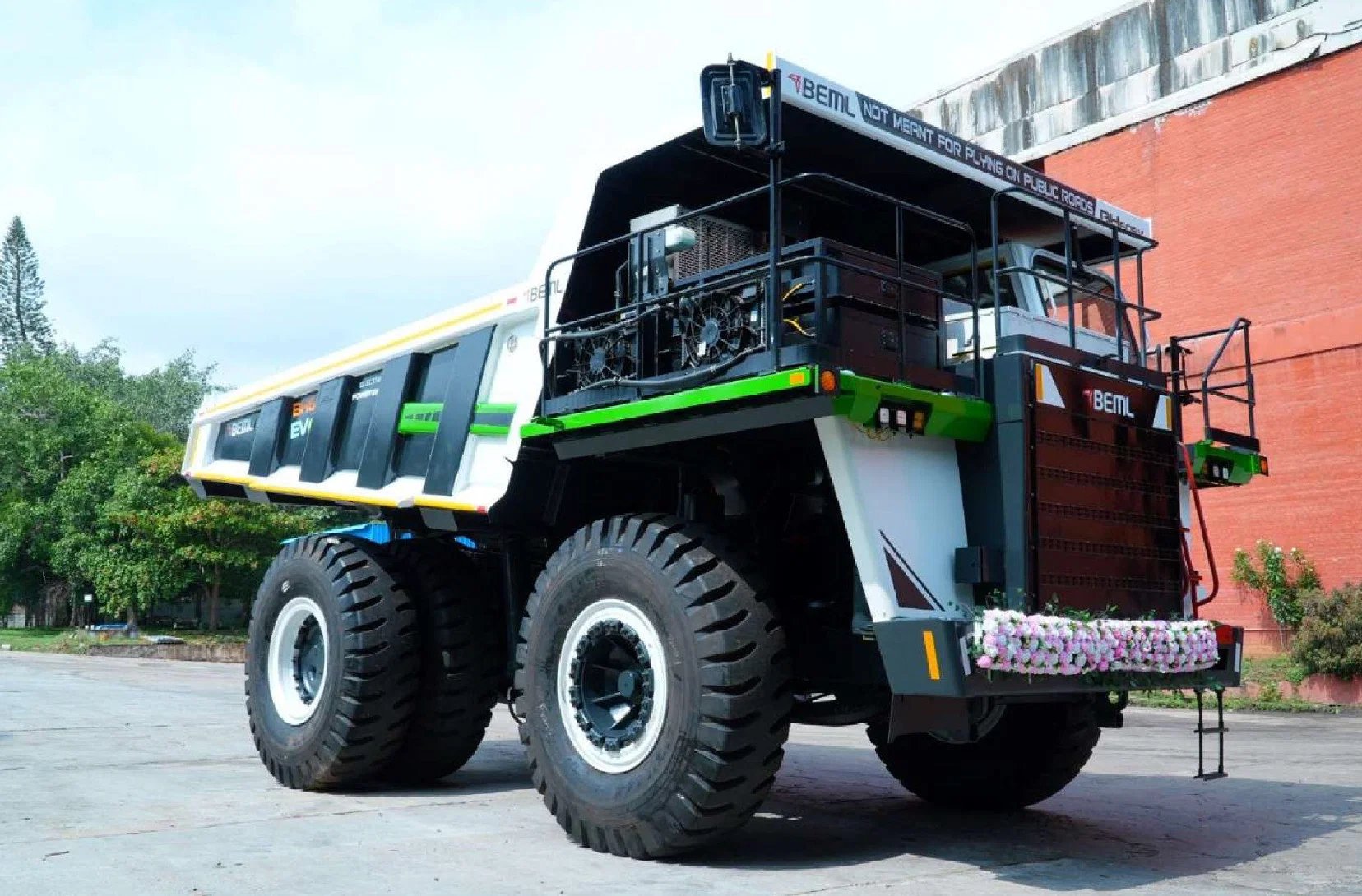
The mining and infrastructure sectors have long been the stubborn heart of diesel consumption, but BEML just cracked that shell open. On September 30, 2026, the company unveiled the BH60-EV at its Mysuru Complex — India’s first indigenous 60-ton electric dump truck. It’s not a small utility vehicle; this is a beast designed to haul 54,500kg of payload with a volumetric body capacity of 36.4 cubic metres. For project managers tired of diesel price spikes and maintenance headaches, this is the shift to watch.
Under the hood, the BH60-EV relies on a Permanent Magnet Synchronous Motor (PMSM) paired with a rugged gearbox and a massive 1,000kWh high-voltage lithium-ion battery pack. The engineering focus here is practical: instant torque for climbing gradients and high tractive effort for heavy loads. BEML claims the setup delivers 40-60% lower operating costs than conventional diesel equipment. That’s a significant chunk of savings for a fleet running 24/7. They also estimate a reduction of around 130 tonnes of CO₂ per vehicle annually, depending on how hard the truck works.
Safety and durability are baked into the design, not added as an afterthought. The truck features a Roll-Over Protective Structure (ROPS), emergency steering, and sealed oil-cooled disc brakes — standard fare for heavy machinery, but essential when you’re moving rock up a slope. BEML has also developed a site-specific charging station solution to integrate with existing electrical infrastructure, aiming to make fleet adoption smoother for operators who might be wary of charging logistics.
This isn’t BEML’s first electric foray. The 35-ton electric dump truck hit the market on April 10, 2026, and the BH60-EV expands that portfolio into the higher-capacity segment. CMD Shantanu Roy emphasized the indigenous engineering and battery technology, positioning the truck as a key part of the company’s push into electric mobility for heavy industry. With manufacturing facilities in Bengaluru, Kolar, Mysuru, and Palakkad, BEML is positioning itself to supply domestic mining and infrastructure projects without relying on imported heavy EV tech.
For buyers, the immediate question is availability and total cost of ownership over the truck’s lifespan. While no specific price tag was disclosed at the unveiling, the operational savings are the real selling point. With the 35-ton model already in the field, the 60-ton variant signals a serious commitment to electrifying the heaviest end of the construction spectrum. Expect early adopters in major mining belts to be the first to test these numbers in real-world conditions.