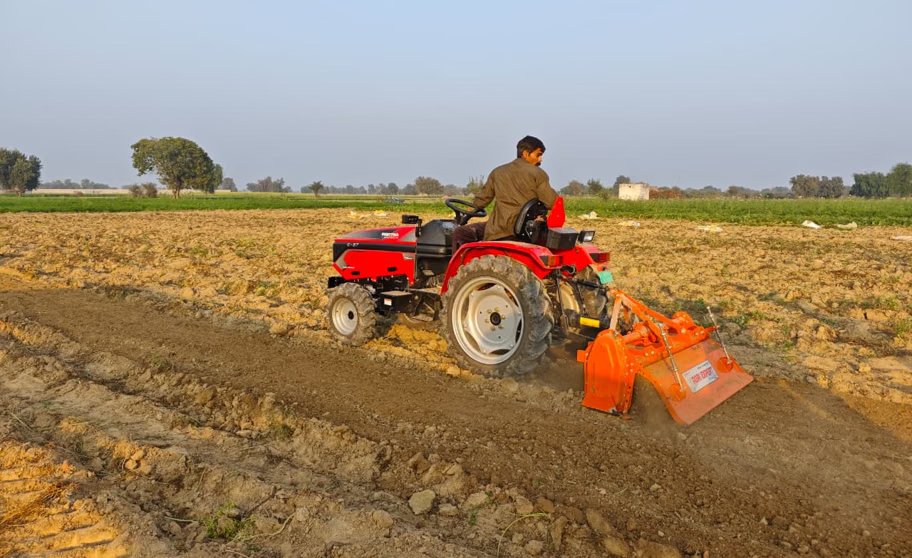
The Montra Electric E‑27 tractor has just earned India’s first battery‑electric farm‑machine certification, and its owners can now tap a central subsidy of up to ₹5.2 lakh—making the upfront cost more palatable than any diesel counterpart.
The subsidy comes under the Ministry of Agriculture’s SMAM guidelines, which bundle electric tractors with conventional ICE units in the same procurement windows. It scales from ₹1.6 lakh for low‑power units to ₹5.2 lakh for the 40‑plus‑horsepower class, and special categories—SC, ST, women, and small farmers—get a bump to ₹6.5 lakh.
But a subsidy alone isn’t enough; the model must first clear the central Farm Machinery Training & Testing Institute (FMTTI) hurdle. Montra’s E‑27 logged over 50,000 field‑hour pilots across 200 units, giving the CFMTTI Budni a solid data set to craft India’s first commercial safety and standards for e‑tractors.
States are riding the wave too. Haryana offers up to ₹5 lakh per tractor plus tax waivers, while Maharashtra caps assistance at 15% of ex‑factory cost, yet backs high‑power DC hubs with Viability Gap Funding up to ₹10 lakh. Other states are integrating quotas and digital land registries to keep the subsidy out of the secondary market.
From an operating point of view, the permanent‑magnet synchronous motor delivers flat torque from zero RPM, shaving diesel‑engine losses and cutting maintenance costs by about 70‑80%. Battery packs—primarily LFP—give 4‑5 hours of heavy‑draft runtime per charge, and the rugged BMS can survive the heat and voltage swings of rural grids.
The Montra E‑27 hits dealers in Delhi and Mumbai by September, with a phased rollout to Tier‑2 cities next quarter. Buyers should keep an eye on the 5‑to‑7‑year lock‑in period that keeps subsidised units in local clusters, and on emerging rivals like TDI‑e35, which promises 55 HP and a projected launch in early 2027.