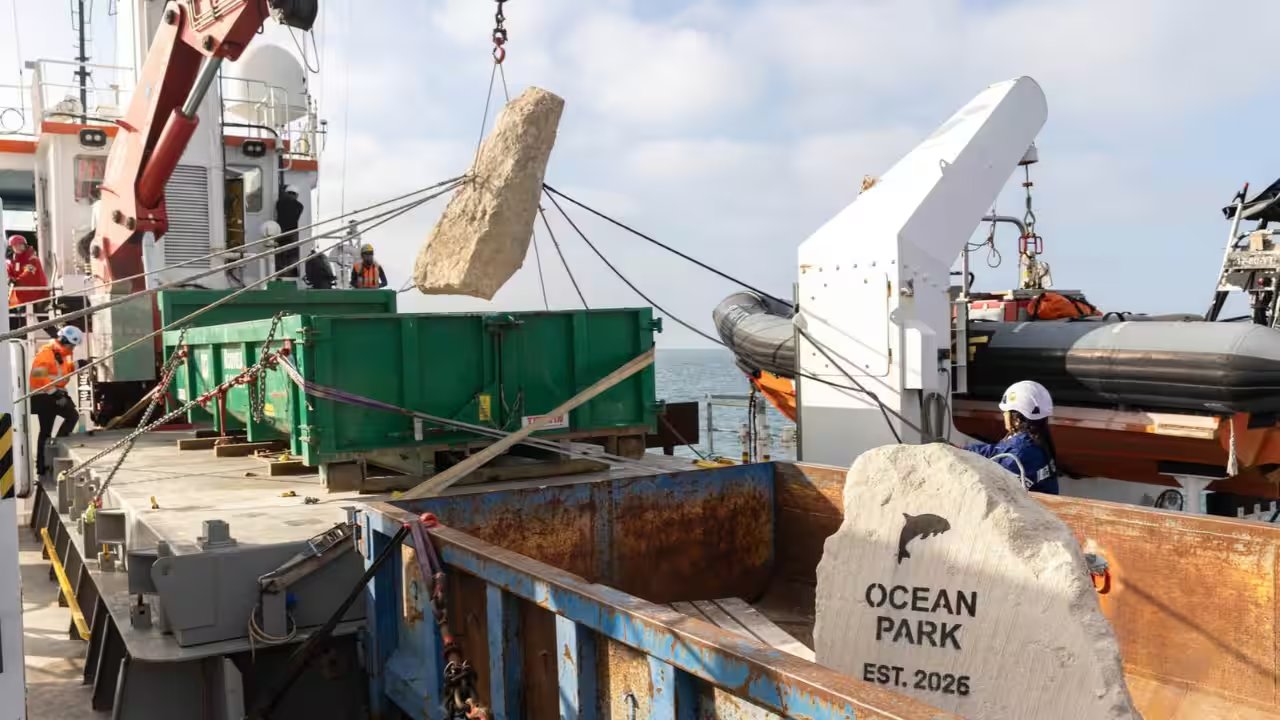
Greenpeace activists aboard the vessel Arctic Sunrise dropped nine massive limestone boulders, each weighing up to two tonnes, onto the seabed of the Southern North Sea Marine Protected Area on October 31. Located 50 kilometers off England’s eastern coast, the strategically placed rocks created a physical barrier that the organization claims has shut down 116 square kilometers of water to bottom trawling. The group announced the operation on November 2, framing the move as an urgent intervention to halt the destruction of sensitive underwater habitats.
The target is specific and severe. Bottom trawling, which involves dragging weighted nets across the seabed, has been recorded for at least 37,200 hours in this protected zone during 2025. That is more than at any other UK offshore Marine Protected Area. The activity threatens the survival of harbour porpoises, which make up approximately 17.5% of the UK North Sea management-unit population. These small marine mammals face entanglement, noise pollution, and the depletion of their prey due to the relentless fishing operations.
Will McCallum, Greenpeace UK’s co-executive director, stated that the organization had warned the government in June that it would take direct action if sufficient measures were not introduced. “Hulking great ships prowl our oceans day after day, stripping them of fish and killing precious wildlife like dolphins, sharks and sea birds,” McCallum said. “With our ship and a movement behind us, we're doing what the government isn't: Protecting our seas.” The campaign has drawn support from British actors Simon Pegg and Benedict Cumberbatch, who signed the boulders before their deployment.
The legality of the operation is a sticking point. Greenpeace acknowledged it did not obtain a marine licence before deploying the boulders, citing it as a last resort after years of failed persuasion. Under Sections 65 and 66 of the UK's Marine and Coastal Access Act 2009, depositing objects on the seabed is a licensable activity. The Marine Management Organisation (MMO) published the coordinates on November 2 to help fishing vessels navigate safely, noting it had not independently verified all positions. The MMO has not announced a specific enforcement outcome, but the lack of a license means the operation is not officially authorized.
Greenpeace plans to patrol the area using the Arctic Sunrise in the coming days to discourage industrial fishing vessels from operating around the boulder placements. The organization is calling on ministers to introduce stronger restrictions on bottom trawling across protected waters, warning that the physical barrier is just the beginning if legislative inaction continues.