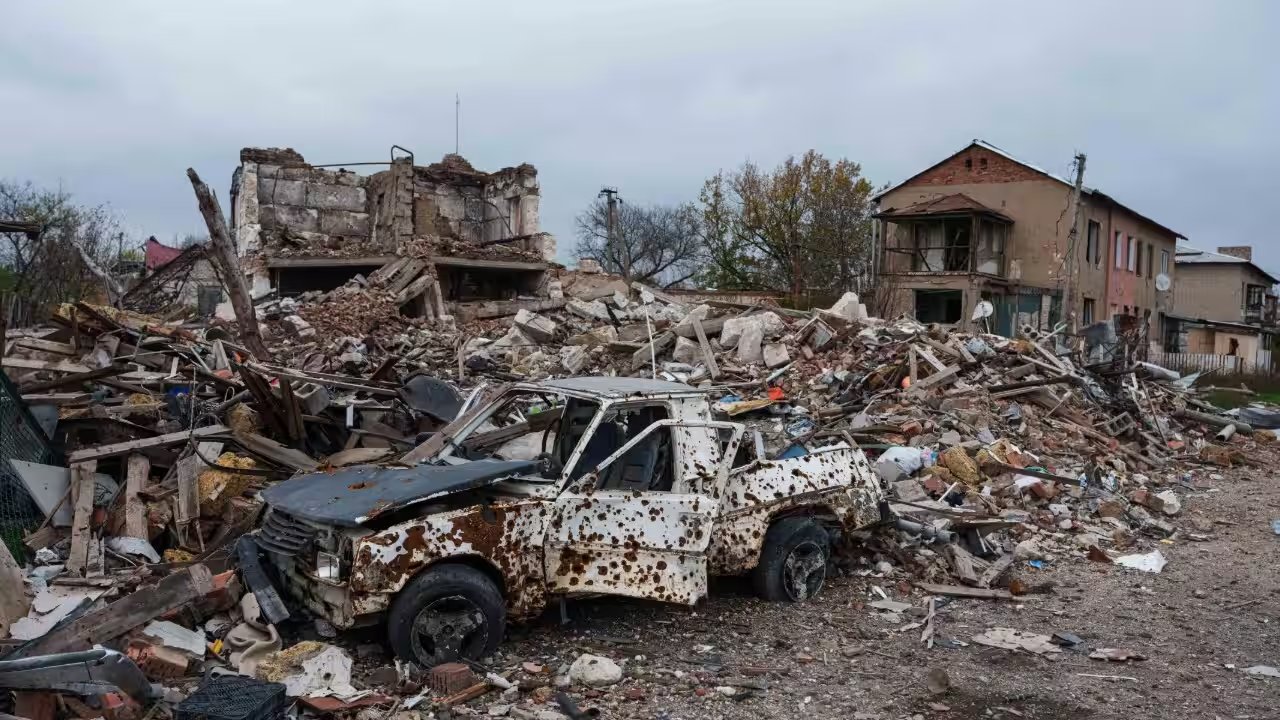
A Russian first-person-view drone struck Ukrainian rescue workers on Sunday as they combed through the ruins of a bombed humanitarian distribution hub in the Zaporizhzhia region.
No personnel were injured in the blast. The strike in the village of Komyshuvakha instead wrecked specialised excavation equipment, abruptly interrupting a week-long recovery mission following a devastating November 2 bombardment that killed at least 55 civilians and first responders. Crews have spent seven consecutive days tearing through concrete slabs and twisted rebar at the former school, where Russian guided aerial bombs detonated during an aid distribution. Approximately 50 people remain unaccounted for beneath the wreckage.
"Absolute cynicism and brutality," Ukrainian President Volodymyr Zelenskyy said, condemning Russian forces for deliberately hunting rescue teams in active disaster zones.
Police and disaster agencies face catastrophic losses from the initial strike. The confirmed death toll climbed to 55 by November 7, including two State Emergency Service workers and four police officers caught in the blast perimeter. On Saturday, mourners and uniformed personnel packed a memorial service in the city of Zaporizhzhia to bury six fallen officers alongside three local residents. Many recovered victims have yet to be identified, forcing forensic teams to rely on ongoing DNA analysis to match fragmented remains.
Sunday's assault fits an established tactical pattern known as a double-tap strike—directing secondary munitions at blast zones precisely when medical teams, firefighters, and diggers rush in to extract survivors. Russian warplanes hit the Komyshuvakha facility with multiple guided glide bombs as families from surrounding villages queued for food and medical supplies, flattening the shelter before drones returned Sunday to harass the recovery crews.
Rescue teams confirmed search operations will continue despite the persistent threat of overhead loitering munitions, with forensic units working to identify dozens of bodies still held at regional morgues.