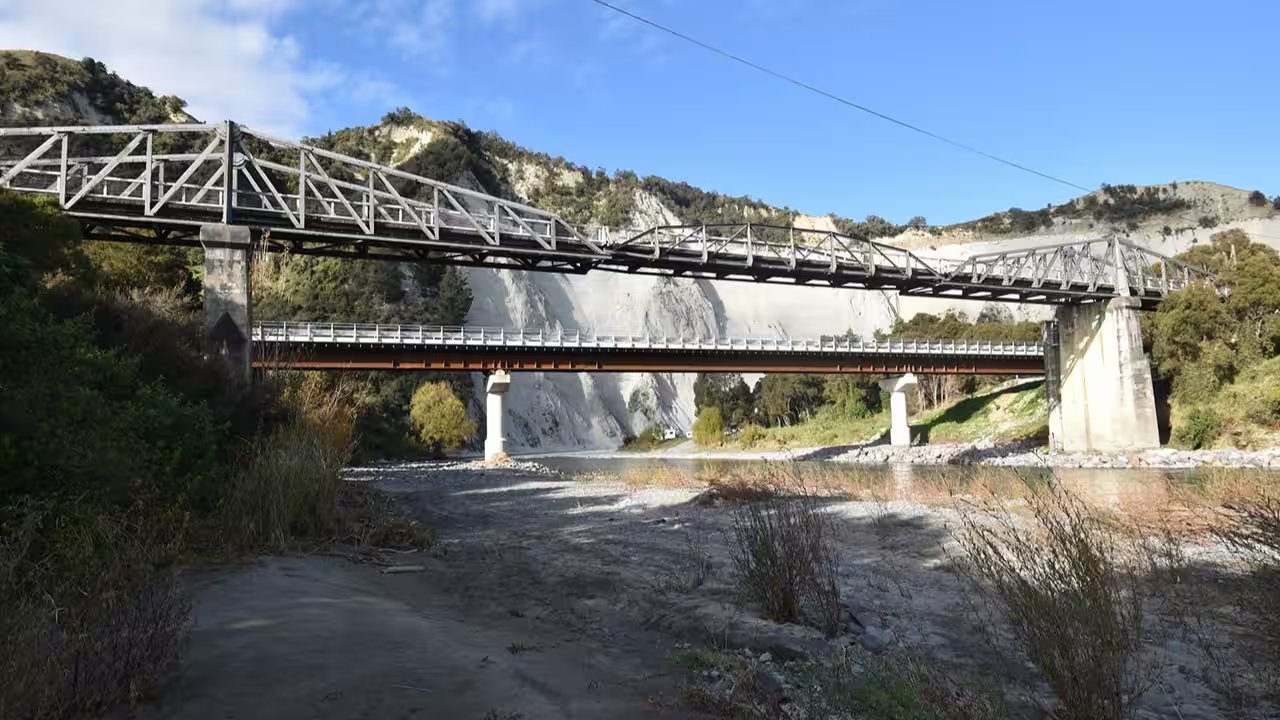
A 141-metre steel truss bridge in New Zealand’s central North Island has survived a century of river floods and traffic, only to face a different threat in 2016. Heritage New Zealand confirmed that routine inspections found serious structural deterioration in the Mangaweka Cantilever Bridge, forcing authorities to shut it to vehicles. The bridge spans the Rangitīkei River, a waterway notorious for its flooding potential that originally dictated its unique engineering design.
The decision to preserve the structure hinged on strong local advocacy. Demolition was a serious option, but the community pushed back, arguing the bridge was more than rusted metal. It was a functional piece of infrastructure that had served the Mōkai Pātea area for over a hundred years. The bridge’s design, a cantilever arrangement that avoids midstream piers, is rare. In fact, it is the only steel cantilever road bridge ever built in New Zealand.
The engineering choice was driven by necessity. Engineers from J and A Anderson Ltd, working under the Public Works Department, needed a way to span the Rangitīkei without placing supports in the deep, flood-prone channel. They repurposed two concrete piers left over from a previous, incomplete cylinder bridge project. The result was a single-lane deck with timber flooring that could handle the weight of early 20th-century farm trucks and forestry equipment.
Today, the bridge serves a different purpose. A modern replacement crossing was constructed just 30 metres to the south, handling current traffic loads. The 1904 structure has been reopened for pedestrians and cyclists. This shift allows visitors to experience the crossing at a slower pace, offering a low-lying view of the valley that drivers missed for decades.
The bridge’s official opening ceremony, a bureaucratic quirk, did not occur until 111 years after construction was completed. By then, the steel trusses had already endured decades of repair and daily use. The preservation effort ensures that this piece of New Zealand’s transport history remains accessible, linking the farming and forestry heritage of the Manawatū-Whanganui region to its present day.