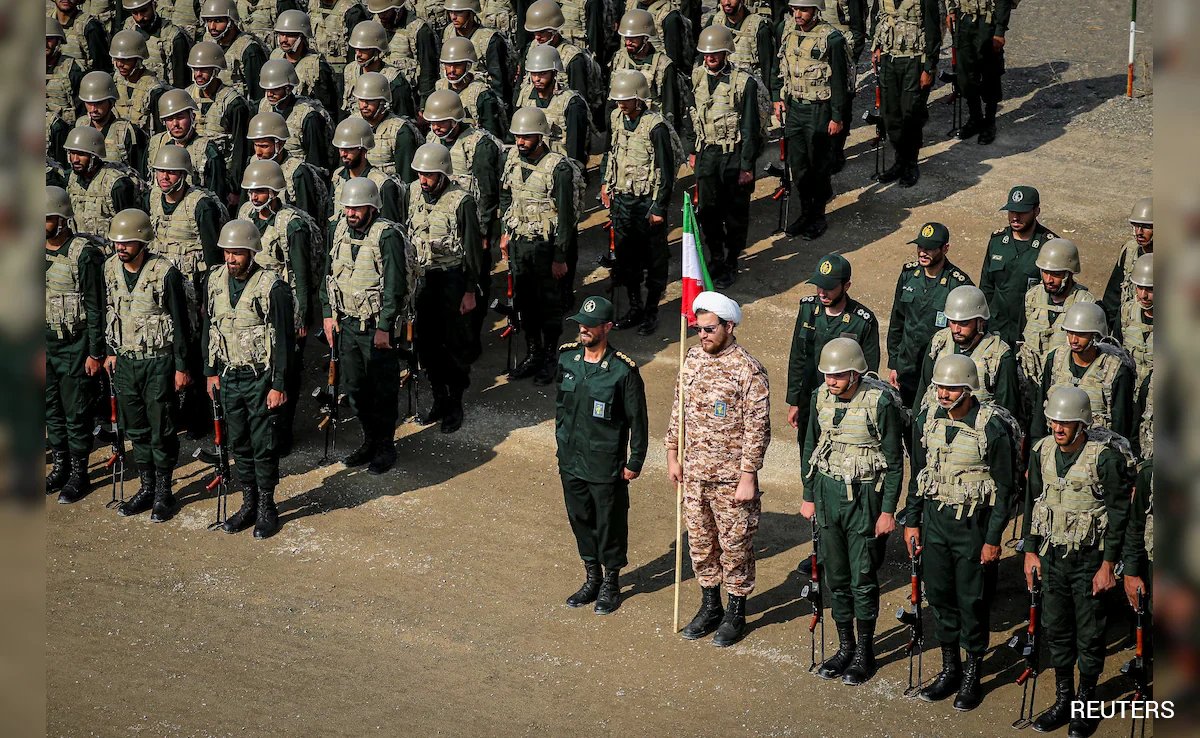
PARIS — France on Monday formally accused Iran's Islamic Revolutionary Guard Corps of orchestrating coordinated cyberattacks that sabotaged refrigeration units across 700 French supermarkets last month, ruining entire inventories of perishable food in what Paris branded an unprecedented act of state sabotage.
Foreign Minister Jean-Noël Barrot delivered the attribution on the sidelines of the G7 foreign ministers' meeting in Paris, confirming that intelligence agencies traced the October 11 and 12 intrusions directly to the IRGC. The attack marked the first large-scale cyber sabotage operation directed against civilian commercial infrastructure on French soil. The food spoiled rapidly. Store managers were forced to scrap stock by the metric ton as store chillers warmed during operational hours.
"This attack is unprecedented in both its scale and its level of aggression," Barrot stated, confirming that the French government summoned the Iranian ambassador to Paris to lodge a formal protest. "We will implement sanctions at the European level against all those responsible."
Paris prosecutor Laure Beccuau opened a formal judicial investigation targeting the commander of "Shahid Kaveh" — an offensive cyber unit operating under the IRGC's Electronic and Cyber Centre — alongside his two immediate deputies. Investigators revealed that the operatives breached supermarket equipment remotely through exposed web management interfaces. They initiated indefinite, unmonitored defrost cycles. At the exact moment temperatures climbed past safe thresholds, the hackers systematically silenced automated alarm sensors to keep staff blind to the failure until food supplies rotted.
The digital footprints left little room for deniability. Investigators recovered Persian-language script embedded in the exploit code and traced incoming command traffic back to internet protocol terminals physically situated inside Iran. The breach was not an isolated hit. Suspected intrusions crippled freezer networks across grocery retailers in at least nine other European nations on November 2, exposing vulnerabilities in civilian supply chains across the continent.
EU foreign policy chief Kaja Kallas backed the French findings immediately after Barrot's disclosure, warning that Brussels would coordinate a unified countermeasure. "Our response should be strong," Kallas said, signaling that the European Union will consider economic restrictions against the IRGC cyber command.
French authorities are compiling technical dossiers to submit to the European Council ahead of upcoming ministerial meetings in Brussels, where diplomats will formally table punitive sanctions packages against Shahid Kaveh's commanding officers.