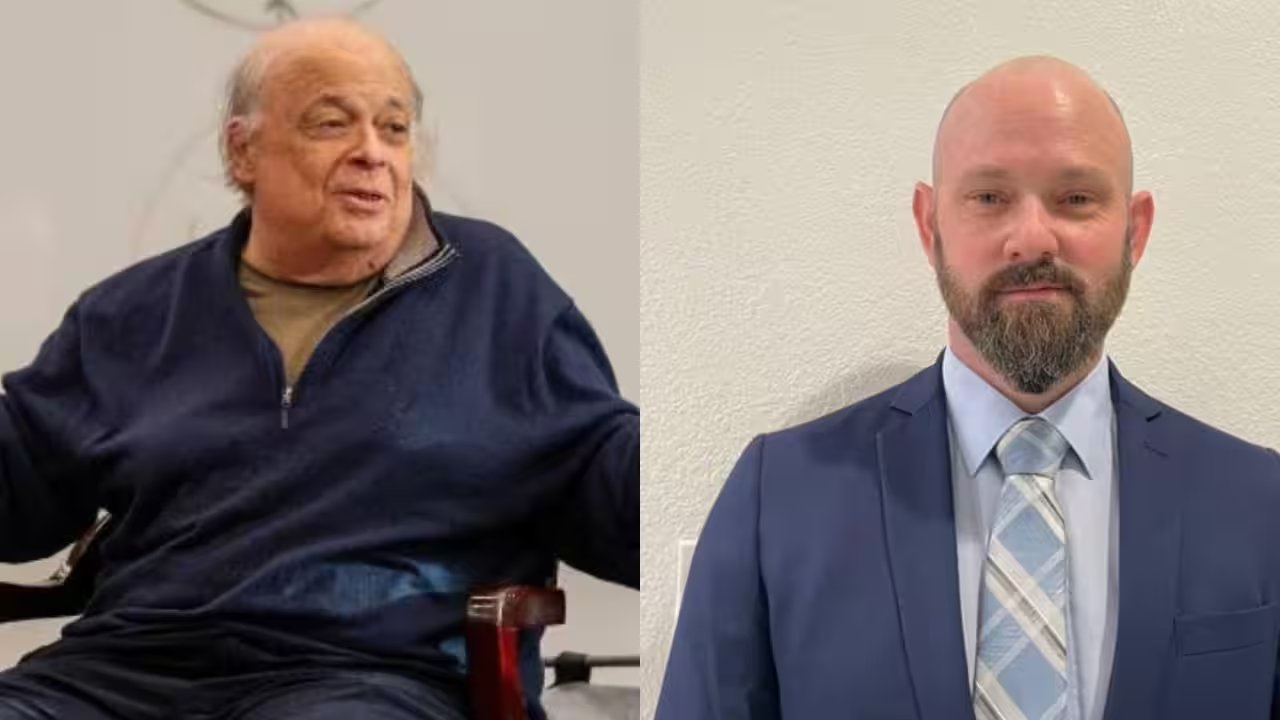
Michael Maslanka stopped mid-sentence, gripped the lectern, and told his evening lecture hall that his vision had gone dark.
Then the 73-year-old professor crumpled to the floor. His pulse vanished. His breathing halted. The room went silent.
Within seconds, 45-year-old third-year law student Matthew Melton cleared the desks. Melton spent years as a United States Navy SEAL, deploying to Bahrain in 2001 and Iraq in 2005, before transitioning to a cybersecurity career and night classes at the University of North Texas at Dallas College of Law. Facing a clinically dead instructor on October 8, 2026, Melton dropped to his knees, locked his elbows, and drove his palms into Maslanka’s chest.
CPR is brutal work. Melton delivered three grueling cycles of compressions and rescue breaths, fracturing Maslanka's ribs under the force of the downward thrusts. Bone gave way under his hands. But Melton did not ease off—perfusion took precedence over skeletal trauma. Without continuous, manual blood flow to the brain, the professor faced irreversible neurological death within four minutes.
Held together by Melton's battlefield conditioning, the classroom transformed into a coordinated triage station. Law students Anwar Hannon and Jeff Baza moved into position to assist with physical stabilization. Daniella Sanchez dialed 911, relayed precise physiological readouts to Dallas dispatchers, and held the unconscious educator's hand. Downstairs, other classmates propped open heavy security doors and flagged emergency sirens into the building’s main courtyard.
The priority was simple: keep the blood circulating and give him a fighting chance to reach the hospital alive.
Matthew Melton, Third — Year UNT Dallas Law Student
Paramedics swept Maslanka onto a gurney and raced across Dallas to Baylor University Medical Center. Emergency room physicians diagnosed ventricular tachycardia—a violent, rapid arrhythmia where the heart’s lower ventricles quiver out of rhythm and fail to pump oxygenated blood to the body.
Doctors applied defibrillator paddles and shocked Maslanka’s heart twice to break the lethal rhythm. The electrical jolts restored a steady sinus pulse. The professor spent 48 hours in the intensive care unit before physicians stabilized him enough for a transfer to a step-down recovery ward. Within days, he walked out of the medical center under his own power.
| Emergency Response Parameter | Operational Metric / Case Detail |
|---|---|
| Patient | Michael Maslanka, 73, UNT Dallas Law Professor |
| Primary Rescuer | Matthew Melton, 45, Law Student & Navy SEAL Veteran |
| Prior Military Deployments | Bahrain (2001), Iraq (2005) |
| Critical Medical Event | Ventricular Tachycardia / Sudden Cardiac Arrest |
| On-Scene Interventions | 3 Rounds of Manual CPR, Rescue Breaths |
| Acute Clinical Intervention | 2 Defibrillator Shocks, 48 Hours in Intensive Care |
Perfect readiness carries an uncanny irony in Maslanka’s lecture hall. Twelve years earlier, in a 2014 instructional broadcast for Texas Bar TV, Maslanka lectured courtroom attorneys on work ethic and professional mastery, holding up Navy SEAL operating doctrine as the gold standard of discipline and split-second composure. He urged young lawyers to prepare so rigorously that high-stress execution became muscle memory. More than a decade later, that exact doctrine saved his life.
Sanchez and her classmates reunited with Maslanka at his hospital bedside one week after the collapse. He has since returned to his podium at UNT Dallas, using the pulpit to campaign for mandatory community life-support certification alongside UNT Health physician Dr. Jeff Beeson.
Penning a forthcoming retrospective for Texas Lawyer titled "Four Life Hacks That Dying (Twice) Taught Me," Maslanka is now working with university administrators to coordinate campus-wide CPR training drives before the close of the academic term.
| Receiving Facility | Baylor University Medical Center at Dallas |