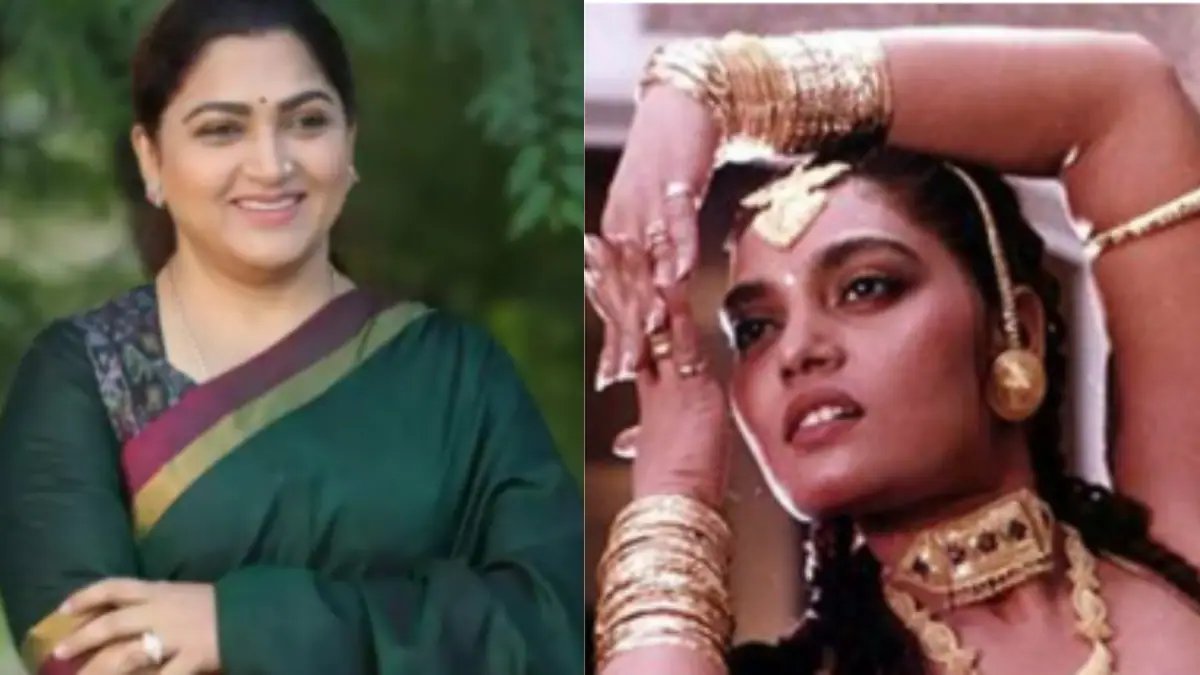
If you think you’ve seen every angle of Silk Smitha, think again—Kushboo Sundar’s words peel back the glossy veneer to reveal a woman who wanted a life outside the silver screen.
Kushboo recalls stepping onto a set where a folded chair and a towel had appeared on a whim, and there she was: a 22‑year‑old with a gaze that could melt glass. She says, “Suddenly, a hush descended on the set. I was hooked.” The girl who would later be called Silk could speak halting English, but she instantly put everyone at ease—no wonder she became a magnet for directors.
Their friendship began when Kushboo flew to Chennai to shoot a never‑made 3D film directed by Ashok Kumar. The two shared a laugh‑filled coffee break, their future careers already poised to explode. Even though the film never hit the screen, the bond that formed was real, and Kushboo never called her “Silk” or “Smitha” in front of the crew—just “Viji,” a nod to her birth name, Vijayalakshmi.
Behind the glitter, Silk wore a shield. Kushboo says, “She was reserved; people thought she was arrogant, but it was her defense mechanism.” She kept her boundaries razor‑sharp, a necessity in an industry that would later roll out more revealing costumes. Yet, in private, she dreamed of a normal life—she even shopped for her boyfriend’s kids like a normal wife, hoping for a family that could keep her off‑screen.
Her legacy is staggering: 18 years, 450 films, and an icon who defined the 1980s’ sex symbol archetype in South Indian cinema. From the opening scene of the 1979 Tamil hit Vandichakkaram to dance numbers that still echo in club playlists, Silk’s impact remains.
So, if you’re in the mood to revisit a legend, pick up one of her classics—whether it’s Vandichakkaram or a lesser‑known gem—and let the girl behind the glam surprise you with the warmth of a woman who longed for a family, not just a fan club.