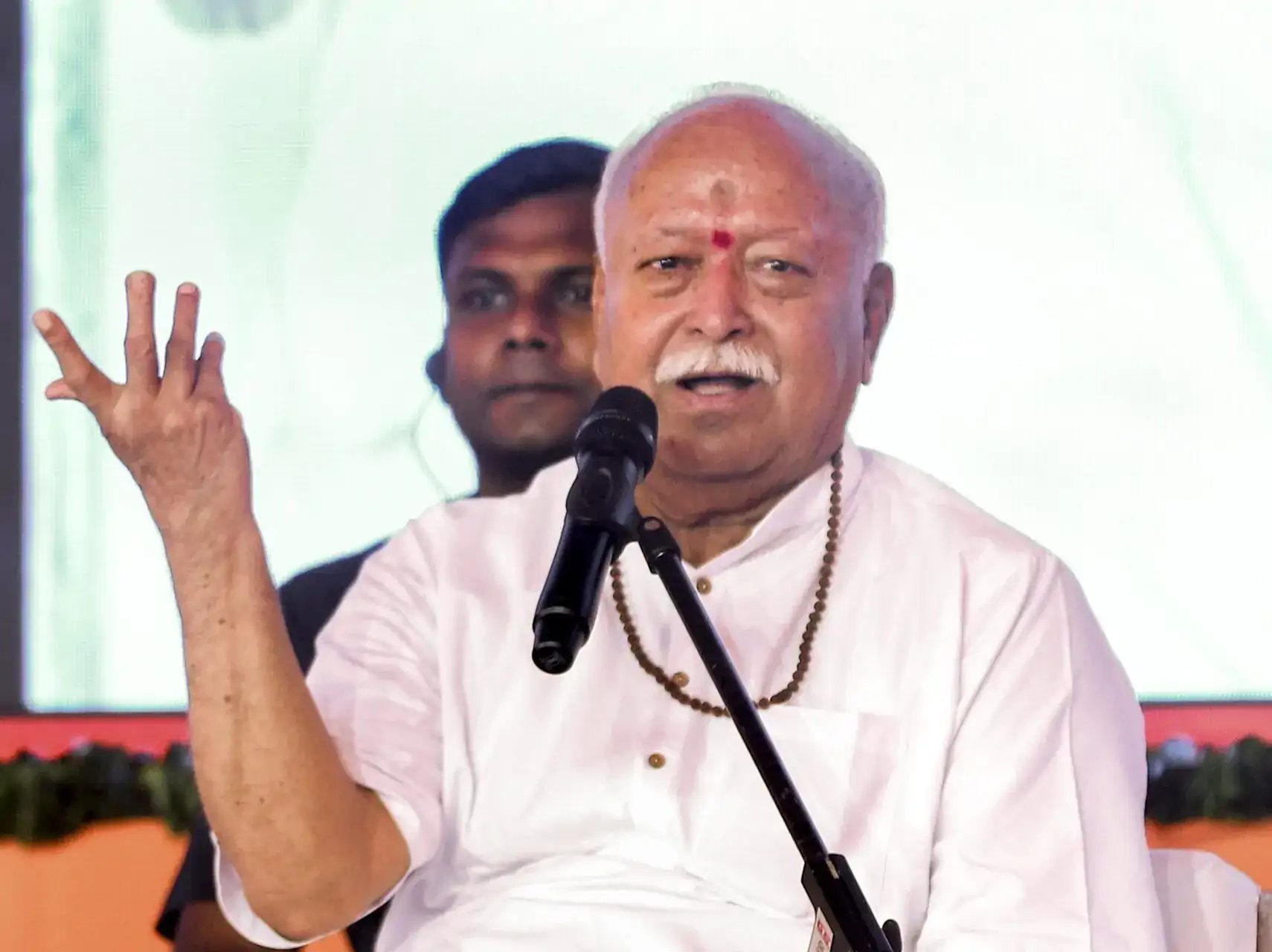
NAGPUR — Rashtriya Swayamsevak Sangh chief Mohan Bhagwat defended India's ancient festive customs on Tuesday, asserting that early firecrackers carried a distinct scientific purpose because their chemical-free smoke purified the environment and eliminated insects.
Speaking at a public gathering organized by the Maheshwari Panchayat in Nagpur, Bhagwat pushed back against critics seeking to halt traditional celebrations. He maintained that core cultural practices originated from rigorous natural observations rather than hollow superstition.
Tradition held practical utility.
"Firecrackers in earlier times were not made from chemicals, and their smoke killed insects and purified the atmosphere," Bhagwat told the audience. "There is a scientific reason behind it."
He expanded the argument to domestic rituals, pointing directly to the burning of ghee and vegetable oils during festive periods. Those traditional lamps, he argued, generated a specific atmospheric quality that cleansed living quarters and protected family health.
Festivals keep society alive and will never stop despite some people trying to do so. Such practices should be followed with an understanding of the science behind them. This will keep the atmosphere pure, and also bring joy to our life.
Mohan Bhagwat, RSS Chief
Bhagwat insisted that preserving customary practices safeguards humanity and the natural environment alike. He argued that ancient communities structured their calendars around seasonal pest surges, using natural fumigation during major gatherings to suppress disease vectors before modern pesticides existed.
Yet he cautioned against blind repetition. He urged modern practitioners to study the foundational mechanisms behind these rituals to preserve their unadulterated forms rather than adopting harmful synthetic shortcuts.
| Event Parameter | Details |
|---|---|
| Keynote Speaker | Mohan Bhagwat, RSS Chief |
| Organizing Body | Maheshwari Panchayat |
| Location | Nagpur, Maharashtra |
| Primary Subject | Scientific Basis of Traditional Festivals & Civic Rule Compliance |
| International Examples Cited | United States Congress, United Kingdom Parliament |
Turning to the international stage, Bhagwat pointed to the expanding footprint of Indian festivals overseas. Diwali celebrations now reach deep into Western power centers.
"Diwali was earlier celebrated only in India, but is now celebrated in the parliaments of US and UK too," Bhagwat said. Global leaders, he added, increasingly recognize the cultural emphasis on cleanliness, charity, and public service embedded in the festival.
He paired his defense of heritage with a direct demand for civic discipline. Cultural pride cannot become a shield for lawlessness.
"In the house, society and city where we live, rules and laws are for all and framed to make everyone's life good," Bhagwat said, challenging the gathering to respect municipal and legal frameworks. "If we are not correcting our mistakes, we should start doing it now."
Municipal authorities and local enforcement wings across Maharashtra continue to monitor festive public gatherings and enforce existing statutory noise and emissions standards.