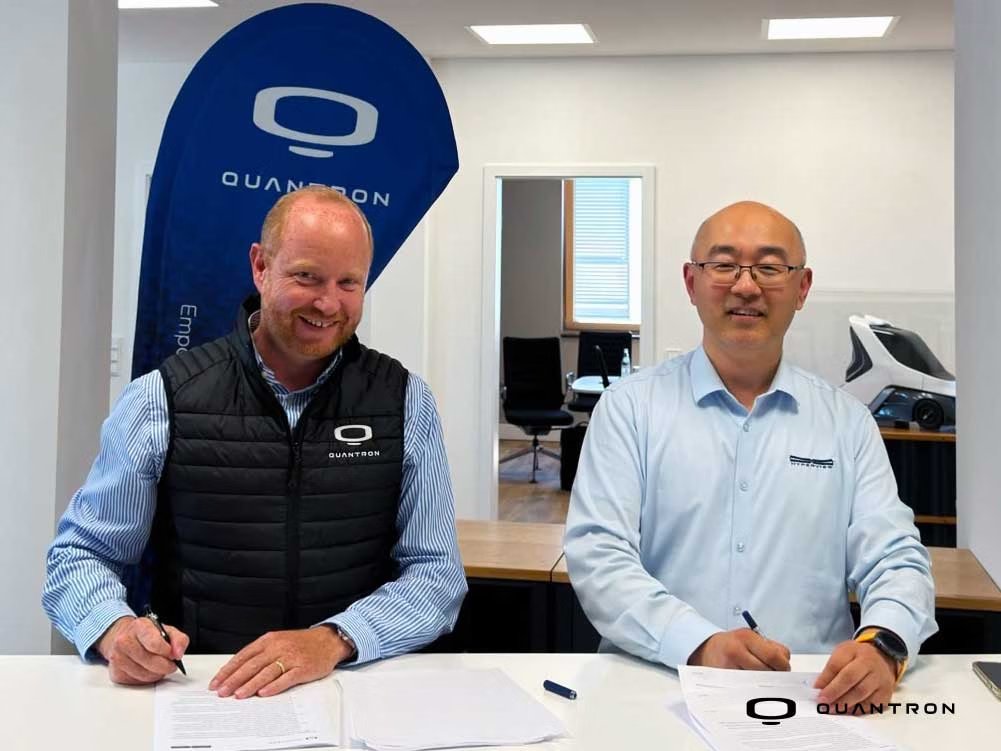
Running a delivery fleet, you know the headache of juggling fuel costs and emission regulations. The Gen2 platform from Quantron China, a joint venture between German zero‑emission specialist Quantron and Chinese autonomous‑driving firm HyperView, promises a single chassis that can be fitted with either a battery‑electric or a hydrogen‑fuel‑cell powertrain. That means you can choose the energy source that best matches your route profile and local charging infrastructure.
The platform will be built in China’s Shaoxing, where the joint venture sits, and will be assembled by Foxconn using semi‑knocked‑down lines. Foxconn’s expertise in large‑scale manufacturing should keep unit costs lower than a fully custom build, giving fleet operators a more attractive price point.
In the zero‑emission truck arena, the Gen2 platform will line up against Volvo’s eC30 and Mercedes‑Benz eSprinter, both of which already offer battery‑powered variants on European roads. The Gen2’s dual‑fuel option gives it a leg up, especially for long‑haul routes where hydrogen refueling stations are still scarce.
The European Union is pushing a 2035 ban on combustion‑engine vehicles, and India has a similar zero‑emission mandate for public transport by 2030. By 2026, the joint venture plans to deliver a validation fleet of 100 zero‑emission trucks and buses to European customers, proving the platform’s readiness under real‑world conditions.
The first complete Gen2 vehicle is slated for a public debut in the first half of 2027, with production set to ramp up in 2028. Foxconn’s SKD production lines will help keep the supply chain local, reducing customs duties that can inflate costs for imported commercial vehicles.
So keep an eye on the 2027 launch window. If the Gen2 platform delivers on its promises, it could become a key piece of the puzzle for fleet managers looking to stay compliant and cut operating costs in the coming decade.