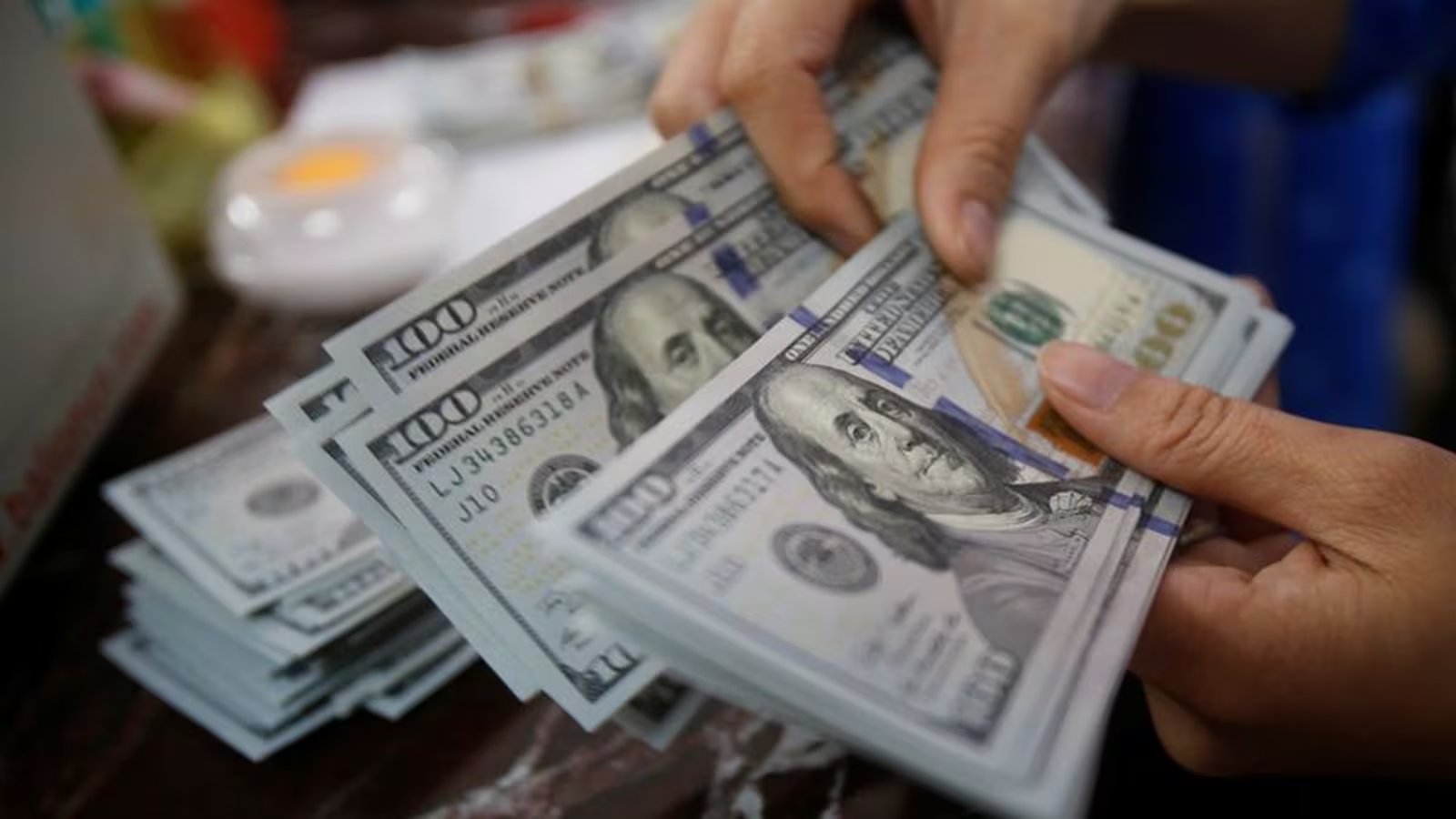
The dollar isn’t just holding ground; it’s taking territory. The broad currency index sat at 101.1 on Thursday, a two-month peak, after a weak auction of five-year U.S. Treasury notes sent yields spiking across the curve. That yield spike—5-year notes crossing the 5% mark for the first time since 2007—was the catalyst. It’s a hard floor for risk appetite, and it’s pushing the greenback higher against every major peer.
The pain is visible in the cross pairs. The euro dropped to $1.1378, its lowest in two months, while sterling hovered near a three-month low at $1.3231. This isn’t a nuanced dip; it’s a broad-based retreat from safe-haven alternatives. The market is betting that the U.S. economy is overheating, a view amplified by a surprisingly strong manufacturing PMI released overnight. That data point didn’t just confirm growth; it reignited the inflation fear that had been simmering.
Fed Governor Michael Barr’s comments on Wednesday landed with the weight of forward guidance. He stated that rising inflationary risks and a strong economy mean the Fed is likely to deliver more rate hikes. Traders took that as a direct signal. CME Group’s FedWatch Tool now shows a nearly 70% chance of a rate increase at the October meeting, up sharply from the 50% probability just a week ago. The market is no longer debating whether the Fed will tighten; it’s debating how fast.
The geopolitical backdrop is adding fuel to the fire. Oil prices jumped nearly 4% on Wednesday after Iranian President Ebrahim Raisi vowed never to surrender, while President Donald Trump’s diesel export ban added another layer of supply-side anxiety. Chris Weston, head of research at Pepperstone, noted that given the relative strength of U.S. growth and increasingly aggressive Fed rate-hike pricing, the dollar continues to stand firm in its attraction to own. The yen, meanwhile, hovered near a three-week low at 157.9, with traders on alert for possible intervention after deeming the Bank of Japan’s recent hike insufficiently hawkish.
The next major catalyst is Chinese President Xi Jinping’s first U.S. visit in three years. The offshore yuan traded flat at 6.7119 per dollar, but the meeting is a high-stakes test for trade, technology, and Taiwan relations. For now, the dollar’s strength is driven by domestic U.S. policy and yield differentials, but any shift in the U.S.-China dynamic could quickly alter the risk landscape.