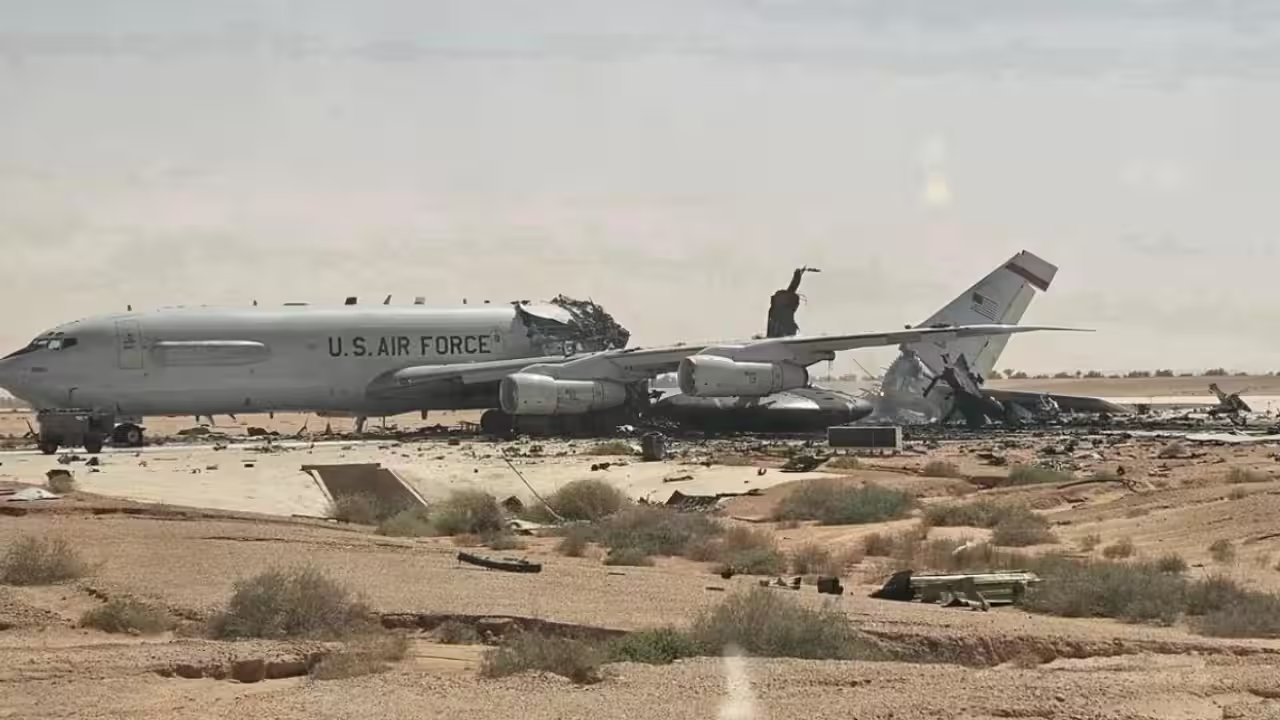
Exclusive images released by CBS News show the guts of Prince Sultan Air Force Base in Saudi Arabia after Iranian missiles and drones tore through the facility. A Boeing E-3 Sentry aircraft lies in pieces, its tail severed from a charred fuselage that once housed the base's rotating radar system. Nearby barracks are gutted, standing in stark contrast to the intact concrete T-walls that were supposed to protect personnel from mortar fire.
The damage extends to Camp Buehring and Camp Arifjan in Kuwait, where US Army armor and staging units are based. Photos show destroyed trailers and buildings pockmarked by shrapnel in the remote desert northwest of Kuwait City. These are not minor scratches. An active-duty service member, speaking on condition of anonymity due to strict military media access rules, described the scene as "major damage to our bases that hasn't been communicated to the American public."
This visual evidence directly clashes with the Defense Department’s recent narrative. Defense Secretary Pete Hegseth, following a March 1 attack on Kuwait’s Port of Shuaiba that killed six US troops, described recent Iranian strikes as "squirters" slipping through defenses. The service member who provided the photos rejected this characterization bluntly. "We’re not defending these bases," the soldier told CBS. "We’re just watching them get destroyed."
The scale of the loss is now officially quantified. A report from the Defense Department’s inspector general released this week disclosed up to $3.7 billion in equipment losses, including nearly 60 aircraft. US Central Command confirmed Iranian strikes hit American bases in eight countries: Kuwait, Bahrain, Qatar, the UAE, Saudi Arabia, Iraq, Oman, and Jordan. The next step is a congressional push for an independent review of the air defense failures that allowed these strikes to land directly on high-value assets.