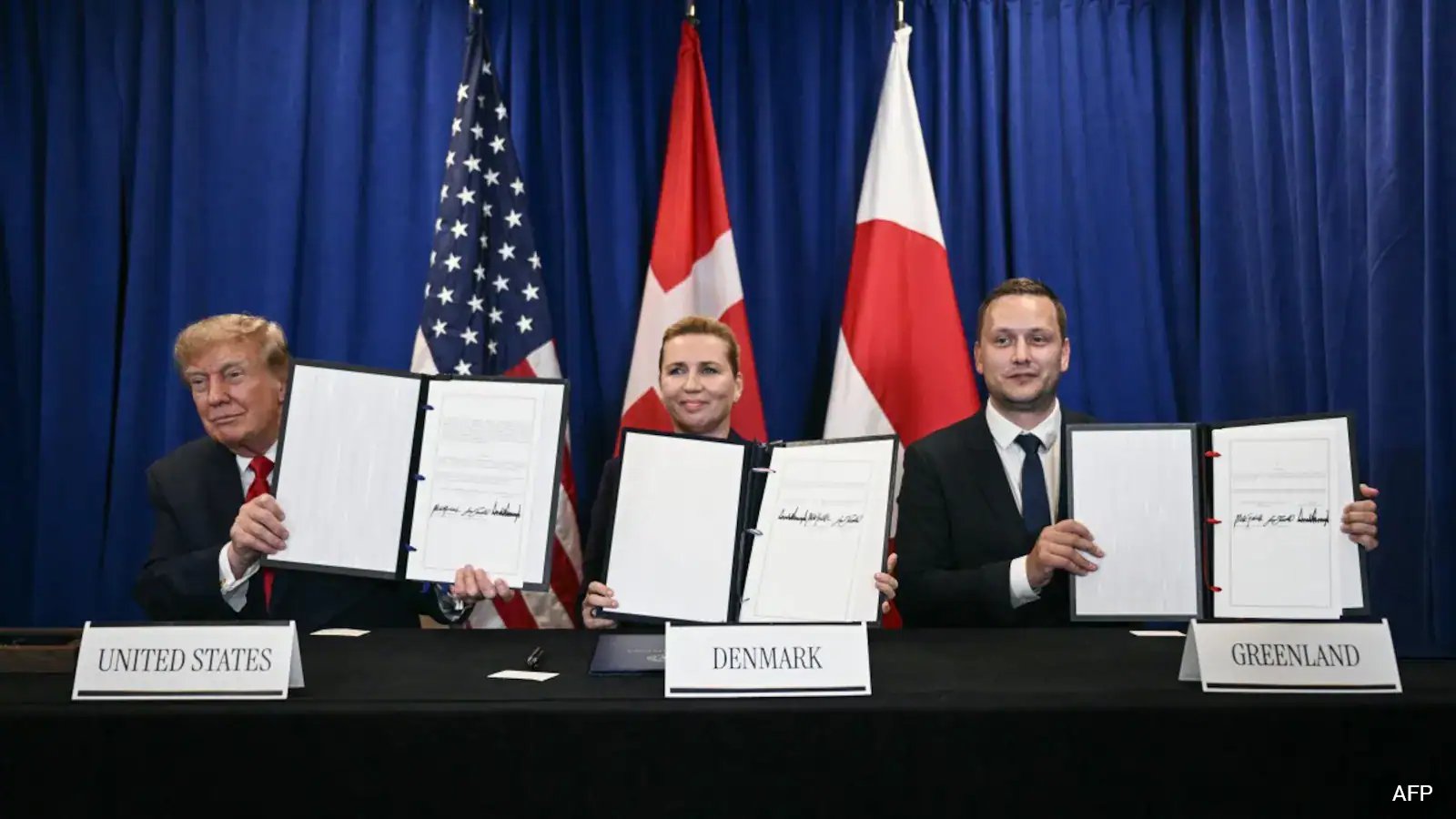
President Donald Trump signed a 10‑page security pact with Denmark and Greenland on Tuesday, authorizing the U.S. to build two new bases at Narsarsuaq in the south and Mestersvig in the east, in addition to the existing Pituffik outpost in the north. The agreement follows months of friction after Trump’s repeated calls for U.S. control over the autonomous archipelago, a stance that alarmed Denmark’s leadership and the wider NATO alliance.
Prime Minister Mette Frederiksen, who met Trump at the UN General Assembly, emphasized that the deal safeguards Denmark’s sovereignty and prevents non‑NATO, non‑EU actors from gaining influence in strategic sectors of Greenland. She said, "We agree that adversaries will not be allowed to get control or significant influence in the territory." The treaty also underlines Greenland’s right to self‑determination while binding the country to the pact even if it later seeks independence.
The pact bars China, Russia and other non‑aligned states from accessing sensitive industries and from obtaining non‑public intelligence that could threaten national security. It also requires Greenland to join NATO if the strategic situation demands it, a move that could reshape trans‑Atlantic security dynamics in the Arctic.
EU High Representative Antonio Costa welcomed the accord as "a positive step for trans‑Atlantic cooperation and Arctic security," and pledged continued collaboration with Denmark and Greenland to maintain a peaceful, secure Arctic. The agreement signals a broader push to keep the northern frontier firmly within the Western security umbrella.
For Greenland, the deal means a steady influx of U.S. construction crews and a boost to the local economy. Fisherman Anja Mikkelsen, who runs a small shrimp‑catching business near Narsarsuaq, said the bases will create jobs but also raised concerns about environmental impacts. Implementation will begin in the next fiscal year, with the U.S. and Danish governments negotiating timelines for construction and operational hand‑over.