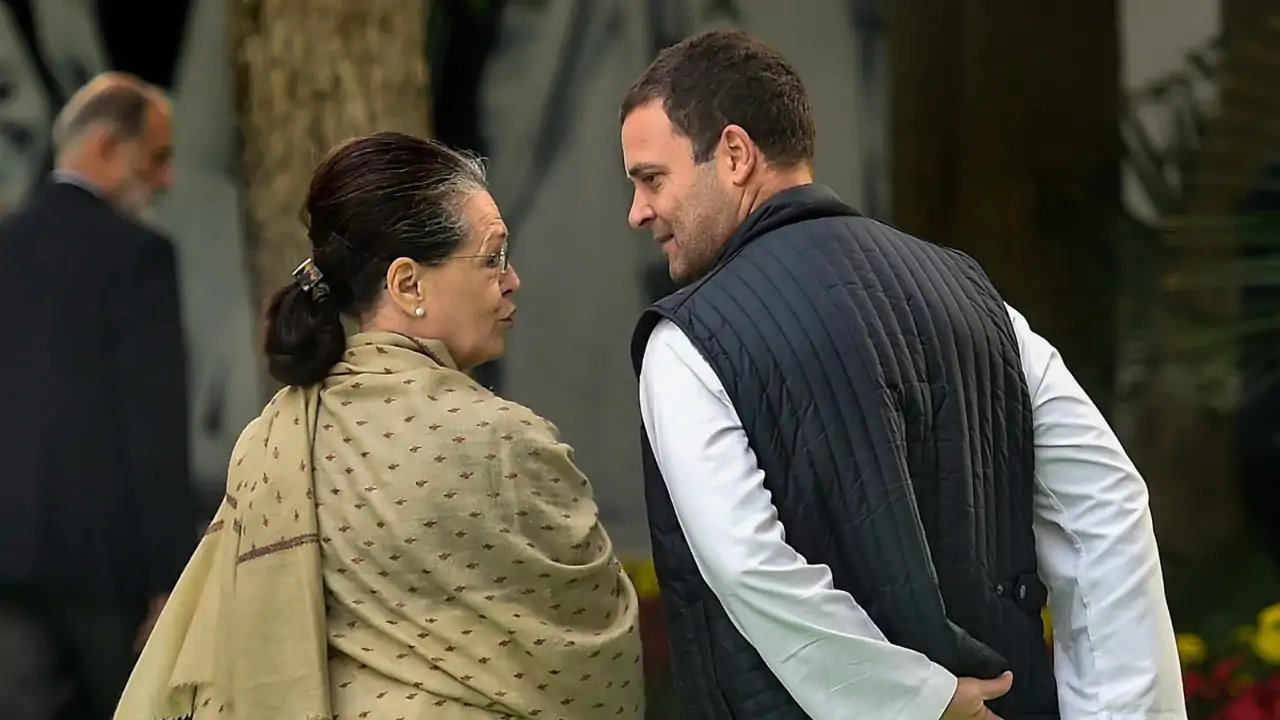
Congress Parliamentary Party Chairperson Sonia Gandhi begged her husband, Rajiv Gandhi, to abandon politics—yet stood aside two decades later when her son Rahul chose the exact same perilous path.
The contrast was stark. Writing in her memoir, Belonging: A Journey Of Love, the former Congress president details the private dread that shadowed her household before Rajiv took power, setting it against the calculated family consensus that cleared Rahul's run for Parliament in March 2004. "Two decades earlier, I had begged Rajiv not to enter politics, not to throw himself and all of us into that menacing world. Now, it was my son's turn, and this time I did not resist it," she writes.
The decision carried heavy baggage. Rahul had watched his father operate under relentless assassination threats, frequently confronting Rajiv over the fatal gamble of remaining in public office. Yet the friction never severed their ideological tie. As Sonia Gandhi details, Rahul retained a fierce affinity for his father's values and admired the grit with which Rajiv soldiered through constant security warnings.
Both siblings grew up walking the dust of Uttar Pradesh. Rajiv routinely brought Rahul to the family pocket borough of Amethi as a schoolboy to expose him to the grinding hardships of rural north India. Priyanka Gandhi Vadra later anchored her mother's election campaigns across the constituency, winning over grassroots cadres while balancing the demands of raising young children and completing a postgraduate diploma in Buddhist studies.
But the party hierarchy wanted Rahul. After finishing an MPhil in Development Studies at Cambridge and working abroad, he tracked domestic political shifts from afar. The pressure from party managers mounted daily. Following closed-door discussions with Sonia and Priyanka, Rahul chose to contest Amethi in March 2004, prompting Sonia to shift her candidacy to neighbouring Rae Bareli.
Rahul took the seat by a wide margin. Once in office, he and Priyanka set up self-help groups across Amethi that expanded into the largest rural women's collective in northern India, later establishing a network of regional eye hospitals extending to Lucknow and Haryana. The memoir documents how a mother’s private terror yielded to cold political reality, cementing a generational transition that still commands the Congress high command.