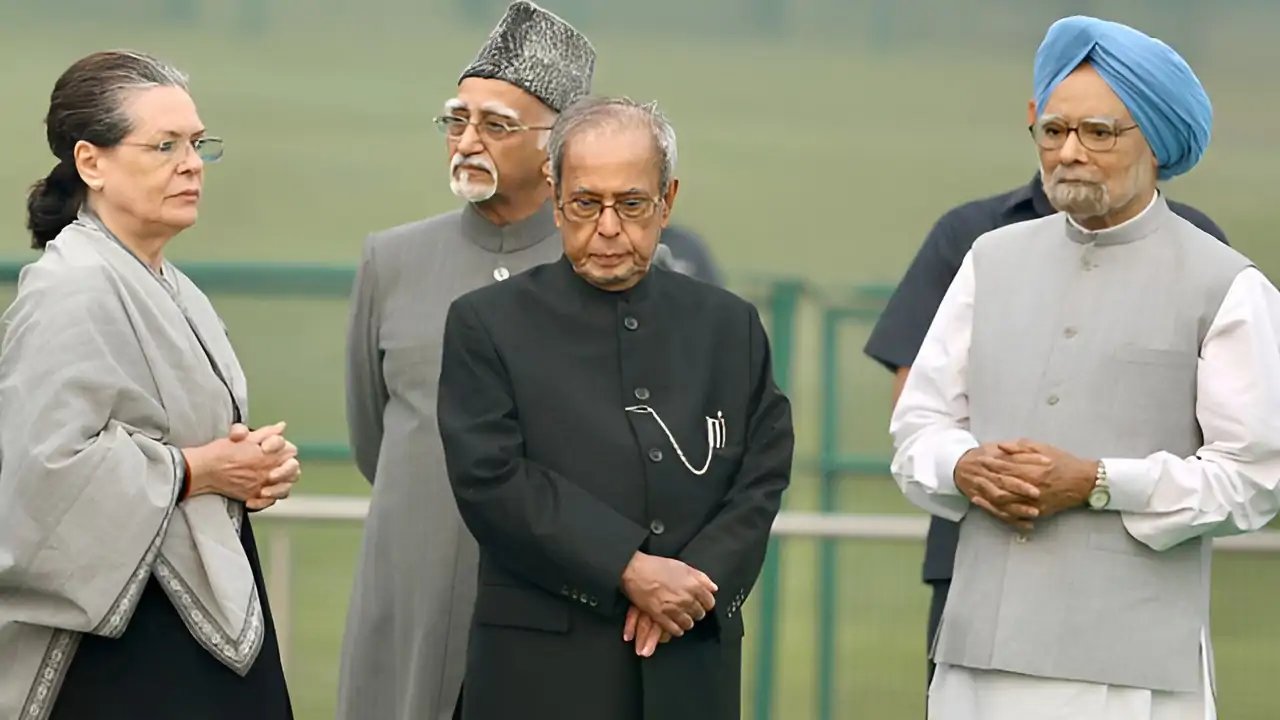
NEW DELHI — Pranab Mukherjee confronted Sonia Gandhi in 2010 with a blunt proposal that India replace Prime Minister Manmohan Singh.
Gandhi refused. In her 544-page memoir, Belonging: A Journey of Love, which hit bookstands on Tuesday, the former Congress president recounts how Mukherjee lingered after a parliamentary strategy meeting to voice boiling frustration over bitter policy disputes with then-Finance Minister P. Chidambaram. The conversation quickly escalated beyond Cabinet friction. Mukherjee bluntly suggested that 'it was time for a change at the top' — a pitch Gandhi interpreted as an unmistakable maneuver to claim the prime ministership for himself.
She deflected the demand immediately. 'I gently changed the subject, and though he may have been disappointed, he never made me feel he held it against me,' Gandhi writes. Two years later, the United Progressive Alliance nominated Mukherjee for the presidency in 2012, elevating him to Rashtrapati Bhavan and settling the internal succession debate.
Mukherjee’s daughter swiftly dismissed the revelation. 'What’s there to get ‘shocked’ about?' she remarked following the book's release, brushing aside the portrayal of her late father's overture.
Beyond the succession struggle, Gandhi uses the memoir to confront the long-standing political charge that she operated as an unconstitutional 'back-seat driver' running the Prime Minister's Office during the UPA's decade-long rule from 2004 to 2014. She denies ever summoning executive files or dictating administrative appointments, outlining what she terms an unwritten pact: Dr. Singh ran the government while she managed the party.
Yet rumors of extra-constitutional interference persisted throughout the administration's second term, culminating a decade later in an explosive tell-all by a former prime ministerial aide. Gandhi singles out those allegations as targeted malice. She cites the official denial issued by the Prime Minister's Office during Singh's tenure, alongside public remarks by Singh's daughter, Upinder Singh, who condemned the aide's book as 'nothing but a stab in the back... a huge betrayal of trust.'
Gandhi insists she guarded against any institutional breach that could offer political ammunition to opponents. Her memoir opens with a verse from the Rig Veda urging unity of purpose and concord of mind — a stark philosophical contrast to the internal power struggles laid bare across its pages.