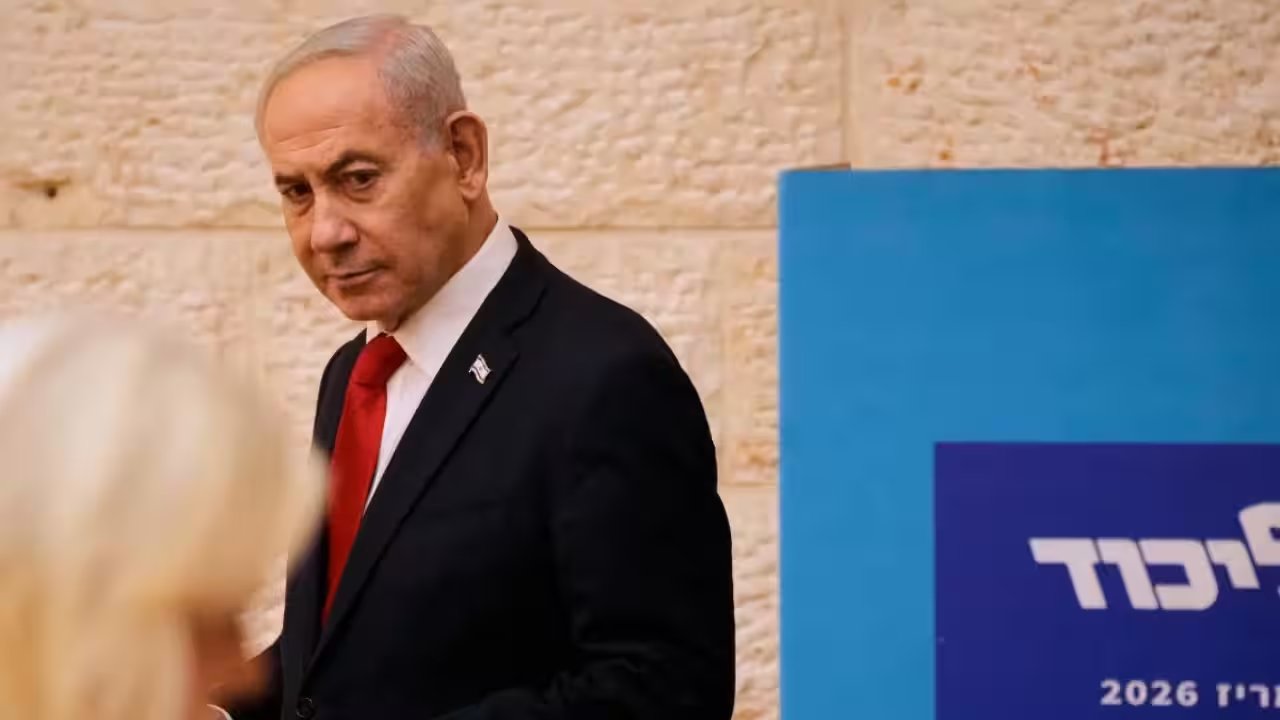
Benjamin Netanyahu signaled a tactical shift on Monday, declaring his openness to a “broad national government” to navigate the political wreckage of last week’s vote. His Likud party captured 27 seats, the largest bloc, but the broader pro-Netanyahu alliance stalled at just 53 seats in the 120-member Knesset. That is 17 seats short of a stable majority. The Prime Minister’s comments, posted on X, marked a distinct departure from his earlier vow to build a “strong, national, right-wing coalition” immediately after the October 27 election.
The pivot has hard limits. Netanyahu explicitly ruled out partnering with Raam and the Joint List, the two major Arab-led parties that collectively won 19 seats. He accused these groups of supporting terrorism and rejecting Israel’s existence as a Jewish state. Without them, and with the 48 seats held by other Jewish-led parties largely closed to him, his options are narrowing fast. All four Zionist opposition parties—Yashar, B’Yachad, The Democrats, and Yisrael Beytenu—have already declared they will not join a government led by Netanyahu.
In a parallel maneuver, Likud attempted to delay the official certification of election results scheduled for Wednesday. The party cited an ongoing probe into alleged foreign interference, specifically claims that Qatar or other powers funded efforts to boost Arab voter turnout. Supreme Court Justice Noam Sohlberg, who chairs the Central Elections Committee, shut down the request. He stated the panel has no authority to withhold certification or intervene in the investigation. The committee has further noted that even if these allegations were substantiated—which they currently are not—they would not be significant enough to alter the final seat count.
Netanyahu now faces a razor-thin path forward. He must either convince the far-right and ultra-Orthodox parties to stay in a fragile coalition or find a way to persuade one of the reluctant Zionist opposition blocs to reconsider. The Knesset’s certification process continues as scheduled, setting the stage for intense negotiations that will determine whether Israel faces a third election or a unstable government.