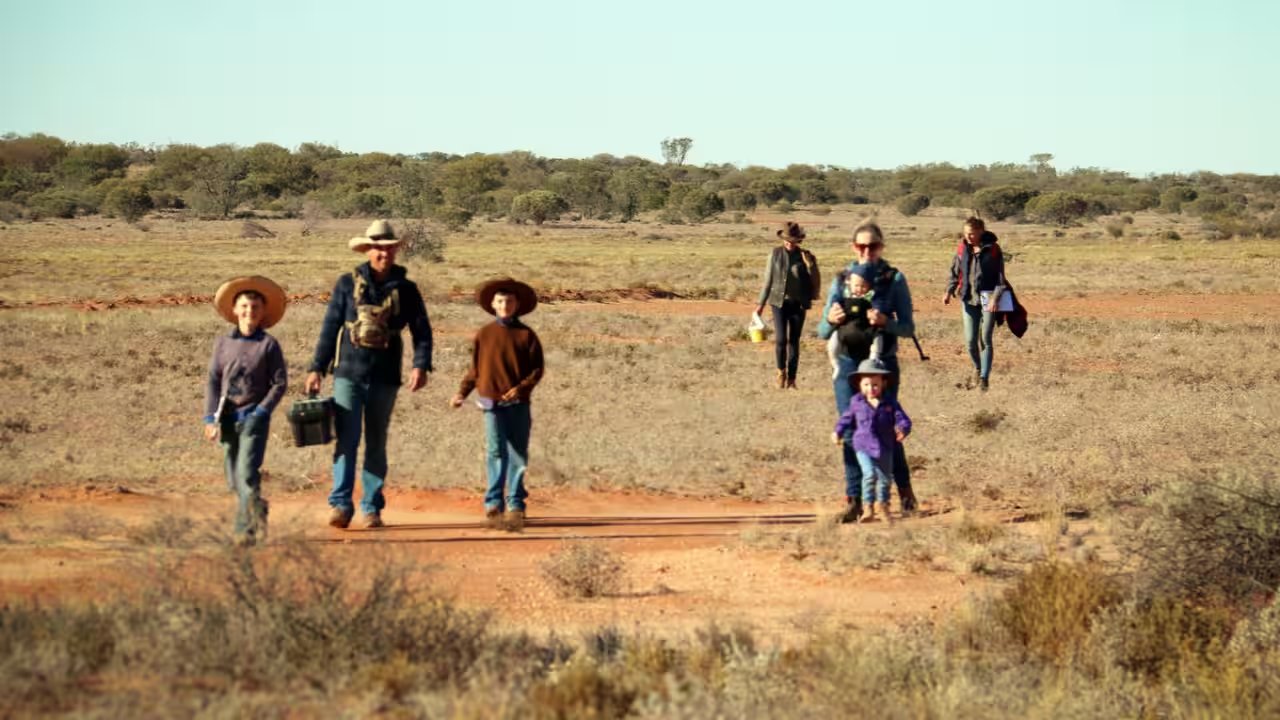
It’s not just about putting animals in a box anymore. By September 2026, ecologists Rebecca West and Reece Pedler recorded something rare in the remote Corner Country: six native mammal species—greater bilbies, crest-tailed mulgaras, Shark Bay bandicoots, golden bandicoots, western quolls, and burrowing bettongs—were surviving, breeding, and even arriving as new individuals in the 100-square-kilometre Wild Training Zone. This area sits just outside the 4,000-hectare predator-free enclosures where feral cats, foxes, and rabbits were eradicated starting in 2016. The animals are adapting to a landscape where predators are present but managed, a critical step that pure enclosure-based conservation cannot achieve.
West and Pedler left Adelaide for Fort Grey in 2017, a former sheep and cattle station near the tri-state border of New South Wales, South Australia, and Queensland. Their mission was blunt: reverse a century of ecological collapse caused by European settlement. Introduced rabbits had stripped the vegetation, while feral cats and foxes decimated small native mammals. The Wild Deserts project, a partnership between UNSW Sydney, NSW National Parks and Wildlife Service, and Ecological Horizons, targeted species with specific ecological jobs. Bilbies and bettongs, for instance, are natural diggers. Their burrows turn over soil, improve water infiltration, and allow native plants to regenerate. Without them, the desert floor stays barren.
The first reintroductions happened in 2020, but the real test came later. Conservationists needed proof that these animals could handle the open range, where feral cat populations are only suppressed, not eliminated. The results by late 2026 were undeniable. Researchers tracked confirmed breeding events and the arrival of new, unmarked individuals in the wild zones. This isn't just survival; it’s population establishment. The project has also created the largest rabbit-free area of its kind, protecting 4,000 hectares from the grazing pressures that once crushed native flora.
The NSW Government and UNSW didn’t wait long to react. In June 2026, they announced a 10-year extension of the partnership, committing to improved predator management and broader reintroduction efforts across larger landscapes. The stakes are high. New South Wales has some of the world’s highest rates of mammal extinction since 1788, with several species restored through programs like this one unseen in the wild for over 100 years. For West and Pedler, Fort Grey isn’t just a station; it’s a laboratory for rebuilding an ecosystem where animals, vegetation, and soil processes support one another again.
The next phase begins immediately. The team will focus on scaling predator control methods and monitoring how these six species interact with the wider environment. If the Wild Training Zone model works, it could become the template for restoring other degraded habitats across Australia’s arid interior. The desert, silent for generations, is finally waking up.